


The Sah Inu Cham Tower Complex is one of the rare remaining Cham Pa relics in Binh Thuan, located on Ba Nai Hill with full views of Phan Thiet Beach. These ancient towers offer a fascinating glimpse into the past and a signature blend of art and culture, making them one of the oldest temples in Binh Thuan.

Po Sah Inu Cham towers overview
Po Sah Inu Cham Towers is a complex of ancient Cham towers located on Ba Nai Hill, within the Lau Ong Hoang historical site, about 7 km northeast of the Phan Thiet city center. It is one of the most representative attractions in Binh Thuan if you want to learn about Champa Kingdom culture while enjoying the sea view.
Built from the late 8th to early 9th centuries, Po Sah Inu Cham Towers bears the distinctive mark of ancient Cham architecture. While not overly large in scale, it has remained almost completely intact over time. This “small but exquisite” nature creates a unique appeal, especially suitable for short, 1-2 hour tours.
Notably, the tower complex has historical value and is associated with the legend of Princess Po Sah Inu, revered by the locals for directing them in farming, weaving, and animal husbandry. A remembrance festival is held here annually, contributing to the preservation of Cham cultural recognition in modern life.

Located on a hilltop, Po Sah Inu Cham Towers offers panoramic views of Mui Ne Beach and the entire Phan Thiet cityscape, a major plus if you’re looking for a place with both cultural significance and stunning views.
History of Po Sah Inu Cham towers
To fully know the value of Po Sah Inu Cham Towers, you need to search back at the context of its formation and its role in the history of the Champa Kingdom, specifically at the following:
Origins and construction
The Po Sah Inu Cham Towers were built around the late 8th – early 9th century, during the Champa Kingdom. Initially, this complex was a place of worship for Shiva, one of the supreme deities in Hinduism, a religion that had a profound influence on Cham culture at the time.
The main structure is a tower approximately 15 meters high, built entirely of red-fired bricks using a tightly fitted technique with almost no visible mortar joints, a technical characteristic that remains a subject of much debate to this day. Inside the tower is a Linga-Yoni set, sacred symbols representing the fertility and power of Shiva.
Around the 15th century, some smaller auxiliary structures were added to worship Princess Po Sah Inu. From then on, the name Po Sah Inu Cham Towers gradually became popular, reflecting the combination of religious elements and local folk beliefs.

After centuries of failure to care for it and its becoming deteriorated, the tower complex was excavated and restored between 1990 and 1995. In 1991, it was officially recognized as a national architectural and artistic heritage site, marking a signature marking point in the protection of Cham heritage in Binh Thuan.
Cham civilization and cultural significance
This is not just an ancient architectural structure, Po Sah Inu Cham Towers vividly reflects the spiritual and religious life of the ancient Cham people. It is a key example of the flourishing improvement of Cham culture, particularly the intermingling of Hinduism and indigenous beliefs.
Today, the tower complex continues to play a main role, such as a notable cultural and religious center for the Cham community in Binh Thuan. Most especially, the annual Kate Festival has characteristic rituals for peace and happy, bountiful harvests and the commemoration of deities and historical figures.
This relationship between the past and the present makes Po Sah Inu Cham Towers a visitor appeal and a destination to get a deeper knowing of Cham cultural identity, an indispensable part of Vietnam’s heritage.
Architecture of Po Sah Inu Cham Towers
Architecture is what sets Po Sah Inu Cham Towers apart from many other Cham relics. Although not large in scale, this complex clearly demonstrates the pinnacle of construction techniques and symbolic thinking of the ancient Cham people.
Unique Cham architectural style
Po Sah Inu Cham Towers are built in the Hoa Lai style, one of the earliest and most distinctive architectural styles of Champa. The most striking feature is the construction technique using tightly fitted red fired bricks with almost no binding material, creating a seamless and durable surface that has lasted for centuries.
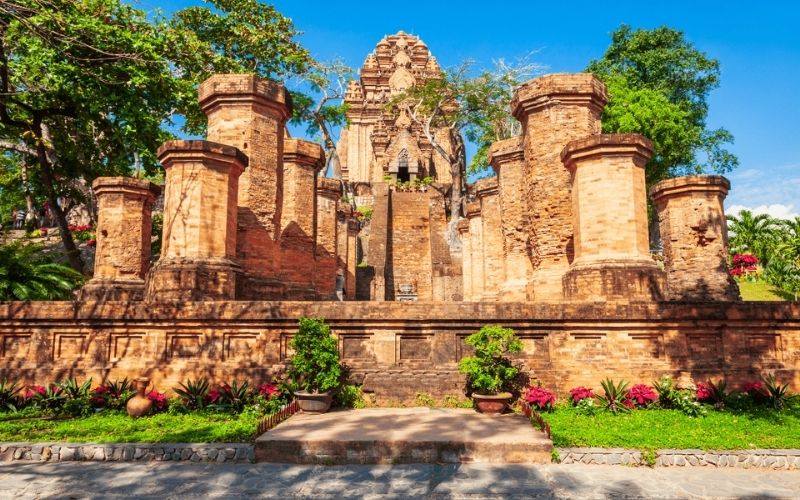
Decorative details are concentrated in the arched doorways and roof, with sandstone carvings reflecting strong religious elements. The interior spaces of the towers are typically small, dark, and sacred, befitting their function as places of worship in Hinduism.
Main towers and structures
Currently, the Po Sah Inu Cham Towers consist of three main structures, of which only the largest tower remains relatively intact, while the other two have been partially damaged:
Tower A (main tower):
This is the most prominent structure, approximately 15–16m high, with three tiers that gradually decrease in size towards the top. The tower is dedicated to the god Shiva, and inside is a monolithic stone Linga-Yoni set. The floor plan is square, the main entrance faces east, and the roof has ventilation holes symbolizing the connection between heaven, earth, and the gods.

Tower B:
Similar in structure but smaller than Tower A, it was formerly dedicated to the divine bull Nandin, a sacred animal associated with Shiva. Although the statue is no longer there, the arched doorways and motifs clearly show the ancient Cham style. The area in front of the tower is often used for ceremonial purposes, especially during festivals.

Tower C:
This is the smallest tower, approximately 5m high, with only one tier and located near the main tower. The Fire God Tower served as a preparation area for offerings before the rituals were performed inside the main tower. Despite undergoing several periods of deterioration, the structure has retained its basic original form.

Overall, the three towers form a complete religious space, both religious in nature and clearly reflecting the architectural thinking of the Cham people: simple in scale but rich in symbolic meaning.
What to see at Po Sah Inu Cham towers
Although not very large, Po Sah Inu Cham Towers offers a truly immersive experience: combining ancient architecture with vibrant cultural elements. If you visit at the right time, you can not only sightsee but also immerse yourself in the unique festival atmosphere of the Cham people.
The main tower complex
The main tower complex isn’t overly large, but it’s enough to give you a clear sense of ancient Cham architecture. Tower A stands out with its red brick architecture, carved arched doorways, and the worship space inside. When you stand closely, you can clearly see the technique of laying tiles with almost no visible joints, a detail that makes Po Sah Inu Cham Towers special compared to many other relics.
The interior space is quite dark and enclosed, creating a very “sacred” feeling, quite different from the sunny and windy outside. If you prefer a more in-depth experience than just taking photos, this part is quite interesting.

Panoramic views of Phan Thiet
One thing many people overlook before going is the stunning view. From the hilltop, you can see Phan Thiet and, further out, Mui Ne Beach.
You can visit at one of two times to take photos:
- Morning (07:00 AM – 09:00 AM): Soft light, fewer crowds, ideal for sightseeing.
- Afternoon (04:30 PM – 05:30 PM): Slanted sunlight makes it easy to take pictures, and you can watch the sunset.
This is a clear advantage if you want to combine cultural sightseeing and landscape photography in one location, saving you time while still providing a complete experience.
Cultural relics and carvings
Beyond the overall architecture, you should pay attention to small details such as the reliefs, sandstone patterns, and the Linga-Yoni set inside the towers, elements closely associated with the Hindu beliefs of the Cham people.
A major difference between Po Sah Inu Cham Towers and many other “static” relics is that cultural life continues regularly here. If you visit at the right time, you can experience traditional festivals:
- Kate Festival (usually around October): the biggest festival of the Cham people, with rituals praying for peace, singing and dancing, and folk activities.
- Rija Nugar Festival (Cham New Year) and Poh Mbang Yang Festival: held at the beginning of the year, meaning prayers for favorable weather, good harvests, and peace.
If your goal is not just to “see the towers” but to gain a deeper understanding of the local culture, then timing your visit to coincide with these festivals will make your experience at Po Sah Inu Cham Towers distinctly different.

Po Sah Inu Towers location and how to get there
The location of Po Sah Inu Cham Towers is quite convenient, making it easy to incorporate into an itinerary for a trip to Mui Ne or exploring the city center.
Where is Po Sah Inu Cham Towers
- Address: Ba Nai Hill, Phu Thuy Ward, Lam Dong Province
Po Sah Inu Cham Towers is located on Ba Nai Hill, within the Lau Ong Hoang historical site, about 7 km northeast of the Phan Thiet city center.
This area is quite easy to recognize, as it sits on a high hill overlooking the sea and the road to Mui Ne. Besides its main name, you may also find other names such as Pho Hai Cham Towers or Ba Tranh Towers when searching. If you search on Google Maps, just type “Po Sah Inu Towers” and you’ll find the correct location; it’s quite easy to locate and doesn’t require complicated directions.
Directions from Phan Thiet and Mui Ne
If you’re already in Phan Thiet or Mui Ne, getting to Po Sah Inu Cham Towers is quite simple and quick.
From the center of Phan Thiet, just head towards Mui Ne, along Vo Nguyen Giap Street. The distance is about 7 km, and the actual travel time is approximately 15-20 minutes by motorbike or taxi. The road is easy to navigate, with few turns and clear signs directing you to Ba Nai Hill.

If starting from Mui Ne, head back towards Phan Thiet along the coastal road. The journey usually takes about 20-30 minutes, depending on your hotel location. This is also a scenic route, so many people select to go to the towers along the way between the two areas.
Overall, whether you’re coming from nearby or far away, Po Sah Inu Cham Towers is quite accessible; you just follow the main road and use Google Maps for convenient ways.
Entrance fee and opening hours
Before planning a trip to Po Sah Inu Cham Towers, you should check the opening hours and ticket prices to plan your time accordingly. Generally, the entrance fee is quite low and suitable for any itinerary.
Ticket price
The entrance fee to Po Sah Inu Cham Towers is very reasonable:
- Adults: approximately 15,000 VND/person
- Children under 12 years old: approximately 10,000 VND/person
An added bonus is that some groups such as the elderly or people with disabilities may be exempt from admission (depending on the time of application).
Visiting hours
- Opening Hours: 7:00 AM – 5:00 PM
Early mornings (around 7:00–9:00 AM) are usually cool, less crowded, and have soft light, making them ideal for sightseeing and photography. Afternoon after 4:00 PM is also more pleasant, with gentle sunlight and the possibility of enjoying the view from the hilltop.

Besides sightseeing, the area offers basic services such as beverage stalls, souvenir shops (especially selling Cham pottery), and sometimes on-site guides if you wish to learn more about the history and culture.
Best time to visit Po Sah Inu
November to April (the dry season in Binh Thuan) is the ideal time to visit Po Sah Inu. The weather is sunny and pleasant, with little rain, dry roads, and clear skies, perfect for sightseeing and photography.
Another particularly ideal time is around October, when the Kate Festival takes place. If you visit during this period, you’ll find Po Sah Inu Cham Towers is not as quiet as usual but becomes very lively with singing, dancing, rituals, and Cham cultural activities.
Travel tips for visiting Po Sah Inu Towers
To make your visit to Po Sah Inu Cham Towers more complete, just keep in mind a few small details. Because this is a religious site located on a hill, the experience will be a little different from typical beach destinations.
What to wear
Clothing should be lightweight, comfortable, and presentable. You’ll be doing some walking and gentle uphill climbing, so sneakers or strappy sandals are more suitable than flip-flops.
Additionally, as this is a religious area, avoid wearing overly short or revealing clothing inside the main tower. A light jacket is also helpful for sun protection, as there is little shade in this area.

Photography tips
Po Sah Inu Cham Towers isn’t a crowded “check-in” spot, so you can take photos quite comfortably if you go at the right time. You can go at one of the following two times to get beautiful photos:
- Early morning: Soft light, easy to capture the red brick color.
- Late afternoon: Slanted sunlight, creating depth and beautiful shadows.
You should try taking photos from a low angle looking up at the towers or standing on the edge of the hill to include the sea and Phan Thiet city in the background; the photos will have more depth than just close-ups.
Cultural etiquette
Since this is still a place of religious activity, you should maintain a respectful attitude while visiting. Avoid speaking too loudly, and do not touch artifacts or worship areas unless permitted.
If you visit during a festival such as the Kate Festival, observe before taking photos or videos, as some rituals may not be suitable for recording.
Nearby attractions to combine your visit
One best thing about going to Po Sah Inu Cham Towers is that you can easily combine it with many nearby destinations without having to travel too far. With proper planning, you can easily go to 2-3 places in a single day.
Mui Ne sand dunes
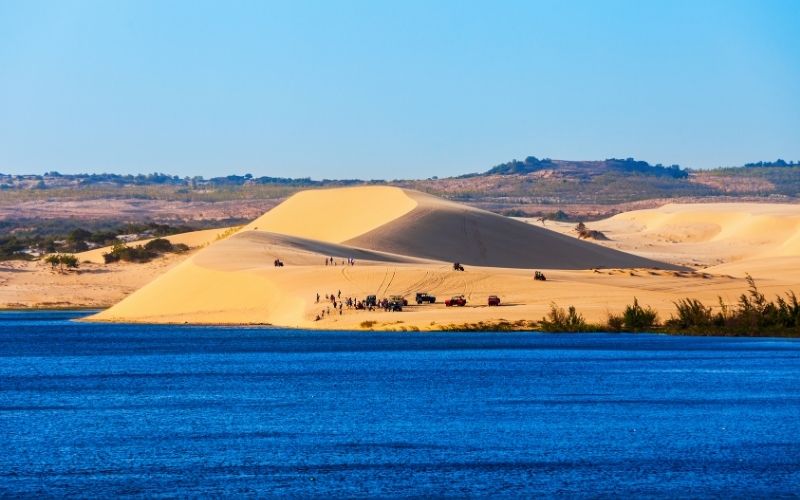
Located about 20-30 minutes’ drive from Po Sah Inu, Mui Ne Sand Dunes is a standout destination if you want a change of scenery from the “ancient” to nature.
The sand dunes are most beautiful in the early morning or late afternoon, when the light creates distinct sand patterns. Many people choose to visit the towers in the morning, then move on to the sand dunes to continue their itinerary, which is quite reasonable in terms of time.
Phan Thiet city center
The central area of Phan Thiet is only about 15-20 minutes from the tower. After visiting, you can return here for meals or visit places like the local market or seafood restaurants, or stroll along the beach. If you go in the afternoon, this is also a suitable place to end the day with a light dinner.

Ong Dia rock beach
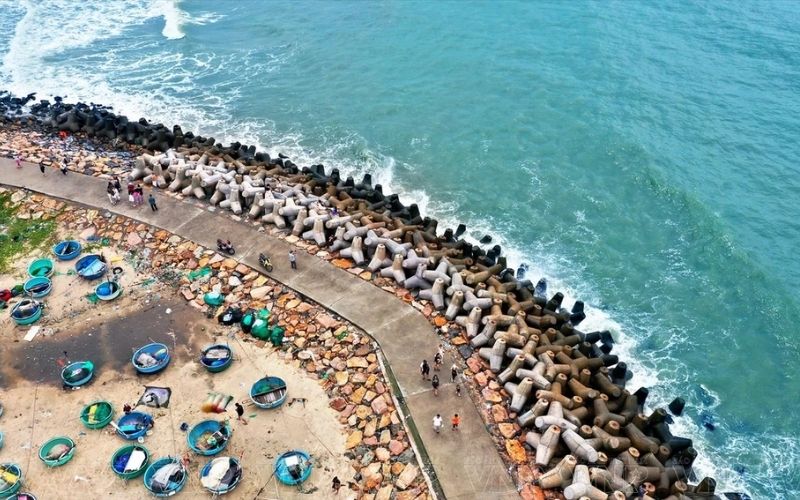
Located relatively close to Po Sah Inu, Ong Dia Rock Beach is a small, easily accessible, and not overly crowded beach. This spot is perfect for a short stop, enjoying the sea view, or taking photos, especially if you’re traveling on the route from Phan Thiet to Mui Ne. The best time is late afternoon, when the light is softer and the air is more pleasant.
FAQs about Po Sah Inu Cham Towers
Here are some frequently asked questions when planning a visit to Po Sah Inu Cham Towers, to help you prepare better for your trip:
How long does it take to visit Po Sah Inu Cham Towers?
Usually, about 1–2 hours is enough to explore the entire tower complex and take photos. This is a short stop, easy to incorporate into your itinerary.
Is it best to visit Po Sah Inu Cham Towers at midday?
No, as the area is quite sunny with little shade. It’s best to go early in the morning or after 4 PM for a more pleasant experience.
Is Po Sah Inu Cham Towers suitable for children or the elderly?
Yes, as the path isn’t too difficult and the travel time is short. However, the uphill section is slightly steep, so you should still walk slowly and wear suitable shoes.
Po Sah Inu Cham Towers is a tourist attraction with enough depth to help you know Cham culture better and enjoy a peaceful view in the heart of Phan Thiet. If you want to optimize your itinerary and have a more complete experience in Phan Thiet–Mui Ne, join Lily’s Travel, which offers pre-designed tours that save you time while still ensuring you don’t miss the highlights of the area.
Read more: Mui Ne To Dalat: The Best Guide To Travel with Ease