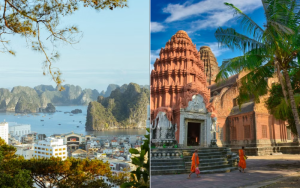



If you are planning a trip with a Central Vietnam tour package, you might be wondering whether to visit Hue, Da Nang, and Hoi An individually or combine them into a single itinerary. In fact, tours of the region often naturally combine all three destinations, as each offers its own unique experiences. A combined Hoi An–Hue–Da Nang itinerary promises a journey rich in history alongside the peaceful pace of rural life in Hoi An, all without excessive travel time.
What makes Central Vietnam worth visiting
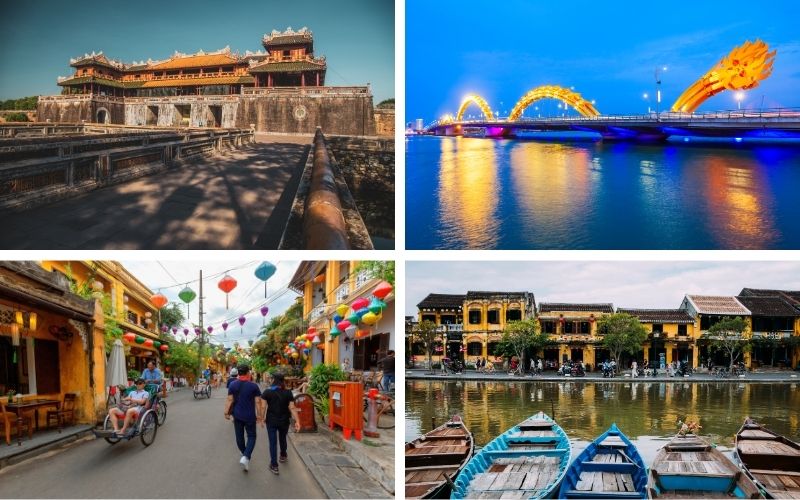
Central Vietnam tour package is one of those parts of Vietnam where you do not have to choose between history, beaches, and local life. Hue, Da Nang and Hoi An are close enough to combine in one trip, yet each city feels completely different.
Hue is where the journey starts to feel more historical. It was the capital of the Nguyen Dynasty from 1802 to 1945, home to 13 emperors from Gia Long to Bao Dai. The Imperial Citadel, royal tombs, and Thien Mu Pagoda give the city a strong sense of its past without requiring you to visit dozens of museums.
From Hue, the road to Da Nang crosses one of the most memorable stretches of the central coast. Depending on the route, travelers can go through the Hai Van Tunnel or over the Hai Van Pass. Da Nang itself is a completely different experience from Hue, more modern, more open, and built around the sea. Son Tra Peninsula, My Khe Beach, and the city’s bridges are easy to fit into a day without making the itinerary feel rushed.
Then there is Hoi An, where the pace changes again. The Ancient Town is the obvious highlight, but some of the best experiences are outside its busy streets. Cycling through Tra Que vegetable village, visiting the Bay Mau Coconut Forest in Cam Thanh, or spending time around the countryside gives you a quieter side of the region.
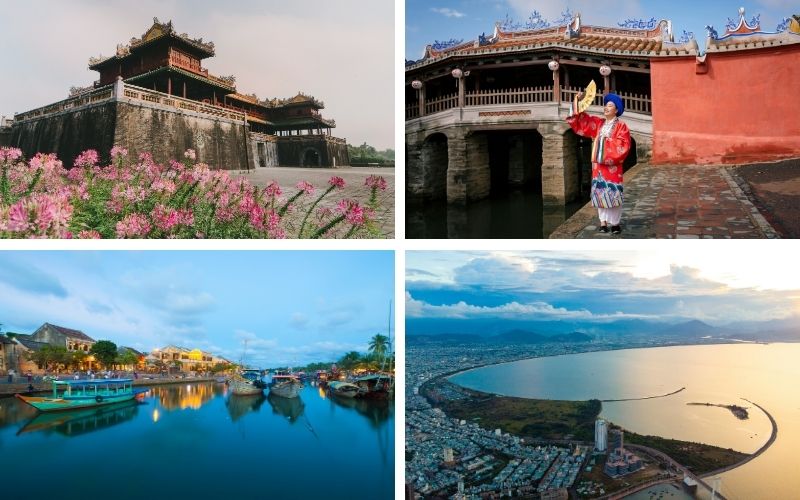
For travelers who want to go a little further, Cham Island adds a completely different experience. The eight-island archipelago is part of the Cu Lao Cham–Hoi An Biosphere Reserve, recognized by UNESCO in 2009. It is particularly appealing if you want to add snorkeling, swimming, or a day by the sea to a cultural itinerary.
See more: Northern Vietnam Tour Packages: Hanoi, Halong Bay, Sapa & Ninh Binh
In simple terms, the three destinations each bring something different:
- Hue: imperial history and traditional culture
- Da Nang: beaches, city life and mountain scenery
- Hoi An: heritage, countryside and a slower pace
- Cham Island: swimming, snorkeling, and island life
That mix is the real reason a Central Vietnam itinerary works so well. You are not repeating the same type of sightseeing from one stop to the next.
Our Central Vietnam Package Options
There is no single way to combine Hue, Da Nang, Hoi An. If you only have a few days, it makes sense to stay around Da Nang and choose one or two nearby experiences. With more time, Hue can be added without making the trip feel like a race.
Short Highlights Route (3–4 Days)
If your time is limited, staying around Da Nang keeps the itinerary simple. From there, you can add Ba Na Hills and choose between Hoi An’s countryside or Cham Island.
Day 1 – Da Nang City Tour
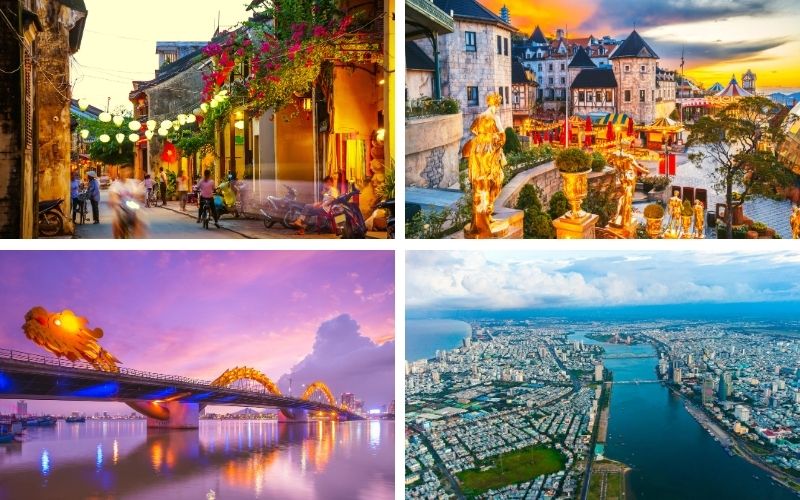
Start with the parts of Da Nang that are easy to combine in one day. The route includes Son Tra Peninsula and Linh Ung Pagoda, followed by Dragon Bridge, Love Bridge, and APEC Park. It is a fairly light first day, so there is still time to explore the city or spend the evening by the beach.
Day 2 – Ba Na Hills
The second day is more about the mountains. Take the Suoi Mo cable car up to Ba Na Hills, then visit the Golden Bridge, Le Jardin, Debay Wine Cellar, and Chua Mountain at 1,487 meters. It is a full day, so there is little reason to add another major attraction afterwards.
Day 3 – Hoi An Coconut Tour or Cham Island
This is where you can choose according to your interests. The Hoi An Coconut Tour is the quieter option, taking you into the Bay Mau Coconut Forest and the countryside around Cam Thanh. If you would rather spend the day in the water, Cham Island offers swimming and snorkeling around the islands.
For a fourth day, simply slow down rather than adding another full tour. A relaxed morning in Da Nang or Hoi An can make a short trip feel much less rushed.
Full Central Vietnam Experience (5–6 Days)
With five or six days, you can add Hue and give each destination more breathing room.
Day 1 – Hue City
Begin in Hue with the Imperial Citadel, including Ngo Mon Gate, Thai Hoa Palace, The Mieu, Hien Lam Pavilion, and the Nine Urns. Continue to either Tu Duc Tomb or Khai Dinh Tomb, then visit Thien Mu Pagoda. Dong Ba Market can be added if you still have time for some local shopping.
Day 2 – Hue to Da Nang
The journey itself becomes part of the route. The Hue itinerary continues towards Da Nang through the Hai Van Tunnel, connecting the two sides of the central coast. Once in Da Nang, the rest of the day can be kept relatively easy rather than adding another packed sightseeing schedule.
Day 3 – Da Nang City Tour
Spend the day around Son Tra Peninsula, Linh Ung Pagoda, Dragon Bridge, Love Bridge, and APEC Park. Compared with Hue, Da Nang feels much more modern and coastal, so this change of atmosphere is part of what makes the route interesting.

Day 4 – Ba Na Hills
Set aside a full day for Ba Na Hills, including the cable car, Golden Bridge, Le Jardin, Debay Wine Cellar, and Fantasy Park. The 1,487-meter elevation also makes this day feel quite different from the coastal city below.
Day 5 – Hoi An Countryside
Move towards Hoi An for a slower day. A village cycling tour can take you through Tra Que Vegetable Village and Van Lang Fishing Village, giving you a look at the countryside beyond the Ancient Town.
Day 6 – Hoi An or Cham Island
Use the final day according to what you missed. You can spend more time around Hoi An and the Bay Mau Coconut Forest or choose Cham Island if you want to finish the trip with swimming and snorkeling.
Flexible / Custom Combination
The day-by-day routes above are only one way to put the destinations together. If you already know what you want to skip, there is little point in keeping a fixed sequence simply for the sake of it.
For example, you could leave out Ba Na Hills and spend more time around Hoi An or choose Cham Island instead of a second countryside experience. Lily’s Travel Agency has individual tours for Hue, Da Nang, Ba Na Hills, Hoi An Coconut Tour, Cham Island, and Hoi An countryside cycling, which makes this kind of combination easier to arrange around your own interests.
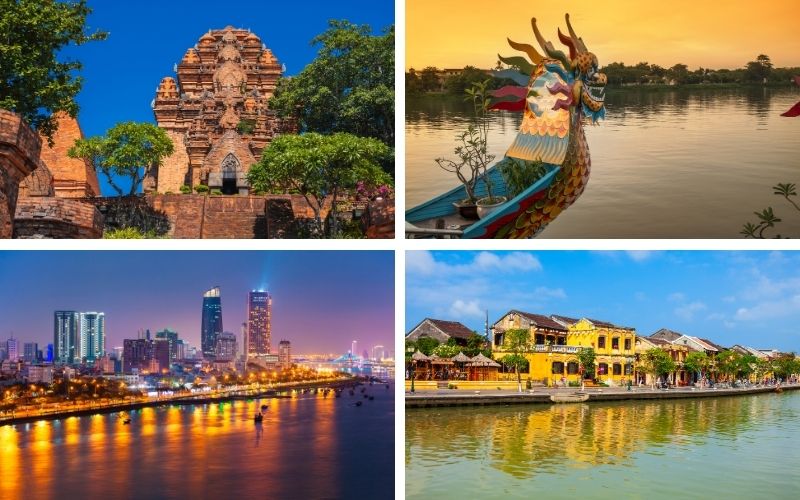
Key Destinations: Hue, Da Nang, Hoi An
Put Hue, Da Nang, Hoi An on the same map, and they look close enough to be part of one trip. Spend time in each, though, and the differences become obvious. Hue feels quieter and more reflective; Da Nang is open and energetic, while Hoi An invites you to slow down. That contrast is what makes the route interesting.
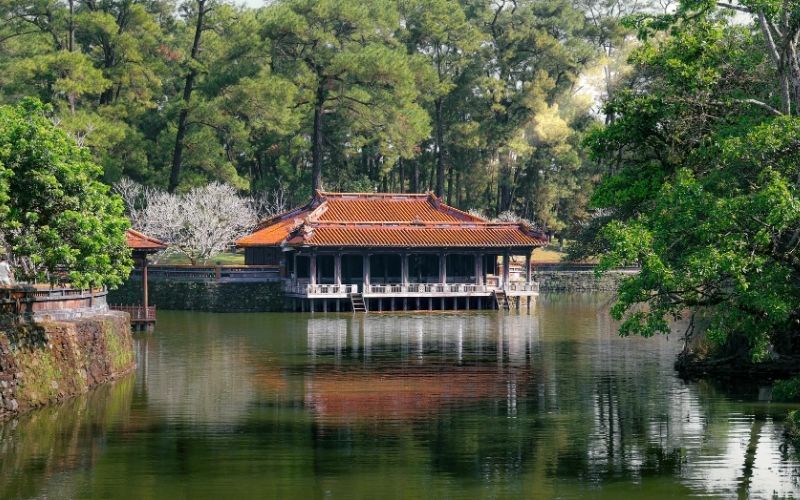
Hue – Imperial Vietnam
Hue is the kind of place where the past is difficult to miss. The city was the seat of the Nguyen Dynasty for more than a century, and much of that history is concentrated inside and around the Imperial Citadel.
Enter through Ngo Mon Gate, and the route leads towards Thai Hoa Palace, The Mieu, Hien Lam Pavilion, and the Nine Urns. You do not need to be a history enthusiast to appreciate the scale of the complex; the architecture alone makes it clear that this was once the center of imperial power.
Outside the Citadel, the mood becomes quieter. Tu Duc Tomb and Khai Dinh Tomb show two very different approaches to royal architecture, while Thien Mu Pagoda, standing beside the Perfume River, offers a much more peaceful stop. If you want to see where local life continues away from the monuments, Dong Ba Market is worth leaving some time for.
Hue works best when you resist the temptation to rush through it. The city rewards a slower morning and a little curiosity about what sits between the major landmarks.
Da Nang – Coastal & Modern
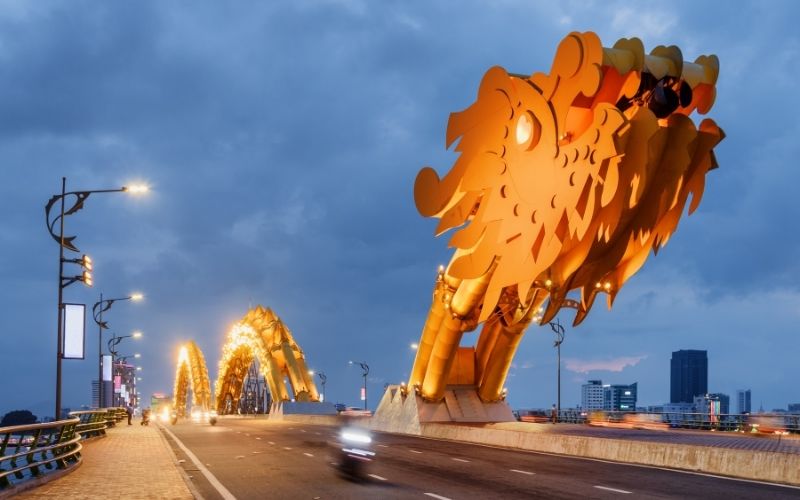
Da Nang feels much more open than Hue, with the sea always close and the city spreading out around the Han River. A morning on Son Tra Peninsula takes you to Linh Ung Pagoda, where the 67-meter Lady Buddha statue overlooks the coastline. From there, you can return towards the city and see a very different side of Da Nang through Dragon Bridge, Thuan Phuoc Bridge, Han River Bridge, and Love Bridge.
Even the city’s public spaces have a distinct modern character. Apec Park, recognizable by its kite-shaped structure, is an easy stop while exploring the riverfront.
And then there is Ba Na Hills, where the landscape changes once again. The cable car climbs towards the 1,487-meter summit of Chua Mountain, with the 150-meter Golden Bridge becoming the most recognizable stop along the way. Le Jardin, Debay Wine Cellar, and Fantasy Park round out the day.
Da Nang is therefore more than a convenient base between Hue and Hoi An. It is where the trip shifts from imperial architecture to coastline, bridges, and mountain scenery.
Hoi An – Ancient Town & Countryside
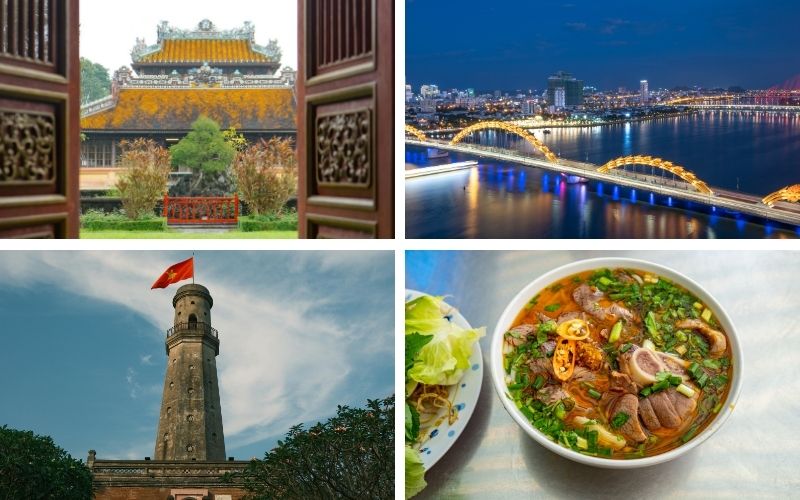
The Ancient Town is the obvious starting point, but its appeal is not simply a collection of old buildings. The town retains the layout and architecture of a historic trading port that developed between the 15th and 19th centuries, which is why wandering its streets can feel more rewarding than trying to tick off individual sights. UNESCO inscribed Hoi An Ancient Town as a World Heritage Site in 1999.
The countryside just outside the center gives Hoi An another dimension. At Tra Que Vegetable Village, the experience is more about seeing how the land is cultivated than visiting a conventional attraction. Around Van Lang Fishing Village and the Bay Mau Coconut Forest in Cam Thanh, cycling and local activities take you away from the busiest streets.
For something more adventurous, continue towards Cham Island. The archipelago consists of eight islands and forms part of the Cu Lao Cham–Hoi An Biosphere Reserve, recognized by UNESCO in 2009. The island’s Bai Lang fishing village and Hai Tang Pagoda add a cultural side to a day that can also include swimming and snorkeling.

Best time to Visit Central Vietnam
February to May is generally the best time for a Central Vietnam trip, especially if you want to combine Hue, Da Nang, Hoi An. The weather is usually more comfortable for sightseeing, cycling, and outdoor activities while the main rainy season has not yet arrived.
- February–May: Best overall. Comfortable for exploring Hue, walking around Hoi An, cycling in the countryside, and visiting Da Nang.
- June–August: Hot and sunnier. A good choice if beaches and swimming in Da Nang are your priority, but plan outdoor activities around the stronger midday heat.
- September–November: Wetter and less predictable. Heavy rain, storms and occasional flooding can affect Hue, Hoi An and boat trips, so this is not the easiest period for a packed itinerary.
- Cham Island: Sea conditions matter more than temperature. For snorkelling and boat trips, check the forecast before setting out.
- Hue and heritage sites: These can be visited year-round, although dry weather makes a full day of sightseeing more comfortable.
If you want the most balanced Hoi An Hue Da Nang tour, aim for February to May. For a beach-focused trip, June to August can also work well; during the rainy months, leave some flexibility in your schedule.
Who These Packages Suit Best
A Central Vietnam tour package route works well because each destination naturally appeals to a different type of traveler.
Couples and honeymooners will usually enjoy Hoi An most, particularly for its riverside setting, historic streets, evening atmosphere, and countryside experiences. Adding a few relaxed days in Da Nang gives the trip a beach component without losing access to cultural attractions.
Families with children may prefer Da Nang as their base. Ba Na Hills combines cable cars, mountain scenery, and Fantasy Park, while the city’s straightforward transport links make day trips easier to organize. Lily’s Ba Na Hills tour also includes hotel pickup, cable car fees, Fantasy Park admission, and lunch.
History and culture travelers should give Hue more time. The Imperial Citadel, royal tombs, and Thien Mu Pagoda provide a much deeper look at Vietnam’s imperial past than a quick stop in a larger city.
Beach and adventure travelers can focus on Da Nang, Son Tra, and Cham Island. This makes a shorter central Vietnam tour package possible without spending every day inside museums or heritage sites.
FAQ
Once the route starts to take shape, there are a few practical details worth sorting out before you explore:
Can I combine Hoi An, Hue and Da Nang in one trip without a private car?
Yes, you can combine all three without hiring a private car. Da Nang has strong bus, taxi, ride-hailing, and tour connections, while Hoi An can be reached by shuttle or bus from Da Nang and Hue. A Hoi An, Hue, Da Nang tour can also use organized day trips for individual sections, which removes the need to arrange every transfer yourself.
What is the best way to get from Hue to Da Nang?
The most convenient option for many travelers is a car or organized transfer through the Hai Van Tunnel, taking roughly two to two and a half hours depending on traffic and stops. The scenic alternative is the Hai Van Pass, which takes longer but provides coastal and mountain views. Lily’s Hue itinerary uses the Hai Van Tunnel on its Hue–Da Nang route.
Is Ba Na Hills worth visiting if I’m short on time?
Yes, if you want a concentrated mix of mountain scenery, the Golden Bridge, cable-car views, and entertainment. Lily’s one-day itinerary combines the cable car, Golden Bridge, Le Jardin, Debay Wine Cellar, Fantasy Park and Chua Mountain, making it possible to see the main attractions in one day.
What should I pack for a Hoi An, Hue, Da Nang tour?
Pack lightweight clothes, comfortable walking shoes, sun protection, and a light rain jacket. Central Vietnam can be hot and humid during the dry season, while the rainy months can bring prolonged showers. If Cham Island is included, bring swimwear, a dry bag, and footwear suitable for boat and beach activities. A light layer is also useful for cooler mornings or air-conditioned transport.
A well-planned central Vietnam tour package brings together three sides of the region that are difficult to experience in one place: Hue’s imperial heritage, Da Nang’s coast, and Hoi An’s historic and rural character. The best route depends on your available time and priorities. Explore the current options from Lily’s Travel Agency, then adjust the combination if you want a more personal pace or specific activities.