


Homestay Mekong Delta is the better choice if you want to see how people actually live along the rivers and canals, rather than rush through the region on a day trip. A night with a local family gives you time for a home-cooked meal, a quiet walk through the garden, or an early boat ride before the waterways get busy. Let’s explore this in more detail in this article.
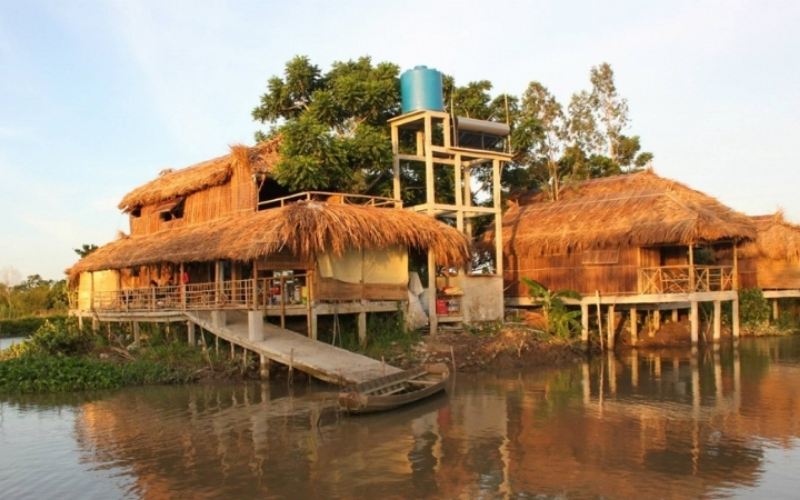
Why staying at a homestay is one of the best ways to experience the Mekong Delta
Homestay Mekong Delta are the best choice if you want to experience local life instead of just visiting famous tourist spots. Many Mekong Delta homestays are located amidst canals, islets, or orchards, allowing visitors access to areas that most day tours or central hotels don’t offer.
The main attraction is the opportunity to live with the local folk. Enjoy family meals with local specialties, learn how to make traditional cakes, paddle a traditional sampan boat or participate in seasonal gardening. These experiences are a far cry from your typical vacation.
In addition, homestays are often closer to nature. In An Binh islet (Vinh Long), Con Son islet (Can Tho), or the countryside of Ben Tre, visitors can easily cycle through village roads, explore small canals, and visit local orchards.
Cost is also a significant advantage to consider. In most parts of the Mekong Delta, a private room usually costs around 400,000–900,000 VND per night, and many hosts include breakfast or even invite guests to join everyday activities at no extra cost. In Ben Tre, for instance, it’s not unusual to start the morning paddling through coconut canals, stop by a small family-run coconut candy workshop, then return for a home, cooked lunch with your hosts…
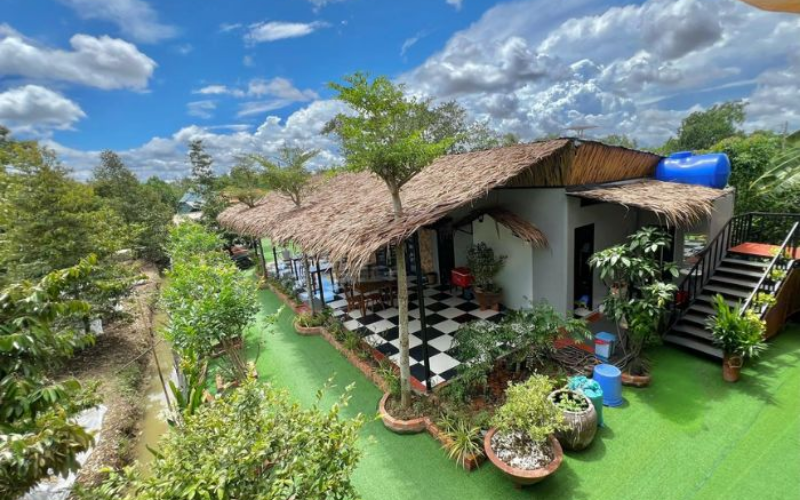
Understanding the different types of homestays in the Mekong Delta
Homestays in the Mekong Delta aren’t limited to just one type. Depending on the location and travel style, you can choose from various accommodation models, ranging from traditional garden houses to high-end eco-lodges or homestays deeply rooted in local culture.
- Garden Homestay: Ben Tre, Vinh Long and Tien Giang are where you’ll find most of the Mekong Delta’s garden homestays. Instead of staying in a town, you’ll be surrounded by fruit orchards that change with the season. Harvest time is when these places are at their best, as many hosts invite guests to taste fruit picked straight from the garden.
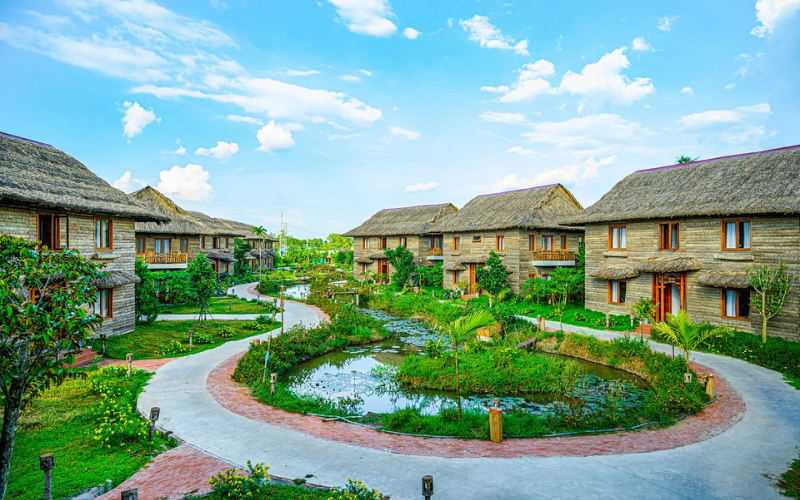
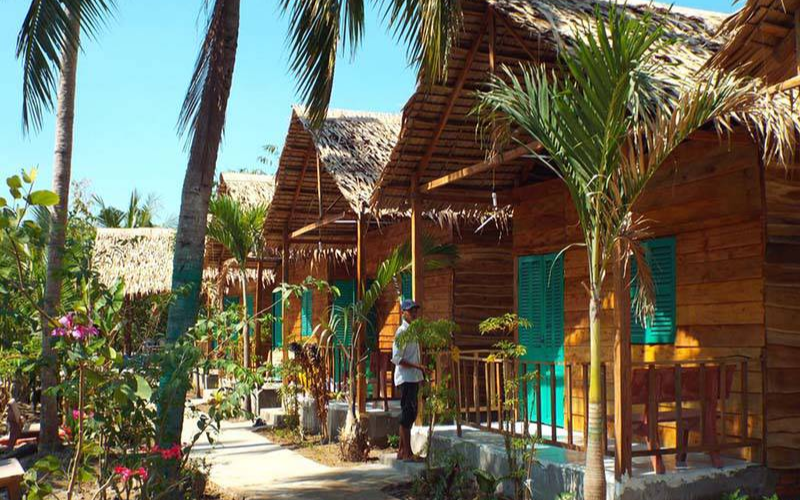
- Eco-lodge or bamboo/wooden bungalows: Suitable for travelers who want to combine nature experiences with comfort. These accommodations use environmentally friendly materials, offer more privacy than traditional homestays, but still maintain an open architecture that blends seamlessly with the river landscape. Many also offer swimming pools, spas, or tours such as kayaking and cycling to explore the countryside.
- Riverside homestays combined with boat experiences: If watching the floating market is high on your list, staying by the river makes a noticeable difference. Many riverside homestays have their own small pier, so you can leave before sunrise instead of driving to a public boat station.
- Homestays connected to Khmer culture: Tra Vinh and Soc Trang offer a different side of the Mekong Delta. Here, some family-run homestays introduce visitors to Khmer traditions through local food, pagodas and seasonal festivals, rather than focusing only on river life.
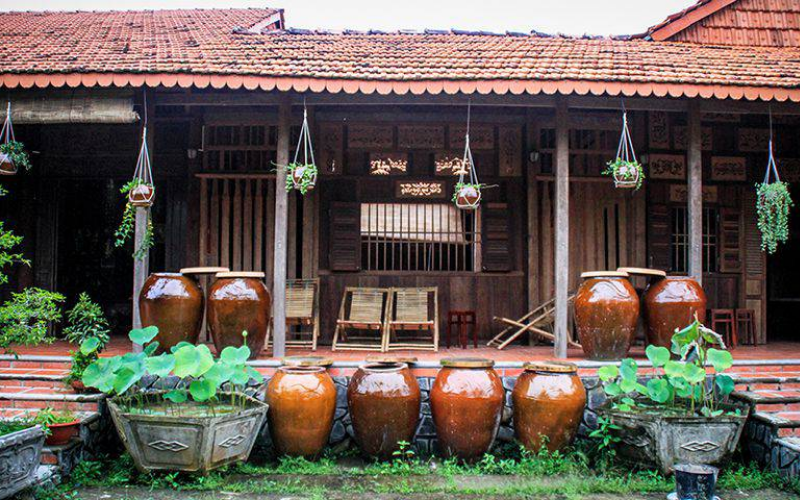
Each type of Mekong Delta homestay offers a different experience. If you prioritize exploring the orchards, Ben Tre or Vinh Long are suitable choices. If you want to combine your trip with visiting floating markets, choose a riverside homestay in Can Tho. Meanwhile, Tra Vinh and Soc Trang are suitable for travelers interested in local culture and seeking a less crowded travel experience.
Read more: 1 Day Mekong Delta Tour: Is a Day Trip Worth It and What Can You Really See?
The best areas to stay for a Mekong Delta homestay experience
There isn’t one place that suits everyone when choosing a homestay Mekong Delta. If it’s your first time in the Mekong Delta, Can Tho is the most convenient option, while Ben Tre and Vinh Long are suitable for those who want to experience authentic rural life, and Sa Dec and Chau Doc are ideal for travelers who prefer less crowded destinations:
Can Tho (Cai Rang) – The best choice for first-time visitors to the Mekong Delta
Can Tho is the ideal place if you want to combine a Mekong Delta homestay with visiting famous landmarks. Most homestays are about 15-30 minutes by boat from the Cai Rang floating market, which makes it an easy start for an early morning departure. Besides the floating market, visitors can also visit Son Island, traditional noodle factories or explore the small canals surrounding the Hau River without straying too far.
Ben Tre – For nature and travel lovers
Ben Tre is perfect if you like to enjoy a quiet space and rural life. Most homestays are located among coconut groves or along small river branches, giving a sense of seclusion from crowded tourist areas. In addition to rowing boats through the coconut canals, many homestays also offer experiences such as making coconut candy, cycling through the countryside, and enjoying dishes made from local ingredients.
Vinh Long (An Binh Island) – Experience authentic countryside life
If you want to live like a local for a few days, An Binh Island (Vinh Long) is one of the most ideal places to go. This place is famous for its rambutan, mangosteen, and durian orchards, which extend along small canals. Many homestays are run by local families, so it’s easy for visitors to join in cooking, gardening, or riding bikes through peaceful village roads.
Sa Dec and Chau Doc – For travelers who want to avoid crowds
Sa Dec and Chau Doc are suitable for those who have been to the Mekong Delta or want to explore less commercialized destinations. Sa Dec stands out with Tan Quy Dong flower village and ancient houses bearing the mark of Southern Vietnam, while Chau Doc is attractive for its cultural blend of Kinh, Khmer, Cham, and Chinese people. Homestays in these two areas often offer a quieter experience than Can Tho, and are convenient stops if you combine your trip with a visit to Mount Sam or the Cambodian border.
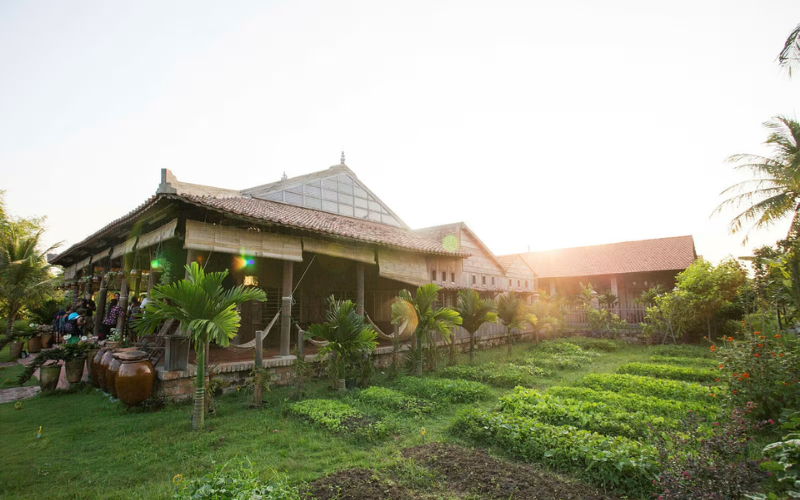
What to expect from a typical homestay stay in the Mekong Delta
A day at a homestay Mekong Delta typically revolves around activities with the host family and the unique lifestyle of the Mekong Delta region. Instead of a fixed schedule like a hotel, the experience is flexible, adapting to seasonal fruits, weather, and local customs.
- Check-in and getting acquainted with the host family: Upon arrival, the homestay owner will usually introduce the property, explain the amenities, and suggest an itinerary for your stay. Many offer fruit juice or seasonal fruits as a welcome.
- Enjoying dinner with local dishes: Dinner is often prepared at home with specialties such as grilled snakehead fish, braised fish, fish hotpot, or vegetables picked from the garden. This is also a time for guests to chat with the host family to learn more about local life and culture.
- Participating in evening activities: Depending on the homestay, you might listen to traditional folk music, go fishing, stroll around the village, or simply relax on the porch to enjoy the peaceful atmosphere of the Southern Vietnamese countryside.
- Depart early in the morning to explore the Mekong Delta: Mornings begin much earlier than they do in the city. Many homestays arrange boat trips from around 5:30–6:00 AM, giving guests enough time to reach Cai Rang Floating Market before the busiest trading hours. Some itineraries continue through smaller canals or stop at nearby fruit orchards on the way back.
- Experience traditional crafts or short workshops: The best experiences are often the ones that aren’t planned. If your host is making coconut candy, preparing lunch or harvesting fruit, you’re usually welcome to join in. Rather than running formal workshops, most family-run homestays simply invite guests to take part in whatever is happening that day.
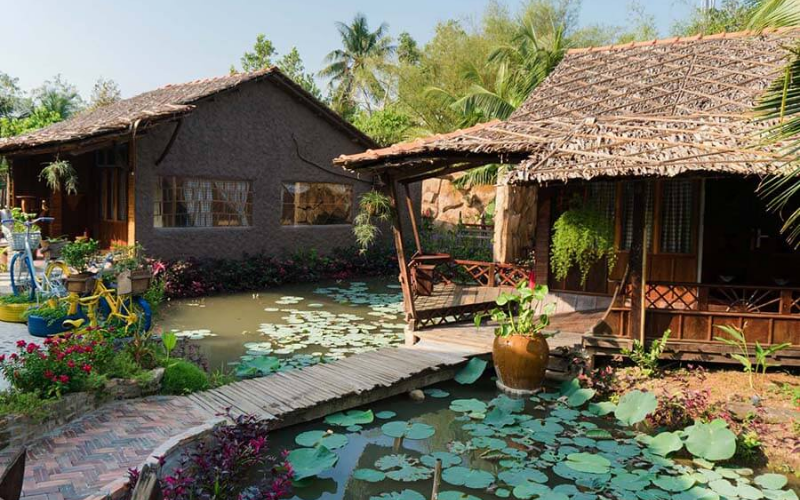
Not all homestay Mekong Delta are created equal in terms of amenities. Budget homestays generally have basic rooms with fans and private or shared bathrooms according to the place. Meanwhile, the more high-end homestays or eco-lodges now tend to have air-conditioning, private bathrooms, stable Wi-Fi and more privacy. Therefore, you should check the room description and amenities carefully before booking, especially if you are traveling with young children or elderly people.
Top Mekong Delta homestays for different travel styles and budgets
The best Mekong Delta homestay depends on what you expect from your trip. Budget travelers, families, couples, and eco-conscious visitors often look for very different experiences, so the recommendations below are organized by travel style rather than price alone.
Note: Prices are for reference only and may vary by season, room type, and booking platform. They should be verified before publication.
| Homestay | Location | Style | Estimated Price* | Best For |
| Mekong Rustic Can Tho | Can Tho | Eco-lodge | 600.000 VND – 1.250.000 VND/night | Families, couples |
| Green Village Mekong | Can Tho | Riverside Homestay | 1.500.000 – 1.600.000 VND/night | Eco-travelers |
| Coco Riverside Lodge | Vinh Long | Riverside Homestay | ~ 1.600.000 VND/night | Couples |
| Ba Linh Homestay | Vinh Long | Garden Homestay | 400.000 VND – 600.000 VND/night | Budget backpackers |
| Jardin du Mekong Homestay | Ben Tre | Garden Homestay | ~ 1.760.000 VND/night | Families |
| Maison en Bambou Phong-Le Vent | Chau Doc | Boutique Homestay | 350.000 VND – 920.000 VND/night | Leisure travelers |
Budget Backpacker
Prioritize family-run homestays in Ben Tre or Vinh Long, where costs are reasonable and often include free breakfast or bicycles.
Family Travelers
Eco-lodges in Can Tho and Vinh Long are more suitable due to their spacious rooms, green spaces, and many activities for children such as canoeing or garden tours.
Couples and Honeymooners
Riverside homestays or bungalows amidst coconut groves in Ben Tre offer privacy and tranquility, ideal for couples seeking a relaxing getaway.
Eco-conscious Travelers
If you prioritize sustainable travel, choose Mekong Delta homestays that limit single-use plastics, use local materials, and organize community activities such as cooking classes, gardening, or traditional craft experiences. These homestays also offer the most distinct cultural value, rather than just providing accommodation.
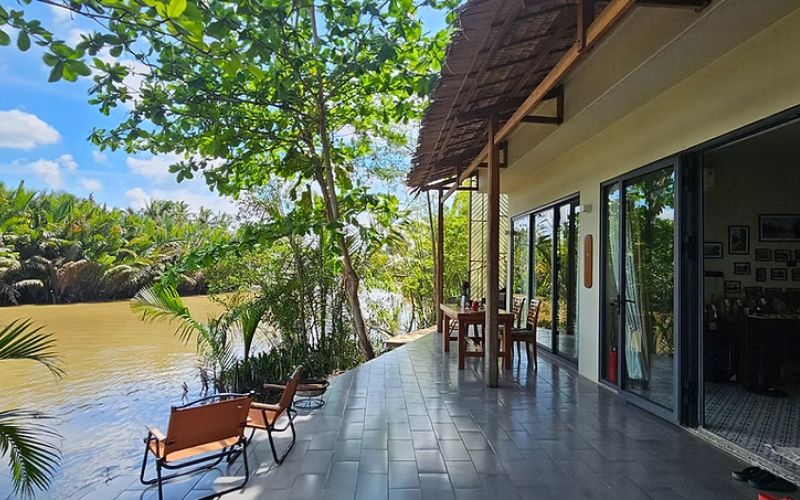
Homestay vs hotel: which option is better for your trip?
For most travelers wanting to explore local culture, homestay Mekong Delta are a better option than hotels. Homestays offer a closer experience of life on the river, while hotels are more suitable if you prioritize comfort, privacy, and a short itinerary.
| Criteria | Homestay | Hotel |
| Average Cost | Usually lower or similar, often includes breakfast or local experiences | Higher, especially for 3–4 star hotels |
| Local Experience | Excellent – interact with local families, enjoy home-cooked meals and village life | Limited, mainly accommodation services |
| Facilities | Basic to comfortable, depending on the property | More comprehensive and standardized |
| Privacy | Moderate, shared spaces are common | High, with private rooms and hotel amenities |
| Location | Rural villages, orchards, riverside areas | City centers and tourist districts |
| Best For | Authentic cultural experiences, slow travel, eco-tourism | Business trips, short stays, travelers prioritizing comfort |
A Mekong Delta homestay makes the most sense when the destination itself is part of the experience. If you want to wake up beside the canals, eat with a local family, or spend time in orchards and small villages, a hotel simply can’t offer the same connection to the region.
A hotel becomes the better choice when the accommodation is just a place to sleep. Travelers with a tight schedule, an early flight, or plans to stay mainly around the city center in Can Tho, My Tho, or Chau Doc will usually appreciate the easier access and more consistent facilities.
Costs, facilities and things to know before booking
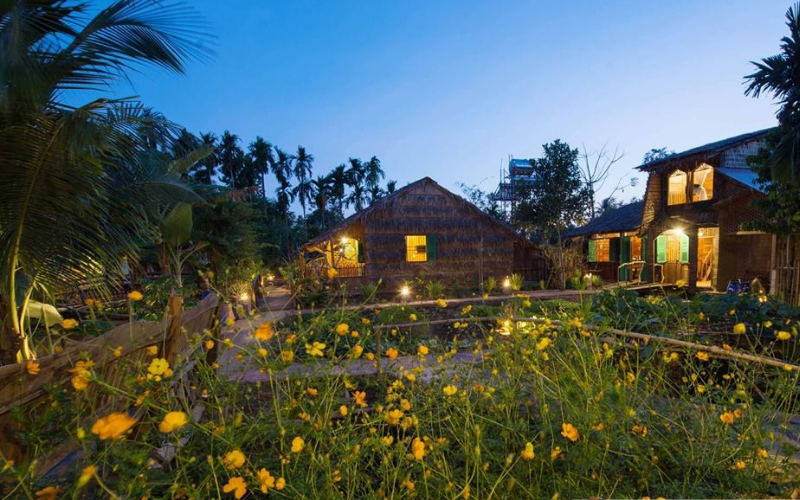
Homestay costs in the Mekong Delta are generally lower than in many other popular tourist destinations in Vietnam, but prices will vary depending on location, season, and type of accommodation. Before booking, you should consider not only the price but also the amenities and experiences included.
| Accommodation Type | Typical Price (per night) | Suitable For |
| Budget Homestay | ~ 300,000–600,000 VND | Backpackers, solo travelers |
| Mid-range Homestay | ~ 600,000–1,200,000 VND | Couples, families |
| Eco-lodge / Boutique Homestay | ~ 1,200,000–2,500,000+ VND | Premium and eco-conscious travelers |
Most Mekong Delta homestays focus on local experiences rather than luxury amenities. However, many still provide all the necessary services for a trip.
Common amenities include:
- Breakfast or dinner prepared by the host family.
- Free bicycles to explore the countryside.
- Canoe tours or boat trips to the floating market.
- Basic Wi-Fi, towels, and drinking water.
- Assistance with car rentals or local itinerary advice.
Amenities not found in all homestays:
- Air conditioning, especially in budget homestays or traditional garden houses.
- Private bathrooms in all room types.
- High-speed Wi-Fi in areas deep within the islands or along the river.
- 24/7 reception, daily housekeeping, or card payment.
To avoid misunderstandings, you should confirm the following information with the homestay owner before booking:
- Does your room have a private or shared bathroom?
- Does the room rate include breakfast or dinner?
- How far is the homestay from the floating market, boat dock, or main attractions?
- Is there a shuttle service or local tour booking available?
- Are air conditioning, hot water, and Wi-Fi available in your chosen room type?
Common mistakes travelers make when choosing a Mekong Delta homestay
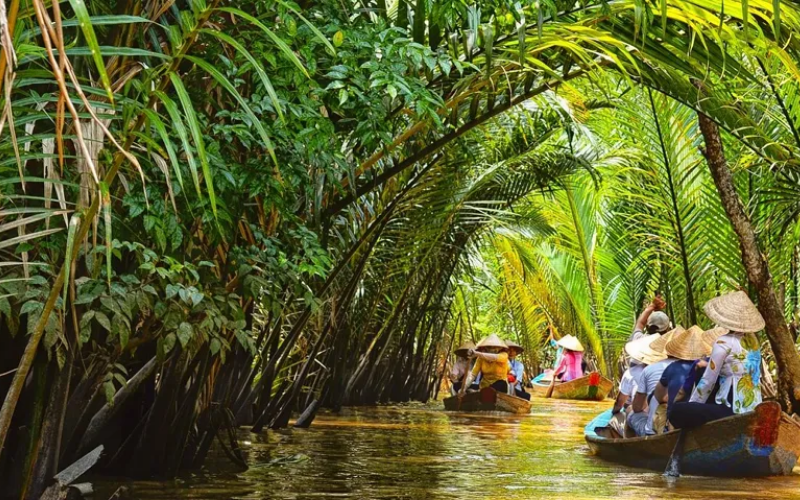
Many inexperienced travelers booking homestay Mekong Delta often encounter avoidable problems if they carefully check the information before booking. Below are the most common mistakes:
- Choosing a homestay based on price alone: A cheaper room isn’t always the better deal. Some homestays are well outside the main tourist areas, which means longer boat transfers or extra transport costs. Before booking, check the location on Google Maps and see how far it is from places you actually plan to visit.
- Assuming every room has a private bathroom: That’s not always the case, especially at smaller family-run homestays. If a private bathroom is important, don’t rely on the room photos, ask the host to confirm before you book.
- Overlooking the rainy season: Between May and October, heavy showers can change the day’s plans, especially if your itinerary includes boat trips or fruit orchards. It’s worth asking the host what activities are still available during your travel dates instead of assuming everything runs as usual.
- Expecting 3-4 star hotel amenities: Mekong Delta homestay is designed to offer a local cultural experience, not luxury resort services. If you want a swimming pool, 24-hour reception or daily room service then you should go for a hotel or resort.
- Do not contact the host before arrival: Some homestays are located on islets or at the end of small roads, requiring a ferry or boat to access. Contacting them in advance will help you get detailed directions, check-in times, and suitable transportation options.
Read more: Ho Chi Minh to Mekong Delta Distance: How Far Is It and Is a Day Trip Worth It?
Is staying overnight at a homestay worth it?
Yes. An overnight stay is worth it if you have at least two days in the Mekong Delta. Once the day-trip crowds leave, the Delta feels completely different. Dinner with your host family, the quiet canals after sunset, and an early boat ride to the floating market are all experiences you simply can’t fit into a one-day itinerary.
Staying overnight is worth it if:
- You have at least 2 days and 1 night to explore the Mekong Delta.
- You want to experience local life rather than just sightseeing.
- You enjoy activities like canoeing, cycling through the countryside, visiting orchards, or taking a cooking class.
- You want to leave early to visit Cai Rang Floating Market when it’s busiest between 5:30 and 7:30 AM.
A day trip may be enough if:
- You only have one day and want to visit the highlights before continuing your journey.
- You prioritize hotels with full amenities or need to work during the trip.
- You are not very interested in experiencing local life.
- Your itinerary focuses on major cities like Can Tho before moving on to other destinations.
For most international tourists, especially those visiting the Mekong Delta for the first time, choosing a Mekong Delta homestay combined with an overnight stay often provides a more memorable and unique experience compared to a day tour.
Frequently asked questions about Mekong Delta homestays
If this is your first time planning a stay at a homestay Mekong Delta, the following questions will help you understand your trip better:
What is the average cost of a homestay in the Mekong Delta?
Expect to pay around VND 300,000–1,200,000 per room per night at most Mekong Delta homestays. Eco-lodges and boutique properties are generally more expensive, particularly on weekends and during peak travel periods. Since room rates change regularly, it’s best to confirm the price before booking.
Is Ben Tre or Can Tho better for a homestay experience?
This depends on your travel goals, but Can Tho is more suitable for first-time visitors to the Mekong Delta thanks to its Cai Rang floating market and convenient transportation system. Ben Tre is a better choice if you want to enjoy a quieter atmosphere, explore coconut groves, and experience ecotourism.
Do Mekong Delta homestays have private bathrooms?
Not all do. Budget homestays may still have shared bathrooms, while most mid-range and eco-lodge homestays now offer private bathrooms. You should check the room type and amenities before confirming your booking to avoid misunderstandings.
How many nights should I stay at a Mekong Delta homestay?
Most travelers will find it sufficient to explore the Mekong Delta in 2 days and 1 night at a leisure pace. Allowing you time to visit a floating market at sunrise, stroll through fruit orchards and enjoy an evening with your host family, rather than racing from attraction to attraction. If you want to visit Can Tho, Ben Tre and Vinh Long, then you should consider a 3 days 2 nights trip.
Is it safe to stay at a local homestay in the Mekong Delta?
Yes. Most homestay Mekong Delta are directly managed by local families who have been serving tourists for many years. To ensure a smooth trip, you should choose establishments with good reviews on reputable booking platforms and notify them in advance of your check-in time if you are arriving late.
What should I pack for a Mekong Delta homestay stay?
There’s no need to overpack for a Mekong Delta homestay. Comfortable clothes, a good pair of sandals, sunscreen, and insect repellent are usually enough. A lightweight rain jacket comes in handy between May and October, while a waterproof bag is worth bringing if you’ll be on small boats or walking through orchards.
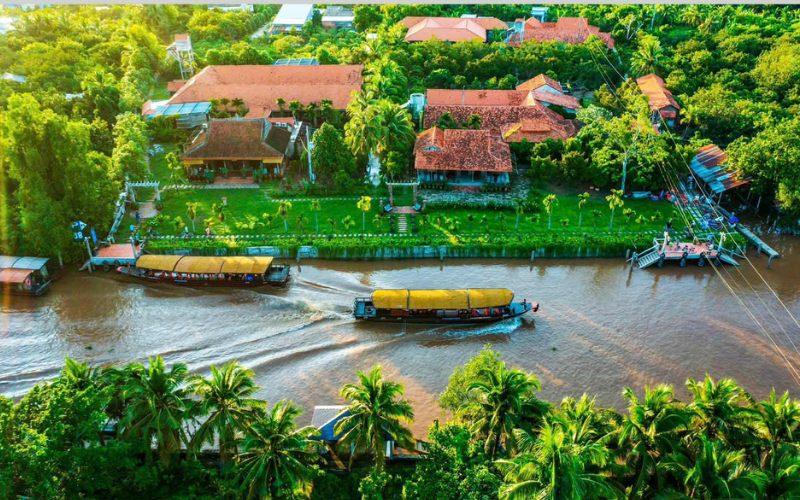
Homestay Mekong Delta is the ideal choice for those who want to explore the Mekong Delta in a more authentic way, from family meals and fruit orchards to the daily life of the local people. If you are looking for a trip that combines accommodation, sightseeing, and experiencing local culture, Lily’s Travel can help you choose the right homestay in the Mekong Delta and design an itinerary to Can Tho, Ben Tre, Vinh Long, or other prominent destinations. Discovering the right places and staying in the right way will make your trip much more memorable.