

The Mekong Delta is a labyrinth of water, life, and culture that cannot be fully appreciated from the land. To truly grasp the pulse of this region, you must get onto the water. Whether you are navigating through bustling floating markets or drifting down quiet, palm-shaded canals, a Mekong Delta river tour is the essential gateway to understanding the “Nine Dragons” of Vietnam.
Why a river tour is one of the best ways to experience the Mekong Delta
The Mekong Delta is not just a destination; it is a complex, living ecosystem defined entirely by its waterways. While the region’s growing road network can take you from point A to point B, choosing a river tour allows you to navigate the region the way it was meant to be seen from the water.
- Access the “backdoor” of the delta: Standard road travel keeps you on the periphery, moving through urbanized zones or heavy traffic. A river tour, however, grants you exclusive access to the narrow, palm fringed canals that serve as the “streets” for local communities. This is where you witness the authentic rhythm of Delta life, far removed from the noise of buses and cars.
- Immersive cultural proximity: On the water, you get a front-row seat On a Mekong Delta river tour, the water is your front-row seat to daily life. You will drift past floating houses, witness children paddling to school, and see vendors trading goods at floating markets. This proximity allows you to observe the unique water-based culture from traditional fishing methods to riverside cottage industries without feeling like an intruder.
- A pace that matches the river: The Delta operates on a different frequency, one dictated by the tides and the flow of the river. A boat based tour forces you to slow down and embrace this pace. Whether you are gliding through a silent canopy of water hyacinths or watching the sunset reflect off the main river branches, the journey itself becomes the highlight, offering a sense of peace that is increasingly hard to find in modern travel.
What does a typical Mekong Delta river tour include?
A well structured Mekong Delta river tour is designed to immerse you in the region’s unique water based lifestyle, balancing cultural discovery with the serenity of the river. While every itinerary varies depending on the province and the duration of your trip, a standard tour typically includes the following highlights:
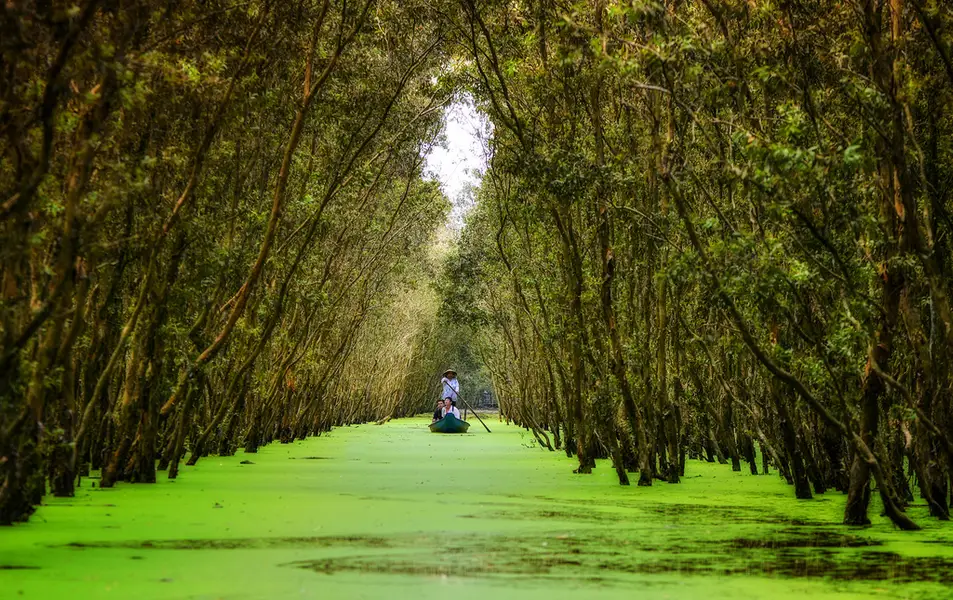
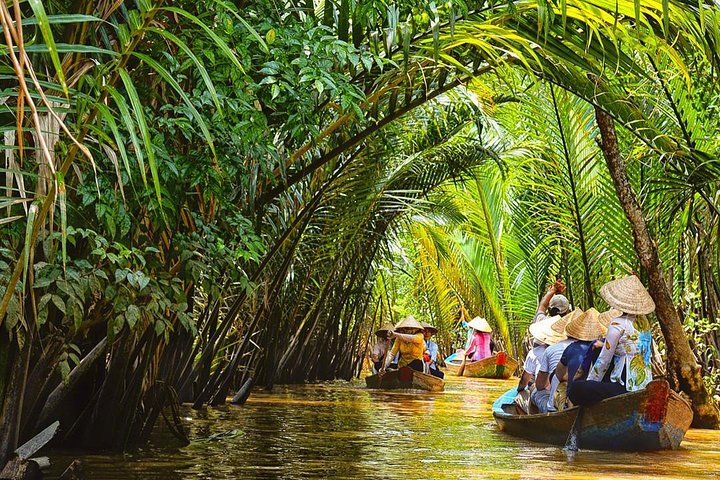
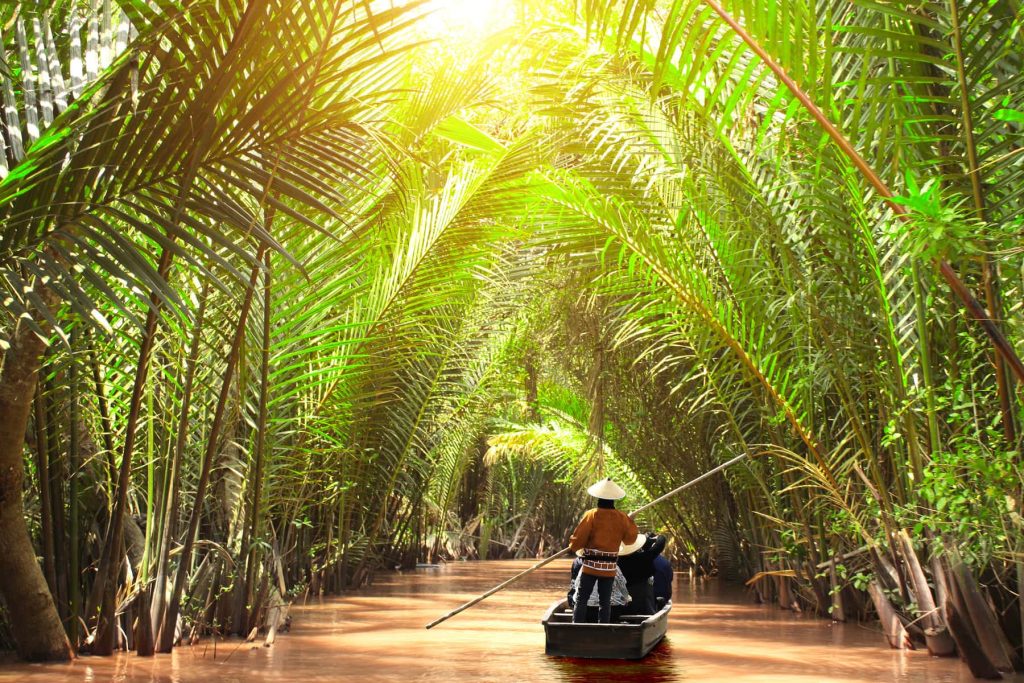
- Canal navigation: You will trade large transport boats for smaller, traditional sampans to weave through narrow, tree lined creeks. This allows you to drift through the “green veins” of the Delta, where you can see the dense, overhanging vegetation and the quiet, traditional homes perched along the water’s edge.
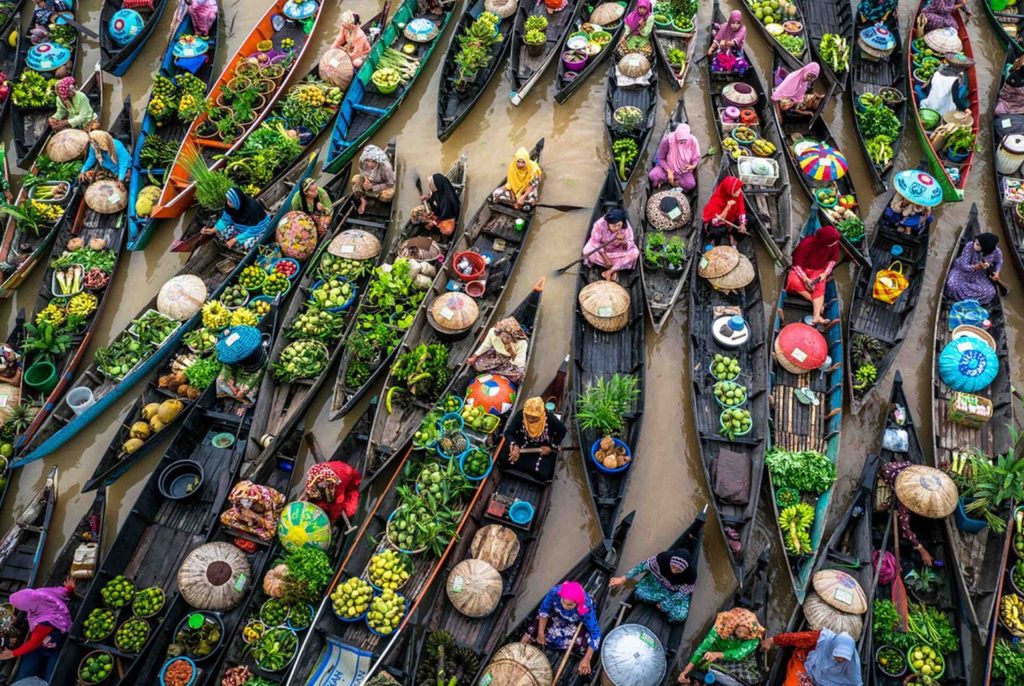
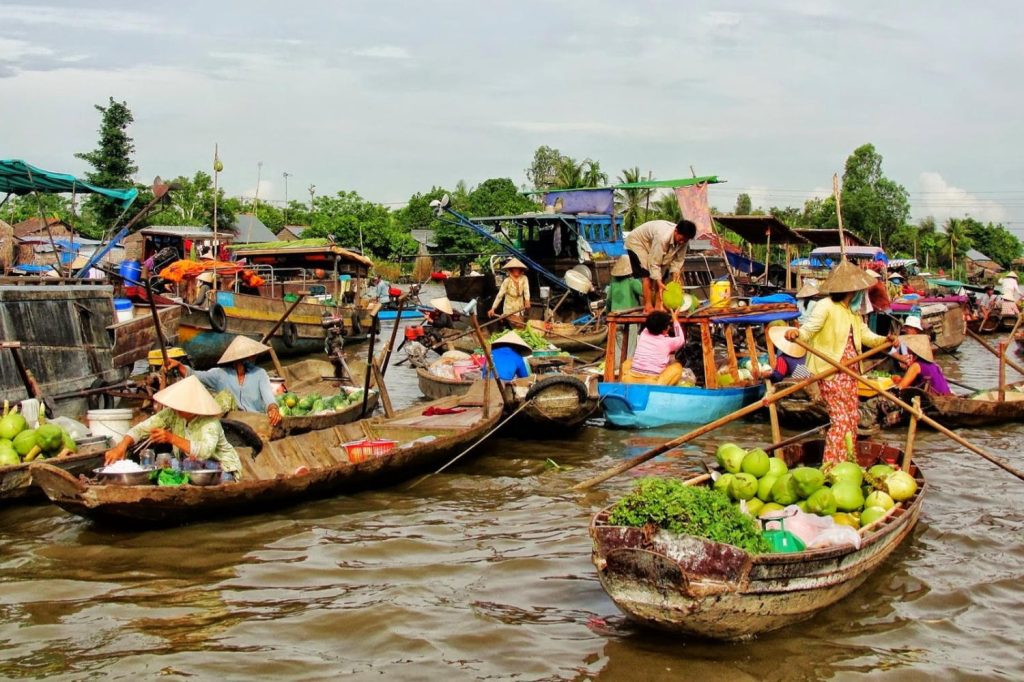
- Floating market access: Most tours prioritize an early morning visit to major trading hubs like Cai Rang. This is where you see the heart of the Delta’s economy large barges laden with mountains of fruit and vegetables and small breakfast boats serving steaming bowls of hủ tiếu (noodle soup) to locals starting their workday.
- Artisan & cottage industry visits: A key part of the experience is stepping off the boat to visit family run workshops. You will often see the step-by-step process behind local specialties, such as the molding of coconut candy, the delicate hand-stretching of rice paper, or the production of local handicrafts, providing a deeper look at the region’s economic backbone.
- Culinary immersion: No Mekong Delta river tour is complete without a taste of the region’s bounty. You can expect to sample seasonal tropical fruits freshly picked from nearby orchards, and enjoy a traditional lunch featuring local delicacies like elephant ear fish, spring rolls, or fresh river shrimp.
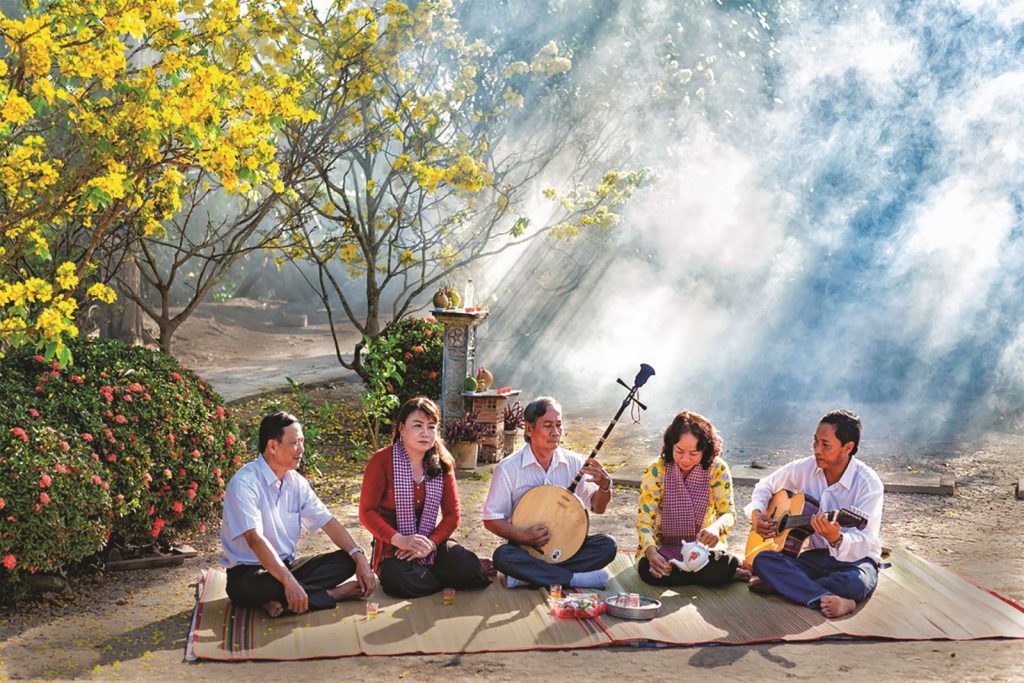
- Cultural performances: Many tours incorporate a session of Đờn ca tài tử, a form of traditional folk music that is a UNESCO recognized intangible cultural heritage of the South. Listening to these emotional, improvised melodies while sitting in a wooden house by the river is often a highlight for travelers.
- Island exploration: Tours frequently include stops at river islets. These are perfect spots for a light bicycle ride through quiet village paths, offering a chance to see local schools, lush fruit orchards and the peaceful, slow-paced life that characterizes the Delta’s rural communities.
The best places to experience the Mekong River and local life
Where you choose to anchor your Mekong Delta river tour defines the character of your journey. Because the region is a vast web of waterways, picking the right location is essential to getting the specific experience you are looking for whether it’s bustling commerce or quiet, rural solitude.
- My Tho & Ben Tre (The Gateway): Often the first stop for travelers, these provinces are the best choice for those seeking a Mekong Delta river tour that focuses on “coconut culture”. Here, you can easily navigate the narrow, arching canals shaded by dense palm groves. It is the ideal region for a quick, impactful immersion into the Delta’s greenery and traditional handicraft villages.
- Vinh Long (The Heart of Rural Life): If your goal is to disconnect, Vinh Long is unbeatable. Famous for its network of river islands like An Binh, this area is best suited for those who want to cycle through quiet orchards, stay in a traditional riverside homestay, and witness the unhurried pace of island life. It is arguably the most authentic location for a relaxed Mekong Delta river tour.
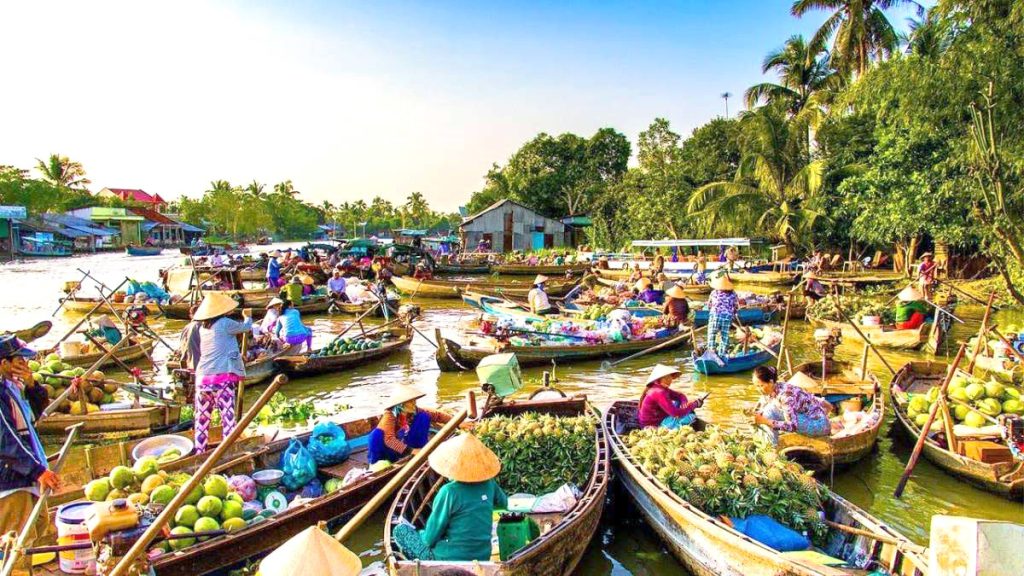
- Can Tho (The Cultural Hub): As the unofficial capital of the Delta, Can Tho is the most critical landmark on any itinerary. It provides the best infrastructure for visiting the iconic Cai Rang floating market, where you can see the sheer scale of river commerce at dawn. For travelers who want to balance comfort with the most significant “must see” landmarks, Can Tho is the essential home base.
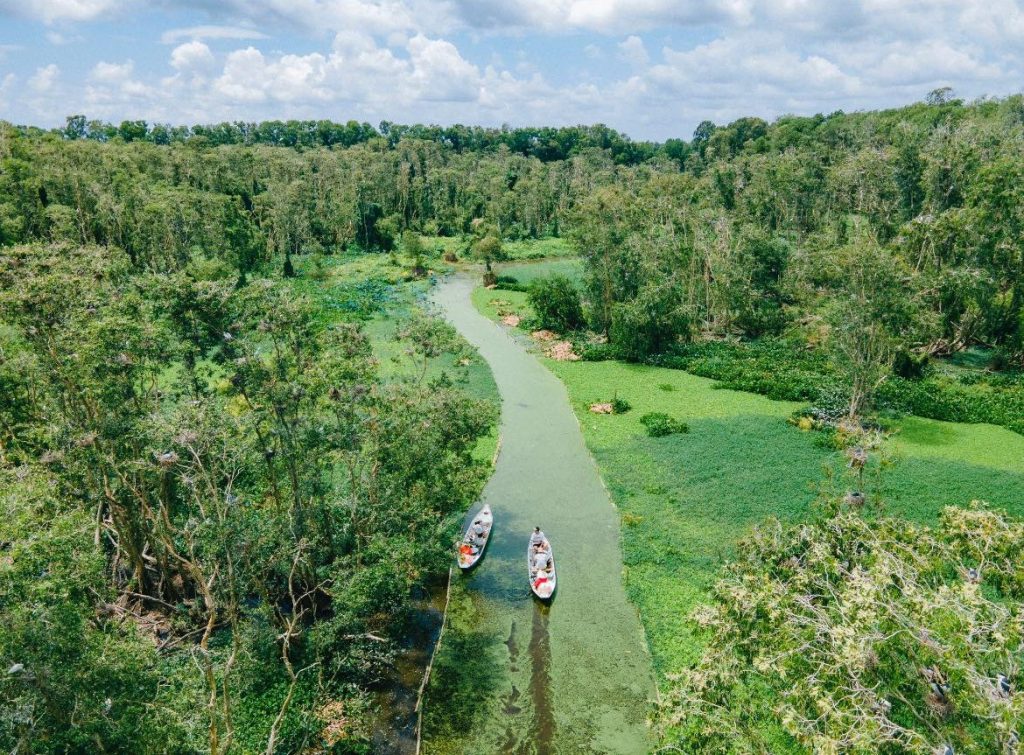
- Chau Doc (The Borderland Crossroads): For a Mekong Delta river tour that feels like an expedition, head to the far west near the Cambodian border. Chau Doc offers a unique cultural fusion of Khmer, Cham, and Vietnamese influences. You can explore the majestic Tra Su Cajuput Forest visit floating fish farms, or enjoy panoramic views from Sam Mountain. It’s a distinct, atmospheric experience that feels worlds away from the busy areas closer to Ho Chi Minh City.
- Soc Trang & Tra Vinh (The Cultural Hidden Gems): These provinces are the best kept secrets of the Delta. Less visited than Can Tho or Ben Tre, they are home to some of the most stunning, intricate Khmer pagodas in Vietnam. If you are looking for a Mekong Delta river tour that emphasizes religious architecture and local, non touristy rural landscapes, these southern provinces are your best choice.
Not sure which destination fits your travel style best? Whether you crave the bustling energy of Can Tho’s markets or the quiet solitude of a Vinh Long homestay, Lily’s Travel can help you pinpoint the perfect location. Let us help you plan a Mekong Delta river tour that captures exactly the kind of local life you want to see.
Day tours vs. overnight cruises: Which option is right for you?
Choosing between a day trip and an overnight cruise is a pivotal decision that will define the rhythm of your Mekong Delta river tour. To help you decide which approach aligns best with your travel style, here is a detailed comparison:
Read more: Full guide to Cu Chi Tunnels and Mekong Delta: Tour options & prices
| Feature | Day Tours | Overnight Cruises |
| Pace | Fast-paced, focused on key highlights. | Slow, immersive and relaxed. |
| Schedule | Fixed; dependent on road transport. | Flexible; integrated into the river flow. |
| Photography | Limited (often misses the “golden hours”). | Optimal (perfect for sunrise and sunset). |
| Depth | Surface level exposure to local sites. | Deep immersion into remote canals. |
| Comfort | High transit time by road. | High comfort; stay onboard the boat. |
| Ideal For | Time-constrained travelers. | Travelers seeking slow, soulful connection. |
Which experience suits your style?
Why choose a day tour? If your itinerary is packed and you only have one day to spare, a day tour is the most efficient way to see the Delta. It is a perfect Mekong Delta river tour solution for those who want to tick off the “must see” items, such as the Cai Rang floating market, without disrupting their accommodation plans in Ho Chi Minh City. While you will spend more time in a vehicle commuting, you gain the convenience of returning to the city by evening.
Why choose an overnight cruise? If you view your Mekong Delta river tour as a journey of discovery rather than a checklist, an overnight cruise is the superior choice. This option grants you access to those elusive, “magical” moments that day trippers never see: the misty stillness of the river at 5:00 AM, the authentic chatter of the markets before the crowds arrive, and the sunset glowing over the rice paddies. Sleeping on a boat allows you to venture deep into the remote, narrow canals that day trippers cannot reach, offering privacy and a profound sense of connection to the river’s culture.
What the experience is really like from a traveler’s perspective
If you are expecting a perfectly polished, tourist centric theme park experience, the Mekong Delta might surprise you. From the perspective of a traveler, a Mekong Delta river tour is a raw, sensory-rich journey that feels less like “sightseeing” and more like stepping into a living, breathing machine that has functioned the same way for centuries.
- A multisensory awakening: The first thing you notice is the soundscape. The hum of boat engines, the rhythmic slapping of water against wooden hulls, and the distant calls of vendors form a constant soundtrack. The air shifts too from the cool, damp mist of the early morning to the earthy, fertile scent of the river as the sun heats the surrounding fruit orchards.
- The beauty of the “unrefined”: As a traveler, you quickly realize that the beauty here isn’t found in manicured parks. It’s found in the “clutter” of the river: the colorful, weathered sampans piled high with dragon fruit, the intricate bamboo scaffolding of riverside homes, and the local artisans who don’t stop their work just because a camera is pointed at them. It’s an unscripted, honest glimpse into a life tethered to the tides.
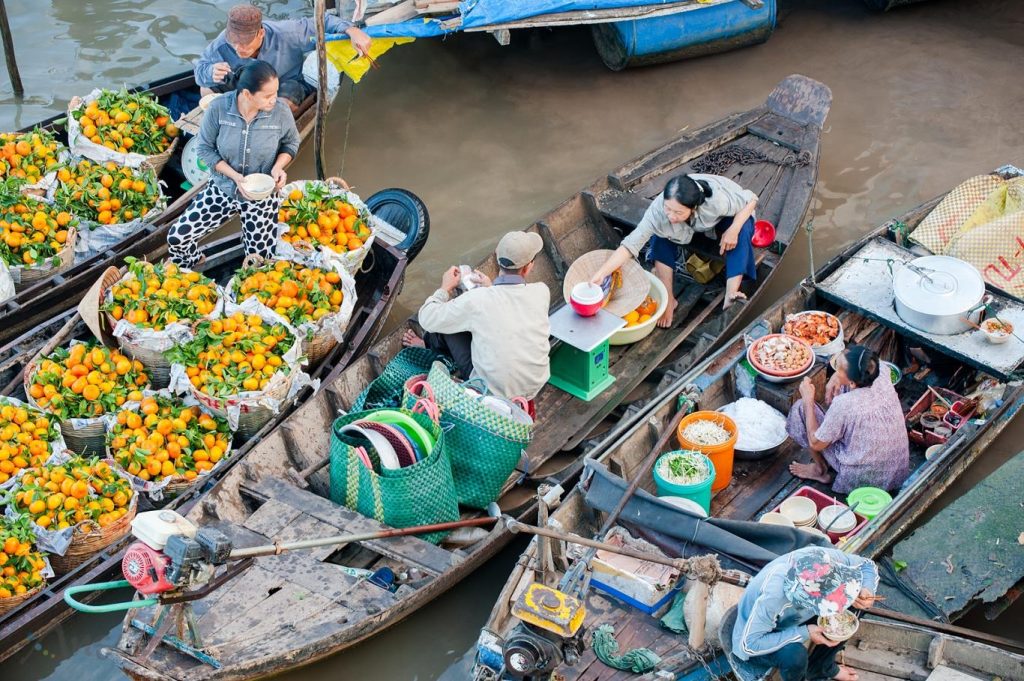
- A shift in perception of time: After a few hours on the water, your internal clock begins to sync with the river. You stop checking your phone and start watching the way the light catches the water hyacinths. You realize that the “slow” pace isn’t a delay, it’s the way life is meant to be lived here. Moving from a wider, motorized boat into a narrow, hand rowed sampan is usually the highlight; it’s quiet, intimate and feels like you have finally left the tourist map behind to discover something private.
- The emotional connection: The most lasting impression for many travelers isn’t a specific monument or landmark, it’s the hospitality. Whether it’s an artisan sharing how they process coconut candy or a local family offering a slice of jackfruit, these small, human interactions bridge the cultural gap. It can be a humbling experience to realize how much of their daily survival depends on the very river you are visiting.
Ready to experience the Delta through a new lens? At Lily’s Travel, we curate itineraries that focus on these authentic, “human” moments rather than just the tourist hotspots. We ensure your Mekong Delta river tour is as genuine and evocative as the stories you want to tell through your photography. Click here to view our tours and start planning your own journey!
Read more: Phu Quoc To Mekong Delta: The Ultimate Travel Guide
Costs, duration and the best time to take a Mekong Delta river tour
Planning a river tour requires balancing your budget schedule, and the region’s distinct tropical seasons. While the Delta is a year-round destination, understanding these logistical pillars will help you craft a more rewarding experience.
Duration: How long should you stay?
- Day trips (8-10 hours): Ideal for those with limited time. You get a condensed highlights reel, usually focusing on one or two provinces (like Ben Tre or My Tho).
- 2 day, 1 night cruises: The “sweet spot” for most travelers. This duration allows you to visit floating markets at dawn, explore remote islets, and enjoy the transition from afternoon to evening on the water.
- 3+ day expeditions: Perfect for those looking to reach deeper regions like Chau Doc or the remote mangrove forests near the border. This allows for a much slower, more contemplative pace.
Costs: What to expect
The cost of a Mekong Delta river tour varies significantly based on the level of luxury and personalization:
- Budget friendly (group tours): Ranging from $25 to $50 per person for day tours. These are excellent for solo travelers or those looking for an affordable, social way to see the main sights.
- Mid range (private tours): Ranging from $80 to $150 per person/day. These offer more privacy, flexibility in your itinerary, and personalized service.
- Luxury (overnight cruises): Ranging from $200 to $500+ per person. These include high end cabin accommodations, gourmet meals and access to exclusive routes, providing a premium, stress-free experience.
The best time to visit
The Mekong Delta has two primary seasons, both offering unique opportunities for photography and travel:
- The Dry Season (December to May): This is widely considered the best time for a Mekong delta river tour. The weather is cool and dry, making it comfortable for cycling and outdoor exploration. The sky is generally clear, providing excellent light for photography.
- The wet season (June to November): While there is more rain, the landscape is at its most vibrant. The orchards are lush, the water levels are high, and the fruit season is in full swing. If you don’t mind a brief afternoon shower, the wet season offers a greener, more “alive” version of the Delta.
Common mistakes travelers make when booking a river tour
Even with the best intentions, it is easy to fall into traps that can turn a dream Mekong Delta river tour into a stressful logistical exercise. By avoiding these common pitfalls, you can ensure your experience is as seamless and authentic as you imagined.
- Underestimating travel time from Ho Chi Minh city: Many travelers assume the Delta is “just outside” the city. In reality, reaching the heart of the river region like Can Tho – takes several hours by road. Booking a tour that demands an overly ambitious itinerary (e.g., trying to see three different provinces in one day) will leave you spending more time sitting in a van than actually enjoying the water.
- Prioritizing price over quality (The “tourist trap” factor): Extremely low-cost group tours often exist to funnel travelers into “commission-only” stops. You might find yourself spending hours in souvenir shops or forced lunch stops rather than exploring authentic canal life. Always check the itinerary details: if it seems too cheap, it usually means your time is being traded for commercial stops.
- Missing the “golden hours”: The Delta is most magical at sunrise and sunset. A common mistake is booking a tour that starts mid-morning, causing you to miss the peak activity of the floating markets or the beautiful transition of light in the evening. If you want the “real” experience, aim for early starts even if it means a shorter night’s sleep.
- Assuming all “floating markets” are the same: Not all floating markets are created equal. Some are massive wholesale hubs, while others are small and disappearing. If you book without checking which specific market you are visiting, you may end up at a site that has little to no activity. Always verify that your tour focuses on active, functioning markets like Cai Rang or Phong Dien.
- Ignoring the need for small sampans: Large tour boats are great for comfort, but they cannot enter the narrow, winding creeks where the true charm of the Delta lives. Ensure your Mekong Delta river tour explicitly includes a “sampan ride” through the smaller canals. Without this, you will stay on the main, wider river branches and miss the intimate, shaded scenery that defines the Delta.
- Not communicating dietary needs or expectations: Because the Delta is rural, it is not always easy to accommodate last-minute requests. If you have specific dietary requirements (vegetarian, allergies) or a particular interest (photography, birdwatching, cycling), communicate this to your operator before you book. A generic tour may not cater to these specific needs.
The Mekong Delta is more than just a destination; it is a profound, sensory experience that lingers long after you leave its shores. By choosing a journey that aligns with your personal travel style, whether that is the swift efficiency of a day trip or the immersive, quiet luxury of an overnight cruise you unlock the door to Vietnam’s most authentic heartland.
Don’t let another day pass dreaming of the “Nine Dragons.” Whether you are ready to navigate the vibrant morning chaos of the floating markets or yearn for the meditative stillness of a hidden, palm lined canal, the river is waiting to share its stories with you.