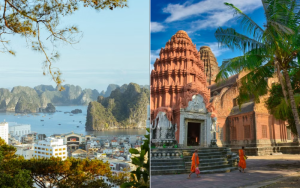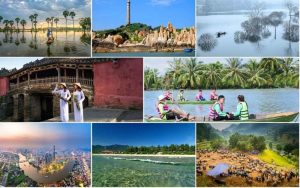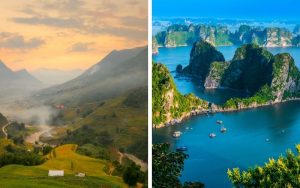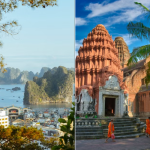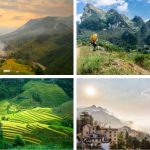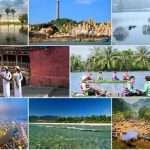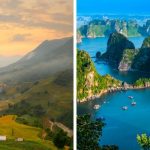



Do you want to travel to the Vietnam or Philippines? It’s not just about choosing a destination, but about choosing the travel experience you truly want: culture, cuisine, and exploration in Vietnam, or beaches, relaxation, and scuba diving in the Philippines. This article will help you in reviewing and simplifying your decision.
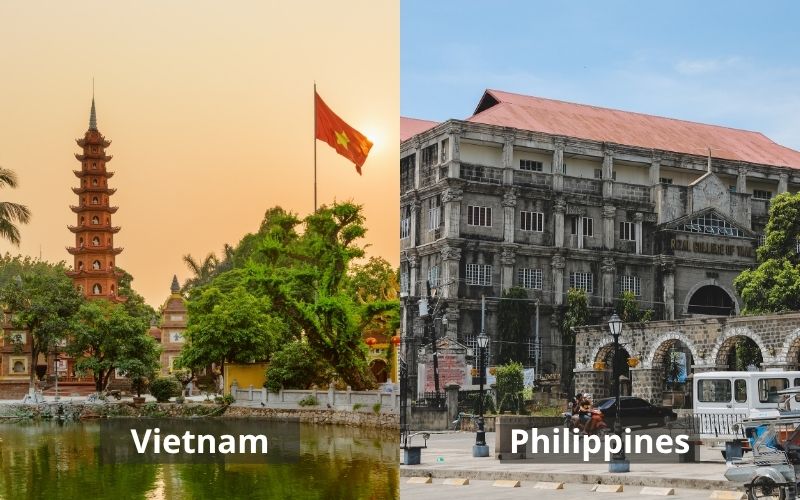
The cost reality – Is Vietnam or the Philippines cheaper in 2026?
Overall, Vietnam or Philippines are reasonably priced Southeast Asian destinations, but the reality in 2026 shows that Vietnam will still be significantly cheaper, especially in terms of food, transportation, and tours. Specifically:
| Category | Vietnam | Philippines |
| Food & Drinks | $10–20/day (street food, local restaurants) | $15–30/day |
| Accommodation | $15–40/night (3-star, central location) | $25–60/night |
| Domestic Transportation | $10–50 | $40–120 |
| Tours & Activities | $20–80 | $50–150 |
| Total Daily Budget | ~$30–70 | ~$60–120 |
Overall, the cost of living in the Philippines is currently about 7% higher than in Vietnam, while the difference in food and dining alone can be as much as 15–20%.
The primary cause is that the Philippines is more dependent on restaurants and imported products, which drives up prices considerably, whereas Vietnam has a thriving, affordable, and easily accessible street food system.
Furthermore, Vietnam provides more affordable lodging and transportation. Travelers may find affordable, high-quality hotels in the city center, and there are several ways to go from one place to another, including cheap flights, buses, and trains.
In contrast, in the Philippines, the archipelago’s geography means travel is almost entirely dependent on domestic flights or high-speed ferries, significantly increasing overall costs, especially when traveling to popular destinations like Palawan or Boracay.
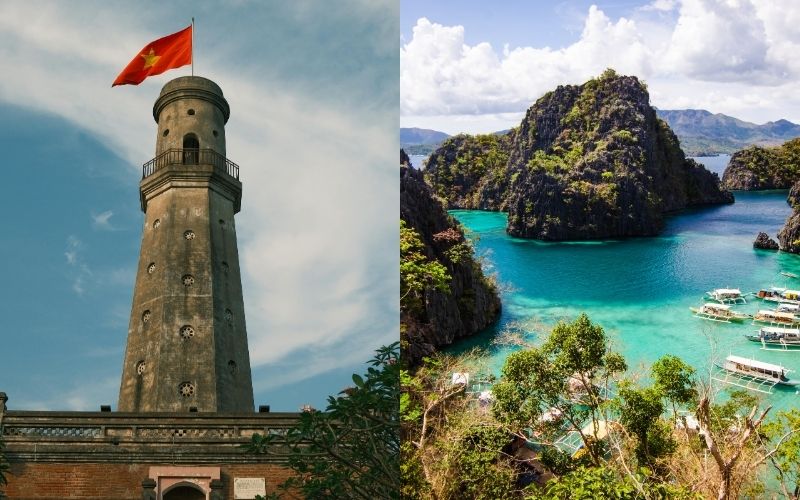
Travel experience comparison: Vietnam or the Philippines?
When choosing a place to travel Vietnam or Philippines, the difference lies not only in cost but also in the core experience. Below is a detailed comparison of key factors to help you visualize the difference:
Climate & weather
To decide come to travel to Vietnam or Philippines based on weather, you need to know the climate characteristics of each country:
| Criteria | Vietnam | Philippines |
| Climate structure | Highly diverse by region | Two distinct seasons |
| Seasonal pattern | North: 4 seasons / Central: dry & rainy / South: dry & rainy | Dry (Dec–May) & Rainy (Jun–Nov) |
| Best travel window | Nov–Apr (driest across most regions) | Dec–May (ideal for beaches & diving) |
| Temperature | Varies by region (can be cool in the north) | Stable: ~25.5–28.3°C |
| Weather risks | Regional floods, especially Central Vietnam | Typhoons during rainy season |
Vietnam has a more complex climate system, Northern Vietnam has four distinct seasons: spring (March-April), summer (May-August), autumn (September-November), and winter (December-February). Central Vietnam has a rainy season from September to December and a dry season from January to August. Southern Vietnam, has a two-season cycle: a dry season and a rainy season, with the dry season lasting from December to April. The ideal months to travel to Vietnam are often November through April because most of the country is dry and easily accessible.
The Philippines has two seasons: the dry season, which runs from December to May, ideal for beach activities such as scuba diving, island hopping, and travel to islands like Palawan. Coastal temperatures year-round range from approximately 25.5°C to 28.3°C, with relatively high humidity, especially in September. However, during the rainy season, which lasts from June to November, typhoons and heavy rains can affect your travel plans.
Transportation & accessibility
When comparing Vietnam or Philippines, the transportation system is a major differentiating factor in terms of experience and budget:
| Criteria | Vietnam | Philippines |
| Geography | Continuous mainland | Archipelago (7,000+ islands) |
| International gateways | Hanoi, Ho Chi Minh City, Da Nang | Manila, Cebu |
| Domestic transport | Flights, trains, buses, motorbikes | Flights, ferries, local transport |
| Travel flexibility | High (multi-options, easy routing) | Lower (depends on flights/boats) |
| Accessibility to remote areas | Relatively easy | Limited, depends on each island |
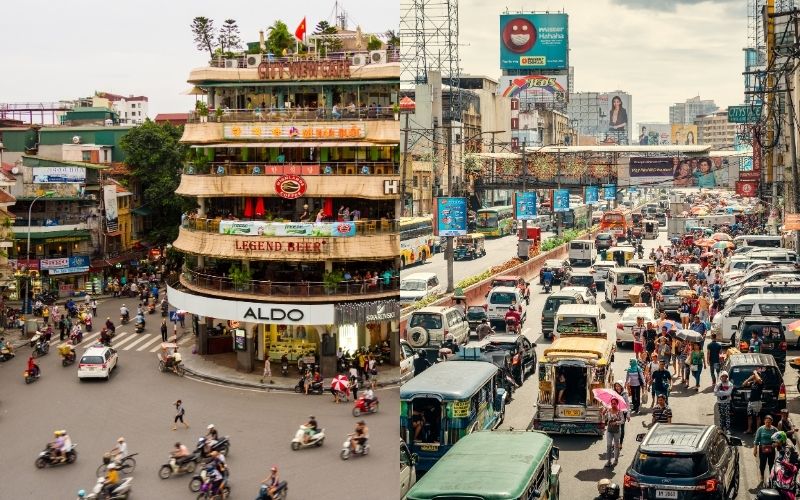
Vietnam features an easy-to-use transportation system that offers a variety of options and makes traveling between locations simple. It boasts major international airports such as Noi Bai International Airport, Tan Son Nhat International Airport, and Da Nang International Airport. Furthermore, you can easily travel between tourist destinations by road, rail, and bus without needing to fly, saving considerable costs.
In contrast, the Philippines relies heavily on ferries and air travel. Ninoy Aquino International Airport and Mactan-Cebu International Airport are important transportation hubs, and travel between tourist areas often requires multiple flights or ferries, increasing costs and time.
Accommodation
When choosing Vietnam or Philippines, accommodation experience is equally important, it affects your feelings during time traveling in Vietnam:
| Criteria | Vietnam | Philippines |
| Variety | Very high | High |
| Budget options | Widely available | More limited |
| Luxury resorts | Rapidly developing | Strong advantage |
| Unique experience | Homestays, local culture | Beachfront resorts |
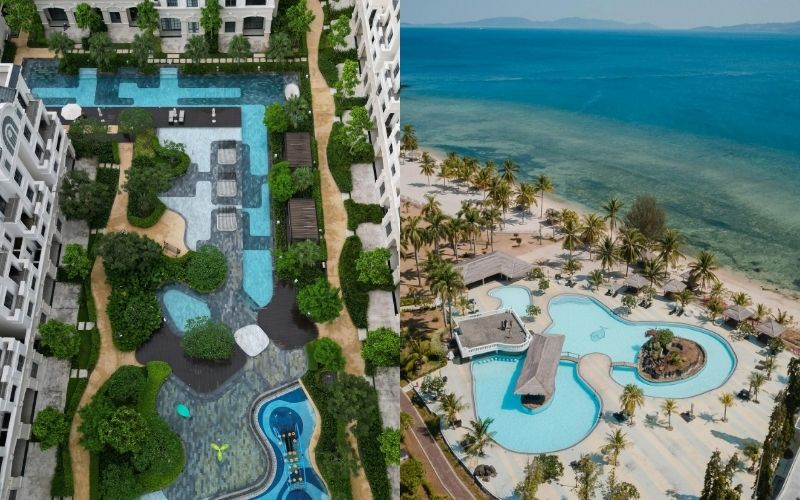
Vietnam provides a wide range of accommodation choices, from tiny homestays in Sapa to coastal resorts in Nha Trang or Phu Quoc. Travelers can easily find solutions that meet their budget while still ensuring quality and enjoying local culture.
Meanwhile, the Philippines is distinguished by its high-end beachfront resorts, offering a distinct vacation experience, especially on popular islands. However, outside of the main tourist areas, accommodation options can be more limited and sometimes require cash payments in more remote regions. This makes the Philippines more suitable for travelers prioritizing relaxation, while Vietnam offers more flexibility for a wider range of travel styles.
Natural landscapes
When it goes to landscapes, selecting Vietnam or Philippines is essentially choosing between tropical islands and diverse terrains:
| Criteria | Vietnam | Philippines |
| Landscape type | Diverse (mountains, caves, beaches) | Island-based, marine-focused |
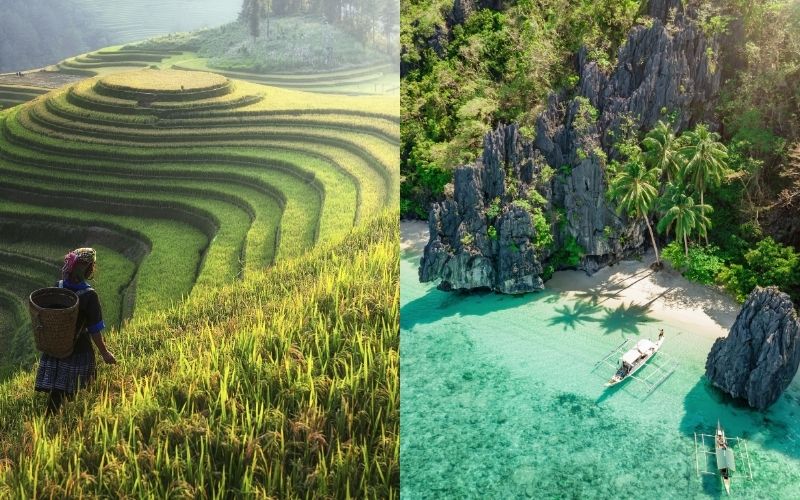
| Signature scenery | Limestone karsts, rice terraces | White-sand beaches, coral reefs |
| Best for | Trekking, nature diversity | Island hopping, diving |
| Iconic destinations | Ha Long Bay, Sapa, Phong Nha | Boracay, El Nido, Coron |
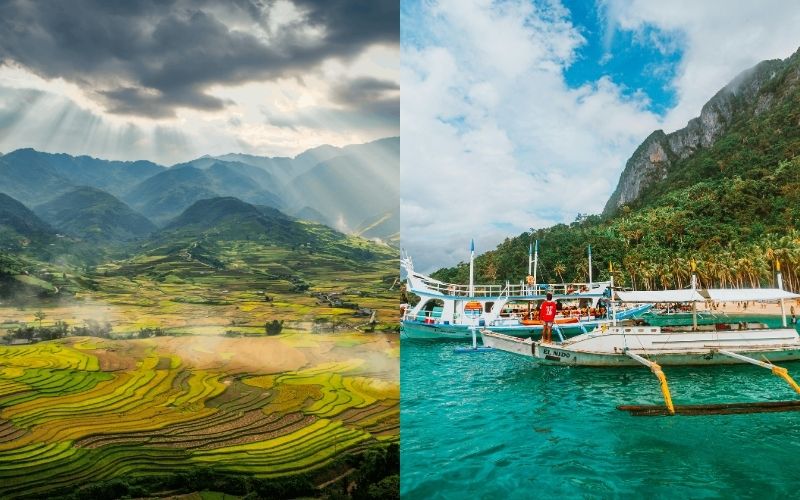
Vietnam impresses with its diverse topography. Ha Long Bay stands out with its limestone mountains and turquoise waters, Sapa is captivating with its terraced rice paddies and trekking opportunities, and cave systems like Son Doong Cave are world-class. Additionally, beaches in Phu Quoc and Nha Trang offer a balanced combination of relaxation and exploration.
Meanwhile, the Philippines is famous for its marine and island landscapes. El Nido and Coron are the best places for swimming and island hopping, while Boracay attracts tourists with its white sand beaches and exciting nightlife. The country’s strength in unique tropical scenery is further enhanced by landmarks such as Kawasan Falls and the Chocolate Hills.
Culture & history
Besides nature, culture and history are key differentiating factors when choosing between Vietnam or Philippines.
| Criteria | Vietnam | Philippines |
| Cultural depth | Ancient, continuous history | Mixed colonial influences |
| Historical sites | Temples, citadels, ancient towns | Churches, colonial cities |
| Cultural identity | Strong local traditions | Fusion of cultures |
| Best for | Cultural immersion | Colonial & modern blend |
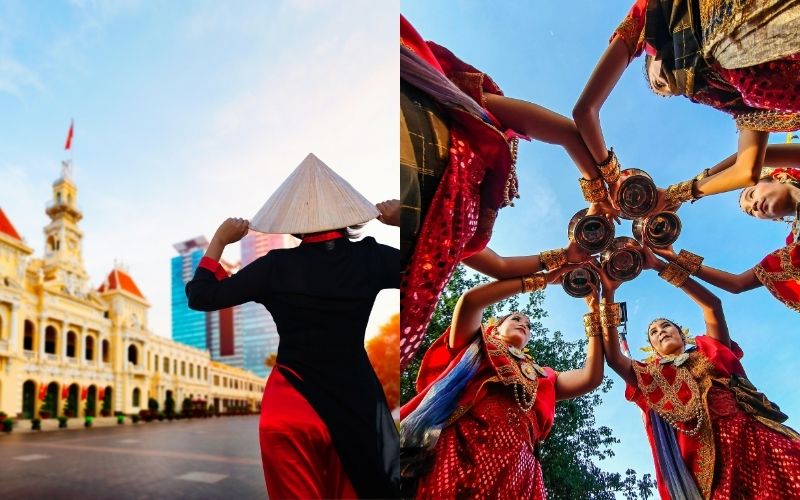
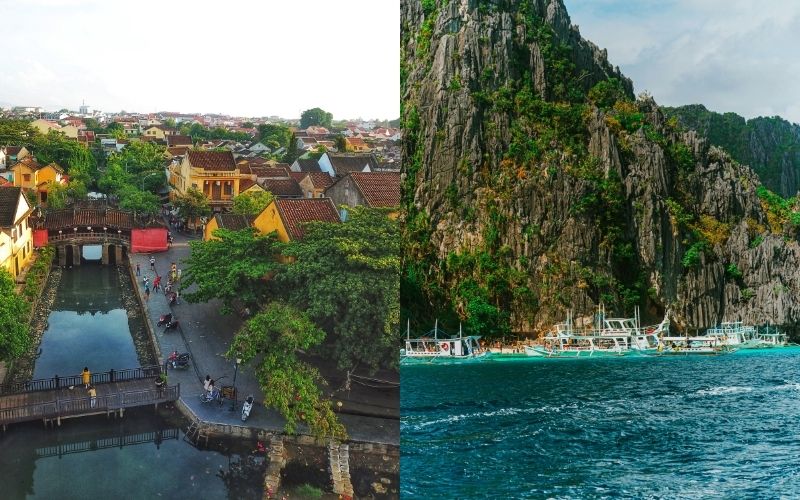
Vietnam has a deeper historical dimension and a more distinct cultural identity. Places like Hoi An Ancient Town, Hue Imperial City, and Hanoi Old Quarter reflect thousands of years of history and cultural exchange. Furthermore, its rural villages and local life offer authentic experiences that are less commercialized.
The Philippines boasts a blended cultural identity, combining indigenous traditions with influences from Spain and the United States. Sites like Intramuros and San Agustin Church clearly reflect colonial history, while Rizal Park is steeped in modern history. Festivals such as the Sinulog Festival showcase a vibrant cultural spirit.
Travel activities
Whether you want to concentrate on discovering islands and beaches or see a variety of landscapes will determine whether you choose Vietnam or the Philippines.
| Criteria | Vietnam | Philippines |
| Activity range | Very diverse | Marine-focused |
| Adventure | Trekking, caves, motorbike | Diving, island hopping |
| Cultural activities | High | Moderate |
| Nightlife | Growing | Strong in islands & cities |
Vietnam brings a more diverse range of activities. You can kayak in Ha Long Bay, explore the caves in Son Doong Cave, trek in Sapa, or participate in cultural activities in Hoi An. Major cities like Ho Chi Minh City also offer a modern nightlife experience.
Meanwhile, the Philippines is brilliant at marine activities and recreation. Visitors can go scuba diving in El Nido, swim with whale sharks in Oslob, or trek to Taal Volcano. Additionally, the nightlife in Manila and Cebu City is vibrant.
Food scene
Cuisine is one of the “emotional deciding factors” when choosing between Vietnam or Philippines, especially if you enjoy exploring cultures through food.
| Criteria | Vietnam | Philippines |
| Flavor profile | Fresh, herbal, balanced | Rich, savory, slightly heavy |
| Core ingredients | Herbs, rice, vegetables | Meat, seafood, rice |
| Street food culture | Very strong | Limited |
| International appeal | High | Moderate |
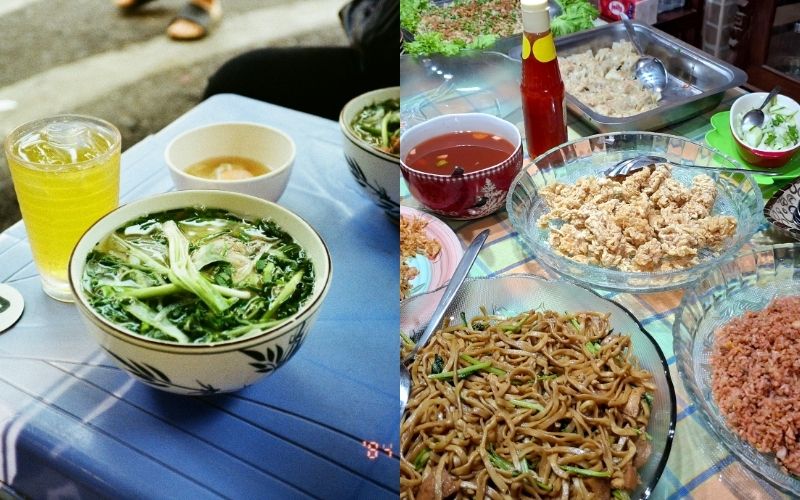
Vietnam stands out with its balanced and more accessible cuisine. Dishes like pho, banh mi, and mi Quang harmoniously combine herbs, broth, and fresh ingredients. The thriving street food culture in Hanoi and Ho Chi Minh City allows tourists to easily experience local cuisine at a low cost.
Meanwhile, the Philippines offers a more flavorful and multicultural culinary style. Dishes like adobo, sinigang, and lechon are often rich in flavor, emphasizing meat and sauces. Additionally, dishes like halo-halo offer a distinctive dessert experience. However, street food in the Philippines is less prevalent, so culinary experiences are often associated with restaurants or tourist areas.
Can you visit both in one trip?
If you still do not know whether you should choose Vietnam or Philippines, you can choose a trip that includes both countries. In about two weeks, you can absolutely combine both countries into one reasonable trip, as long as you know how to plan your itinerary, optimize routes and travel time as much as possible. Check out the following suggested itinerary:
Suggested 14-day combo plan
Below is a 14-day itinerary designed to blend cultural and natural experiences in Vietnam with a relaxing beach and island getaway in the Philippines, helping you make the most of your time while maintaining a relaxed pace:
Day 1-2: Hanoi and Ninh Binh
The first two days of your Vietnam – Philippines trip will focus on the unique culture, history, and landscapes of Northern Vietnam, starting in Hanoi.
In Hanoi, you should spend time exploring the city center, including the Hanoi Old Quarter and Hoan Kiem Lake, ideal for walking, enjoying street food, and trying egg coffee. For deeper knowledge about history and culture, you can go to sites like the Ho Chi Minh Mausoleum, the Temple of Literature, and Hoa Lo Prison, helping you get a clear picture of Vietnam’s cultural depth.
On the second day, it takes about 2 hours to travel to Ninh Binh, approximately 90-100 km from Hanoi. A signature to discover is Trang An, a World Heritage site, offering a boat travel through its system of caves and temples. Additionally, Tam Coc brings a “Halong Bay on land” experience with the Ngo Dong River winding through limestone mountains.
Alternatively, if you want an overall view, you can climb Mua Cave to get a complete view from the top of Ngoa Long Mountain, and discover other signature locations such as Bai Dinh Pagoda, Hoa Lu Ancient Capital, and Am Tien Cave (Tuyet Tinh Coc) for a deeper knowledge of history and a peaceful experience.
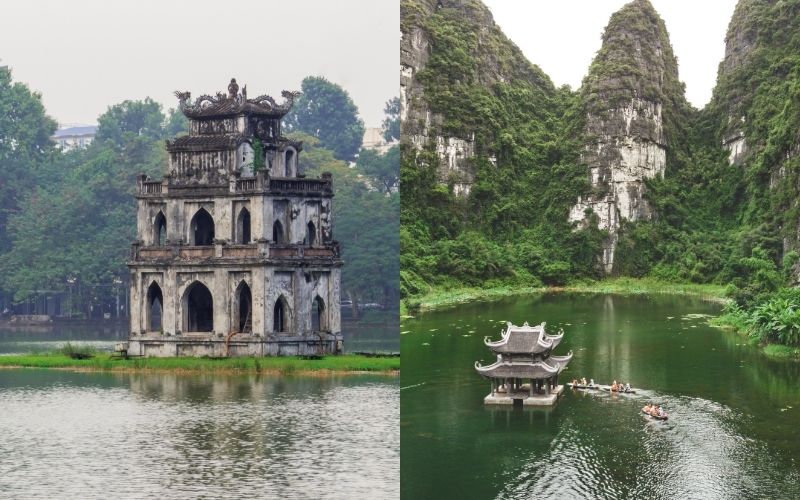
Discover the full cultural heritage of the capital with the Hanoi tour and Ninh Binh tour travel offered by Lily’s Travel, the ideal choice to start your Northern Vietnam journey in a relaxed and fulfilling way.
Day 3-4: Ha Long Bay
Leaving the mainland, the journey truly begins when you arrive at Ha Long Bay. This is one of those places that would be a shame to miss if you only visited it for a day, so the most popular option is a 2-day, 1-night cruise to fully enjoy the bay’s scenery.
In the itinerary, you’ll have the chance to kayak through tranquil areas like Luon Cave, explore large caves like Sung Sot Cave, or simply relax on the deck and watch the sunset. The pace here is quite slow, perfect for a break along the way. If you prefer a less crowded experience, Lan Ha Bay is often a good alternative with a quieter atmosphere but similar scenery.
After your bay trip, you return to Hanoi to prepare for the next leg of your journey.
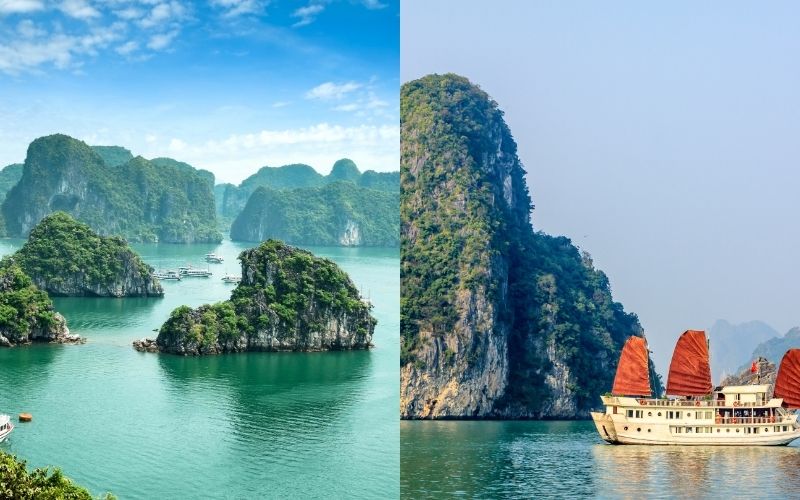
Enjoy the natural wonders on quality Ha Long Bay 2 days 1 night cruise tours from Lily’s Travel, offering a relaxing and memorable vacation experience on the bay.
Day 5-6: Sapa
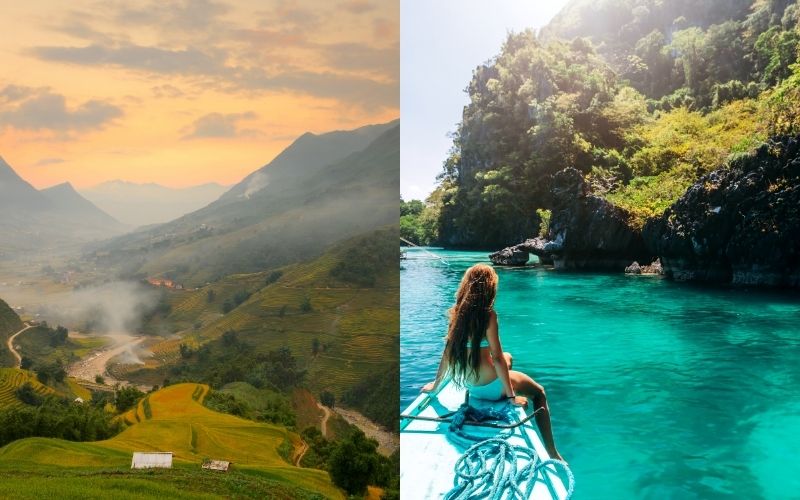
From Hanoi, you travel to Sapa, one of the most distinctly “experiential” destinations in Northern Vietnam. The air is cooler, and the expansive landscape with terraced rice fields and mountains creates a completely different feeling compared to the previous days.
The main activity here is trekking through villages like Lao Chai and Ta Van, where you can not only admire the scenery but also interact directly with the Hmong and Red Dao people and learn about local life. If you have time, experiencing a homestay will help you better appreciate the cultural differences.
In favorable weather conditions, you can take the cable car up to Fansipan to see the panoramic view of the Hoang Lien Son mountain range from above. This is often a scenic “highlight” on a Northern Vietnam trip.
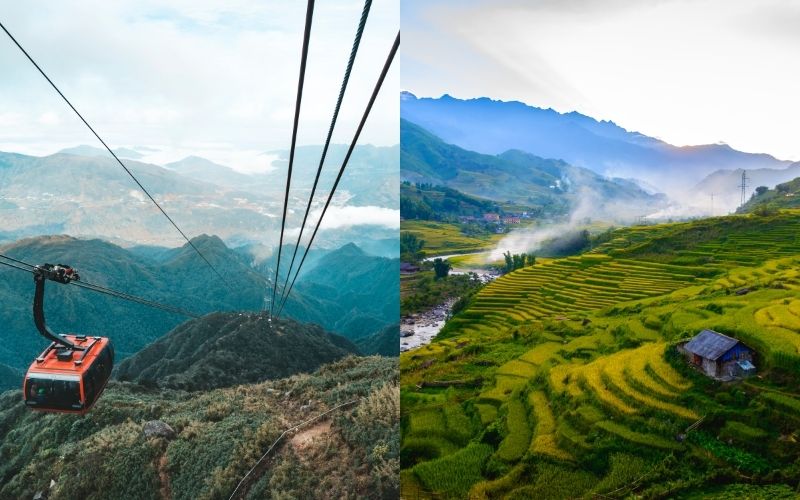
Experience trekking, terraced rice fields, and local life on Sapa tours optimally designed by Lily’s Travel, helping you fully explore the northern mountainous region.
Day 7: Back to Hanoi, fly to Philippines
From Sapa, you return to Hanoi to prepare for your flight to Manila or Cebu City, depending on your next destination (usually Palawan or Boracay). To avoid rushing, you should choose a flight in the afternoon or evening.
Day 8-11: Palawan
After arriving in the Philippines, the itinerary shifts entirely to island experiences, and Palawan is the ideal starting point. You can take a domestic flight to El Nido or Coron, depending on your preference.
In El Nido, the highlight is island hopping with tours A, B, C, and D, taking you past turquoise lagoons, pristine beaches, and distinctive limestone cliffs. Meanwhile, Coron is famous for its crystal-clear waters, saltwater lakes like Kayangan Lake, and shipwreck diving spots for those who enjoy diving.
The pace in Palawan is quite slow, mainly revolving around swimming, snorkeling, and relaxation. After spending a lot of time in Vietnam, it is the ideal time to relax and notice the differences between Vietnam and the Philippines.
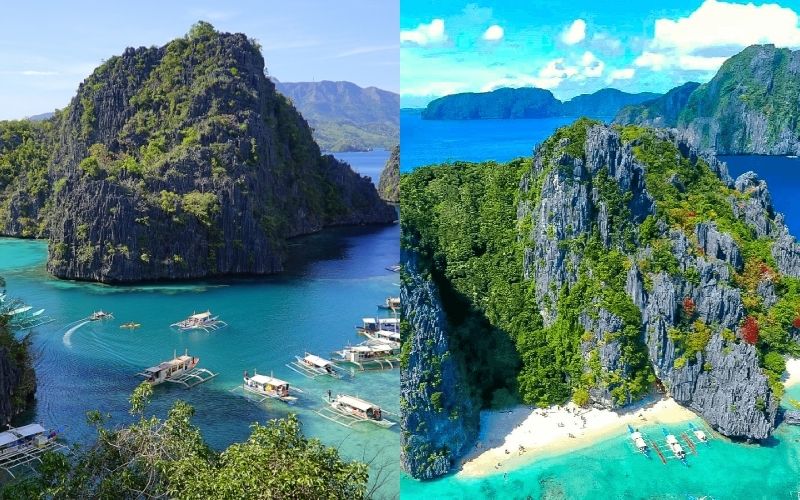
Day 12-13: Boracay
From Palawan, you can fly to Boracay, the most famous island in the Philippines, known for its fine white sand beaches and crystal-clear waters.
White Beach is the main hub, where you can swim, participate in activities like parasailing and paddleboarding, or simply relax. The sunset in Boracay in the afternoon is one of the most memorable experiences, while the area comes alive in the evening with beachfront restaurants and bars.
Compared to Palawan, Boracay has a more distinctly resort feel, making it the perfect place to end your trip with truly relaxing days.
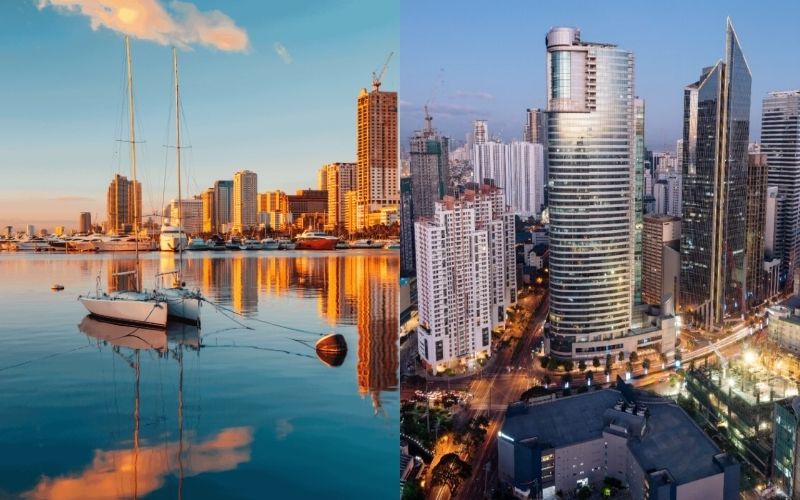
Day 14: Manila
You will fly back to Manila to prepare for your international flight on your last day in the trip. If you have time, you can travel to Intramuros, an old town with a strong Spanish influence, or Rizal Park to learn more about Philippine history. However, for most tourists, this is mainly a day for rest and travel.
Budget considerations
With a 14-day itinerary combining Vietnam and the Philippines, the budget will be spent heavily on how you travel between places and your level of knowledge (budget or mid-range). Below is a realistic estimate based on the recommend itinerary:
| Category | Estimated cost (14 days) |
| International flight | $500 – $900 |
| Vietnam (7 days) | $250 – $400 |
| Flight Vietnam → Philippines | $80 – $150 |
| Philippines (7 days) | $400 – $700 |
A 7-day trip to Vietnam has cost relatively little. You can expect to spend about $30–$60 per day on hotels, food, and transportation in places like Hanoi, Ninh Binh, Sapa, and Ha Long Bay (including mid-range cruise tours).
And a 7-day trip to the Philippines is generally pricier. Places to come, like Palawan and Boracay can average $60–$120 per day due to higher room rates, island hopping tours, and domestic flights. Travel between islands (Palawan → Boracay → Manila) also significantly increases the budget.
You have to know that flights from Vietnam to the Philippines and domestic flights within the Philippines usually account for a large cost of unexpected costs. That’s the reason you should book early, and choosing convenient flight times can save you considerable money.
Overall, this 14-day trip isn’t a “super budget” option, but in return you get a well-balanced experience, exploring the depths of Vietnam and half relaxing on the beaches and islands of the Philippines.
Final decision guide – Vietnam or the Philippines?
After all the comparisons, the ultimate goal of your trip will determine whether you choose Vietnam or Philippines. Instead of “better or worse,” it’s clear that these two countries suit two very different travel styles.
Choose Vietnam if you want deep culture & food
You should choose Vietnam if you prioritize an in-depth journey that combines culture, history, and cuisine. In Vietnam, you can experience many different things in one trip.
Vietnam’s biggest strength lies in its diversity and reasonable cost. The cuisine is rich with delicious dishes at affordable prices, and the convenient transportation system allows for flexible travel between locations via buses, trains, and coaches without incurring excessive costs. This is a suitable choice if you want to explore extensively, travel for extended periods, and truly understand the destination rather than just relaxing.
Choose the Philippines if you want paradise beaches & diving
Conversely, the Philippines is an ideal choice if you’re looking for beautiful beaches and an authentic island experience.
The style of travel in the Philippines typically focuses on relaxation, island hopping, and enjoying the natural surroundings. While the cost is higher and transportation between locations is more complex, the experience is well worth the money if you prioritize beautiful beaches and want a relaxing vacation.
Choosing between Vietnam or Philippines relates to the experience you’re looking for. If you want a trip rich in culture, cuisine, and diverse landscapes, Vietnam is the best choice. And to make that trip easier and more fulfilling, partner with Lily’s Travel to create an ideal itinerary, helping you connect with local experiences that truly embody the spirit of a memorable journey.