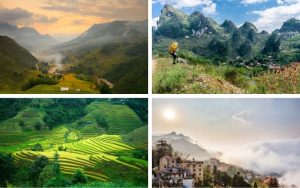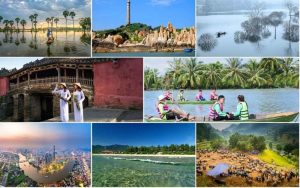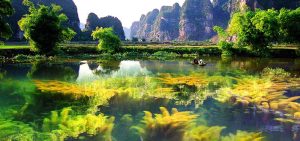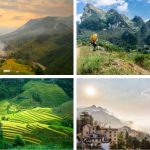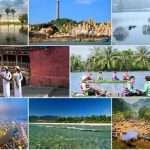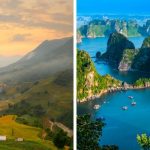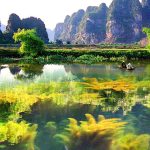



Looking for the ultimate Mekong Delta photos to capture the soul of Southern Vietnam? From the iconic chaos of floating markets to the tranquil, emerald-green horizon of endless rice paddies, the Mekong Delta is a photographer’s dreamscape waiting to be explored. This region offers a rare blend of water bound life, rich agricultural heritage that few other destinations can match. In this guide, we reveal the most stunning, hidden spots for snapping your own unforgettable Mekong Delta photos, along with professional tips on how to catch the perfect light and document the authentic, floating lifestyle of one of Southeast Asia’s most photogenic corners.
What does the Mekong Delta really look like?
If you are hunting for the perfect Mekong delta photos, it helps to know that the landscape is far more dynamic than a single image can convey. To capture the best pictures of Mekong delta scenery, you need to look past the surface and understand its three distinct “personalities.”
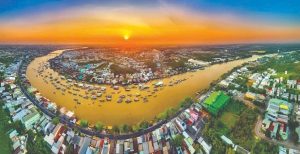
- The labyrinth of waterways: At its core, the Delta is a fluid network. Visually, it looks like a complex web of brown, silt-heavy rivers and deep green canals. The most striking Mekong delta photos often focus on the contrast between these dark water paths and the vibrant, lush vegetation lining the banks.
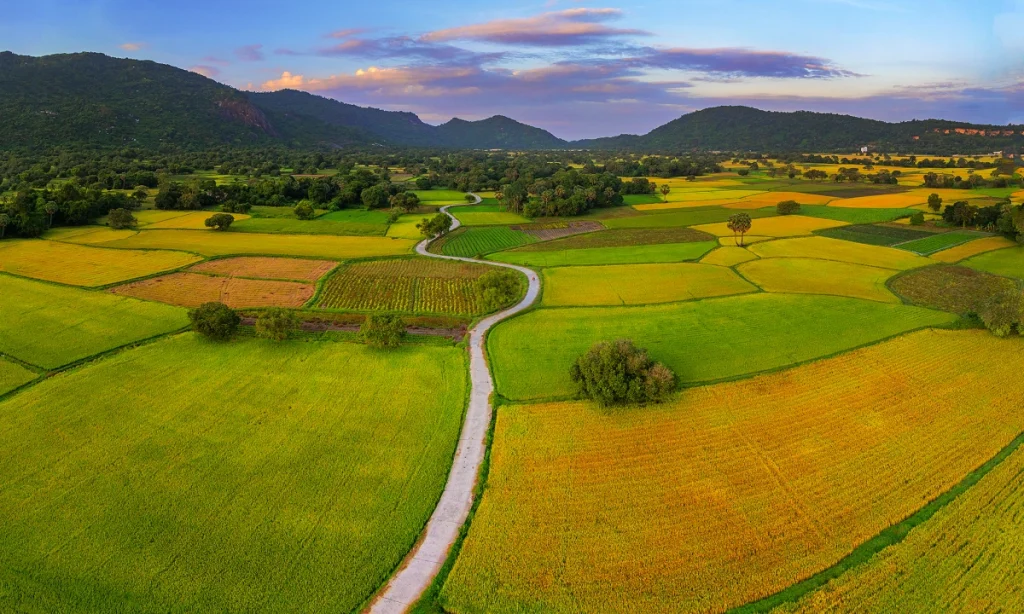
- The patchwork of productivity: From a higher vantage point, the Delta is a massive, shifting quilt. Depending on the season, the land transforms from neon green shoots to shimmering golden harvest fields. The visual identity of the region is defined by this human made geometry, where long, straight irrigation lines cut through wild, tropical growth.
- The architecture of “floating” life: Perhaps the most iconic pictures of Mekong delta life are those that capture the human presence. You will see houses built on stilts over the water, small wooden sampans serving as “family cars”, and the bustling, colorful chaos of floating markets. It is a world where nature and architecture are permanently intertwined, creating a unique aesthetic that feels both rustic and incredibly resilient.
Ultimately, the Mekong Delta does not look like a static postcard; it looks like a living, breathing ecosystem that changes its colors and mood with every tide.
Why the Mekong Delta is a paradise for travel photography
Some destinations photograph well only under perfect conditions. The Mekong Delta is not one of them, it rewards the camera almost any hour, any season, any lens. The reason is variety: within a single day you can move from dawn light on a floating market, through emerald rice fields at midday, to a golden riverside sunset, each scene completely different from the last. Few regions in Southeast Asia pack so many visual layers into such a compact area.
Here’s what makes pictures of the Mekong Delta so compelling:
- Endless subject diversity. The delta offers imagery ranging from action-packed markets on water to slow-living fishing communities, from scenes of tropical abundance to industrial documentary all reachable in a short boat ride or drive. Rice paddies, coconut groves, Khmer pagodas, brick kilns, salt flats, mangrove forests, and fruit orchards sit side by side, so you never run out of fresh compositions.
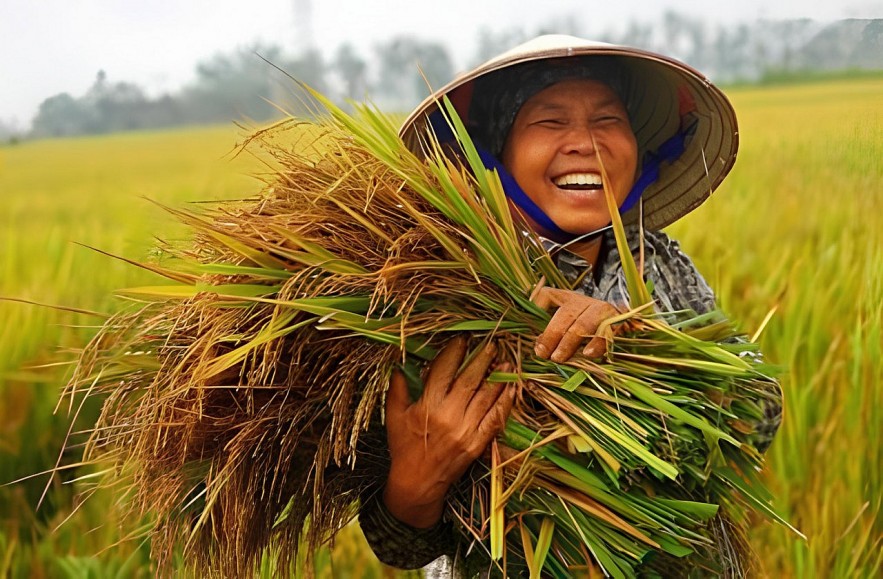
- People and daily life are central to Mekong Delta photography, but respectful permission matters, especially for close portraits. Unlike many tourist-heavy destinations where locals have grown weary of lenses, people here are exceptionally friendly, andFor portraits, start with a greeting, ask permission, and keep enough distance for people to feel comfortable. including just enough background to keep your subjects prominent and authentic. Farmers in conical hats, vendors stacking tropical fruit on wooden boats, fishermen casting nets at dusk, the human element turns every Mekong Delta picture into a story.
- A landscape that keeps changing. In many rice-growing parts of the Mekong Delta, fields can cycle through multiple crops each year, so the same area may look flooded, bright green or golden depending on the local planting calendar. . During planting and harvest, the fields transform into vibrant green or golden mosaics, while farmers in conical hats moving through the paddies add human scale. Add the September – November flood season, when entire plains turn into shimmering lakes, and the visual calendar never really repeats.
Floating market photos: The signature images of the Mekong Delta
If you could keep only one set of Mekong Delta photos from your entire trip, it would almost certainly be the floating market shots. No other scene captures the region’s identity so completely, commerce, colour, water and community all in a single frame.
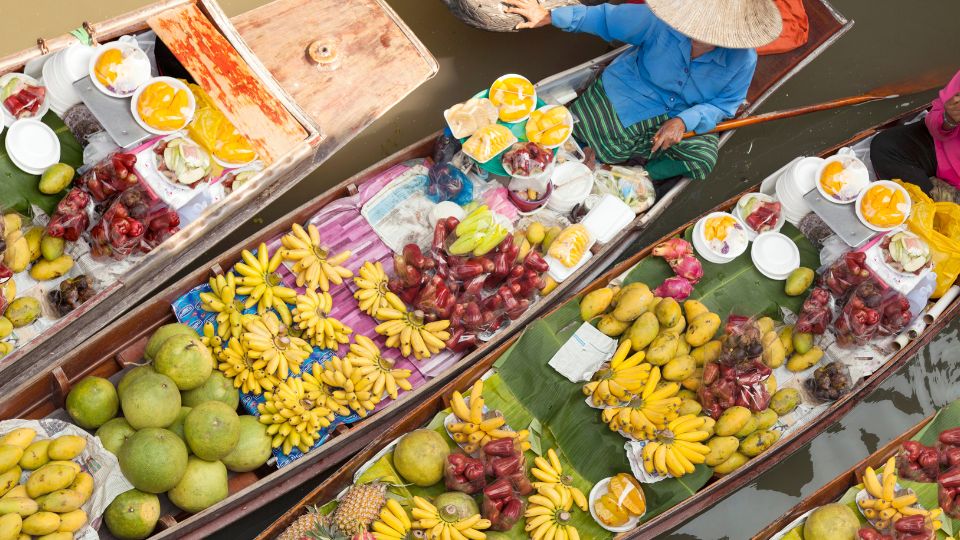
What makes these pictures so striking: From colourful agricultural produce to the golden reflection of dawn, every frame at a floating market tells a story worth recording. Wooden boats stacked high with watermelons, pineapples, and cabbages create bursts of colour against the brown river. Vendors cook breakfast on open flames right on their vessels. Clothes hang from makeshift lines, kitchens sit at the stern, and the makings of daily routine float on the water, proof that these boats are not just shops but homes. That blend of the ordinary and the extraordinary is what gives pictures of the Mekong Delta their emotional pull.
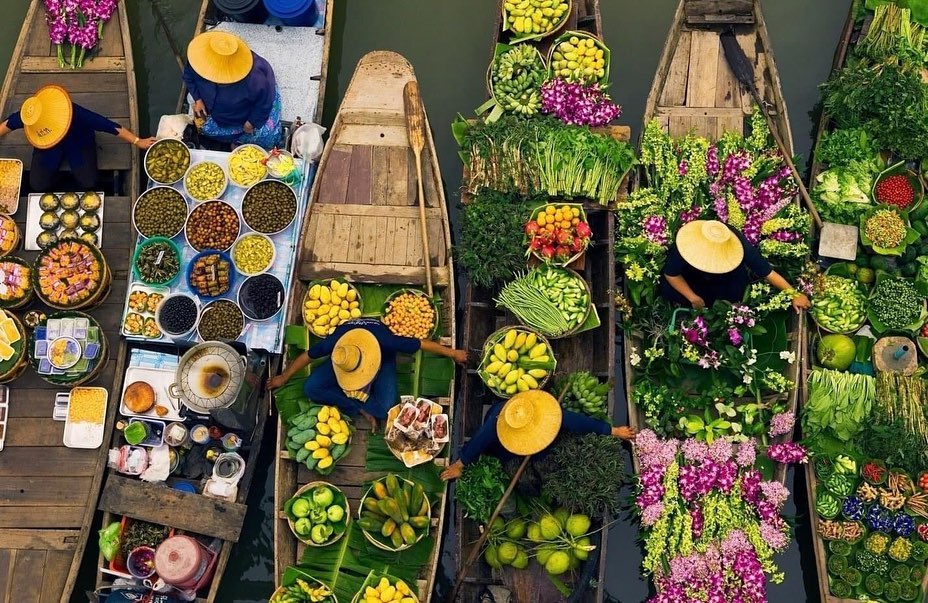
Where to go: Cái Răng is the largest and best-known floating market in the Mekong Delta. It is most active in the early morning, so photographers should leave Cần Thơ around 5:00 AM. For something quieter and more intimate, Phong Điền can feel quieter than Cái Răng, but activity varies. Check with a local boat operator before planning it as your main floating market shoot. Smaller markets like Ngã Nam and Long Xuyên see almost no foreign visitors at all, which often makes for the most genuine Mekong Delta pictures.
How to get the best shots: Timing is everything: arrive between 5:00 and 6:00 AM for the best light and peak activity; by mid morning the action fades. Hire a small boat so you can weave between the larger vessels and shoot at water level, that low angle puts the viewer inside the market rather than watching from a distance. Use a fast shutter speed to freeze passing boats, or experiment with panning to emphasise the movement and rhythm. And don’t forget the details: weathered hands exchanging coins, a pole hung with produce to signal what’s for sale, steam rising from a noodle pot at dawn. These close ups often become the Mekong Delta photos people remember most.
One honest note: these traditional markets are in decline as road infrastructure expands and land markets replace them. That reality makes your floating market pictures more than souvenirs – they’re a record of a river tradition that won’t look the same forever.
Read more: Mekong Delta river tour: What to expect and how to choose the right experience
River life and boat culture through the lens
The Mekong Delta’s identity isn’t built on roads, it’s built on water. Canals replace streets, sampans replace motorbikes, and entire families live, cook, and trade on vessels that double as floating homes. For anyone chasing authentic Mekong Delta pictures, the river is the stage where real life performs without a script.
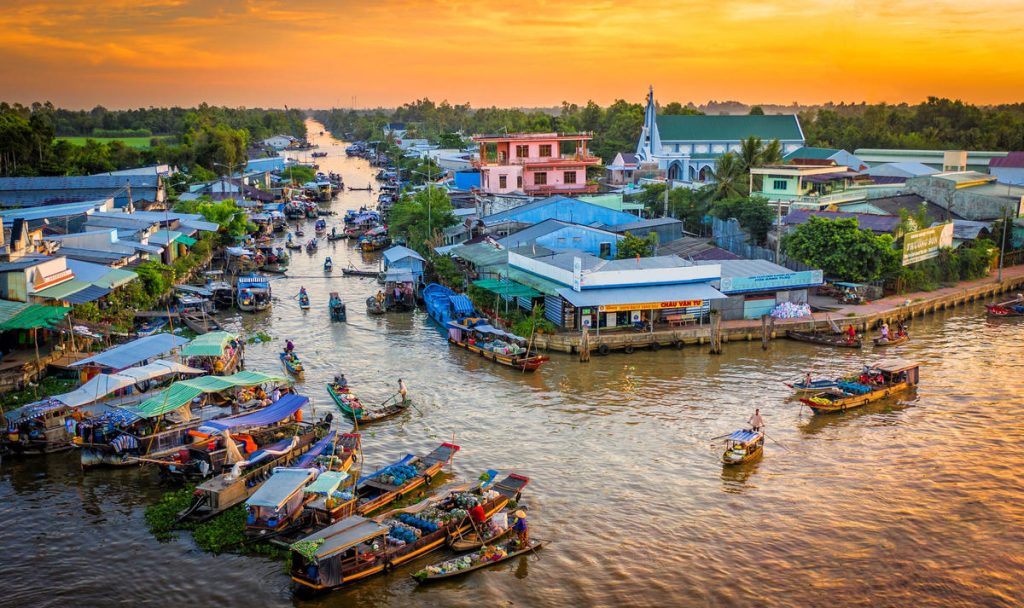
People commute by boat, bamboo bridges link the banks, floating houses rest gently on the water, children swim freely, women wash clothes along the edges, fishermen mend their nets, and families paddle to work. Every one of those moments is a photograph waiting to happen and unlike posed tourist scenes, they unfold naturally if you’re patient enough to watch.
The best approach is to hire a small sampan and drift through the narrower side canals away from the main tourist routes. The low, water level perspective puts viewers inside the scene rather than above it. Early morning and late afternoon deliver the softest light, but even midday works along tree shaded channels where dappled sunlight creates contrast on weathered wood and dark water.
To truly capture the rhythm of the river, follow these professional tips:
- Lens choice:
- 24-70mm (standard zoom): Your most versatile tool. Use the wider end for environmental portraits showing the boat and its surroundings, and the 70mm end for tight, candid shots of people’s faces and expressions.
- 35mm or 50mm (prime): Ideal for low-light conditions or when you want to achieve a shallow depth of field, helping to isolate your subject from the busy river background.
- Shooting angles:
- The low level perspective: Have your boat captain slow down and pull alongside local vessels. Shooting from a low angle at water level creates a sense of intimacy and makes the viewer feel like they are floating right there with the subjects.
- The “through the frame” Shot: Use the framing of your own boat’s cabin or a low hanging tree branch to create a natural border for your image, adding depth to the scene.
- What to capture:
- The folk details: Look for the “eyes” painted on boat prows (a tradition to ward off evil spirits), the geometry of fishing nets being cast in a wide arc, and the intricate texture of laundry lines strung between cabin poles.
- The quiet humanity: Watch for the intimate, unscripted moments, a grandmother rocking a baby in a hammock slung across the deck, or a vendor sharing a bowl of noodles with a neighbor boat.
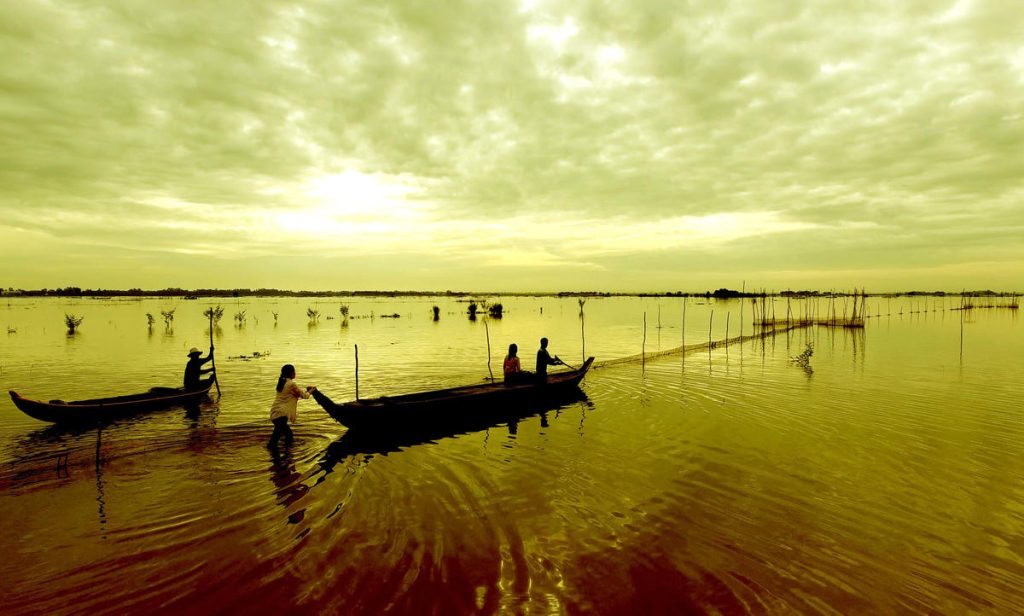
Village life photos that show the authentic Mekong Delta
Step off the boat and onto a dirt path, and the delta reveals another layer. Village life here moves at a pace that feels generations removed from Saigon’s traffic and that contrast is exactly what makes these Mekong Delta pictures so compelling.
Start with the morning rhythm: smoke rising from outdoor kitchens, neighbours gathering at a small café for iced coffee, farmers heading out on foot or by motorbike with conical hats silhouetted against the low sun. Move through the day and you’ll find women making rice paper on bamboo racks, children cycling along levee paths, and elders sitting on wooden benches outside family temples.
Specific villages specialise in craft production – coconut processing in Bến Tre (candy, oil, woven mats), traditional rice paper and noodle making elsewhere and these workshops offer rich visual material: hands shaping, cutting, drying, all in warm natural light.
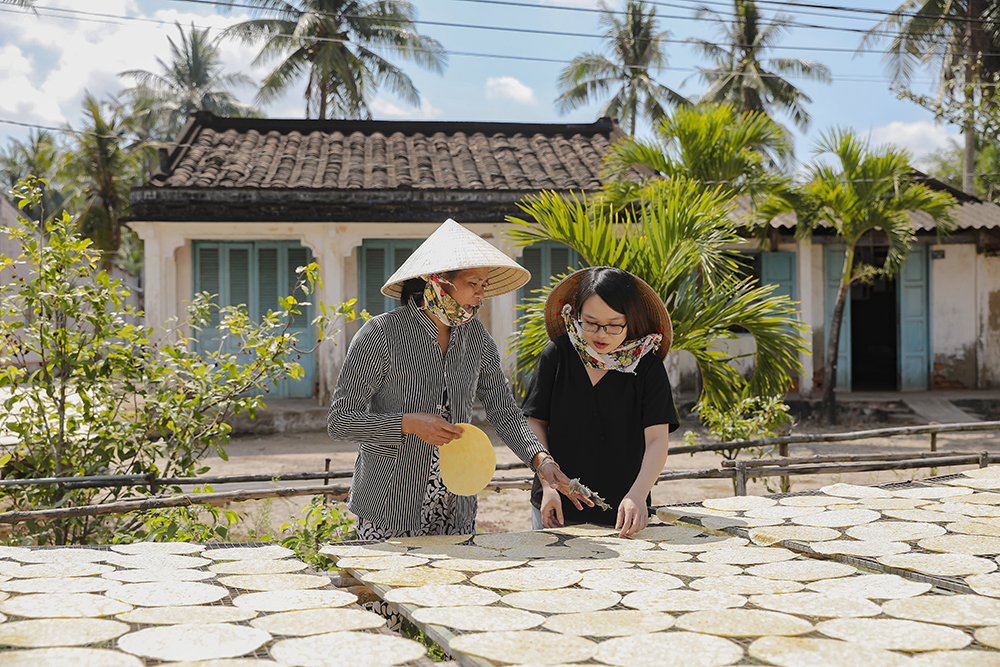
For the strongest village portraits, seek permission with a smile, then shoot in context. A rice-paper maker photographed inside her workshop, surrounded by drying sheets and steam, tells a far better story than a tight headshot against a blank wall. Wide environmental portraits, a farmer framed by his paddy, a family gathered under a jackfruit tree, give viewers a sense of place they can almost step into.
These areas can offer quieter village scenes, but photographers should still ask permission and avoid interrupting work. Bring small prints of your previous photos as gifts, it’s a gesture locals genuinely appreciate.
Fruit orchards, coconut groves, and tropical landscapes
Beyond the rice fields and rivers, the Mekong Delta is one vast tropical garden. Orchards heavy with mango, rambutan, pomelo, and durian line the canal banks, while coconut groves in Bến Tre stretch in neat rows as far as you can see. For photographers, this greenery offers a refreshing visual break from the water-and-boat scenes that dominate most Mekong Delta photos.
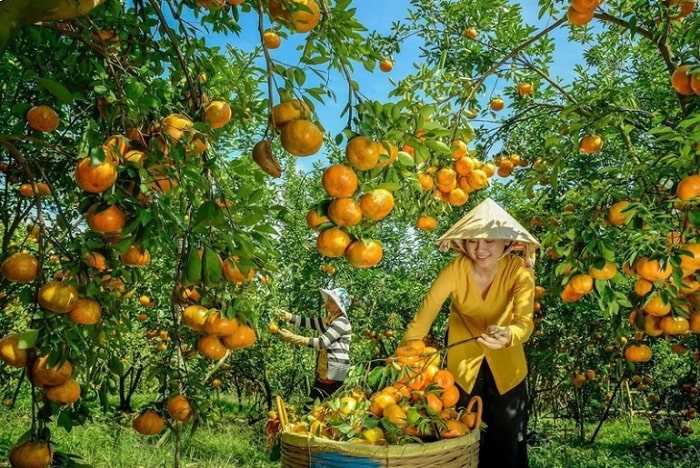
The orchards photograph best when there’s human activity inside them: a farmer reaching up to cut a bunch of longan, a woman sorting dragon fruit into baskets, children climbing a mango tree. These interactions add scale, colour, and story to what would otherwise be a static landscape.
Coconut groves deserve special attention. The tall, slender palms create strong vertical lines and graphic patterns, especially when backlit at sunrise or sunset. Look for the workers who climb barefoot to harvest, their silhouettes against the sky are among the most striking images the delta produces.
Timing matters: summer months from May to August are the main fruit season, when orchards are at their most colourful and markets overflow with produce. Visiting during harvest means more action, more colour, and better pictures.
The most Instagrammable places in the Mekong Delta
If your feed needs a refresh, the delta delivers. Here are the spots that consistently produce the most shareable Mekong Delta photos:
- Cái Răng floating market at dawn: Boats heaped with tropical fruit, golden light on the water, steam rising from breakfast noodle vendors, every frame tells a story worth recording. Arrive by 5:30 AM.
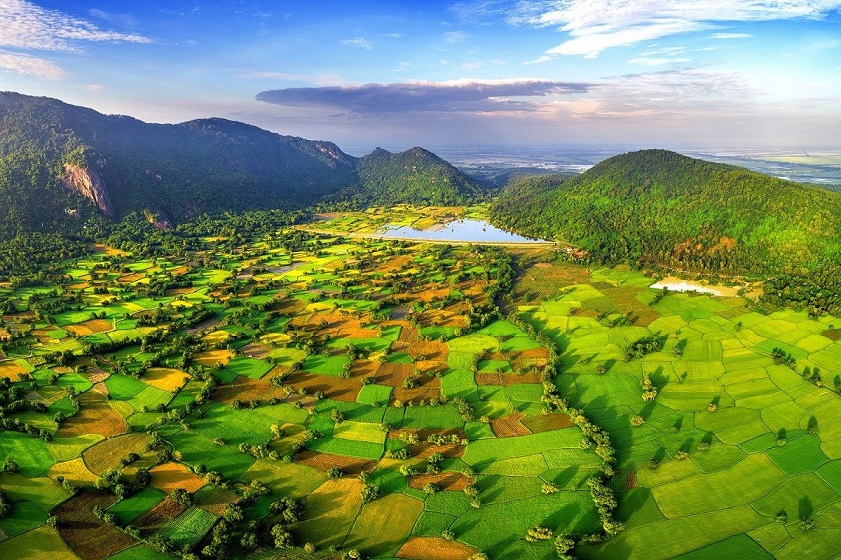
- Tà Pạ rice fields, An Giang: Sugar palm trees rise from a patchwork of green and gold paddies at the foot of Tà Pạ mountain, the delta’s most iconic landscape shot, especially at sunrise.
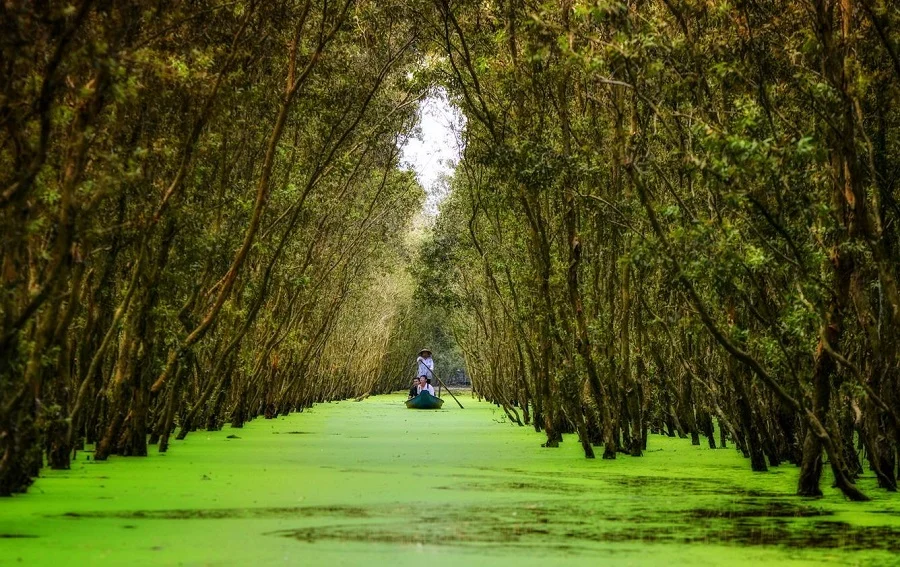
- Trà Sư cajuput forest: Canals covered in bright green duckweed, framed by tall cajuput trees, create an almost surreal monochrome-green scene. The bamboo sampan ride through the flooded canopy is as photogenic as it gets.
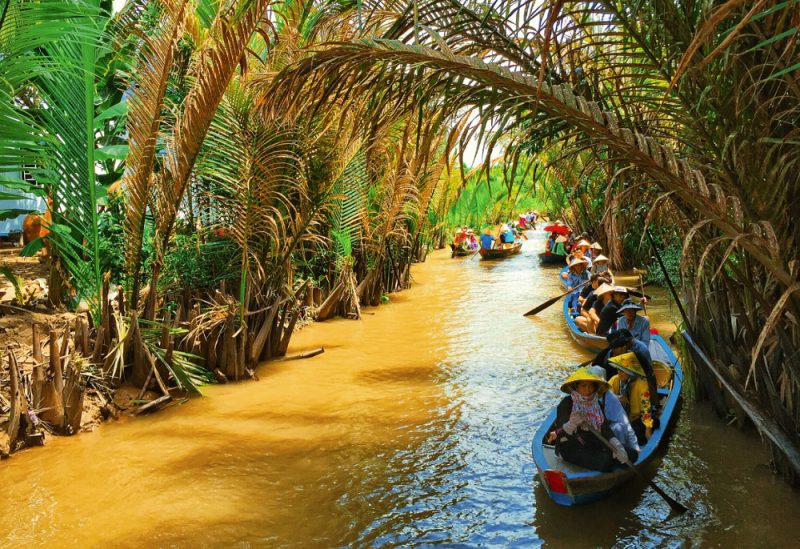
- Bến Tre coconut village canals: Narrow waterways shaded by arching coconut palms, with dappled light falling on small wooden boats – effortlessly atmospheric.
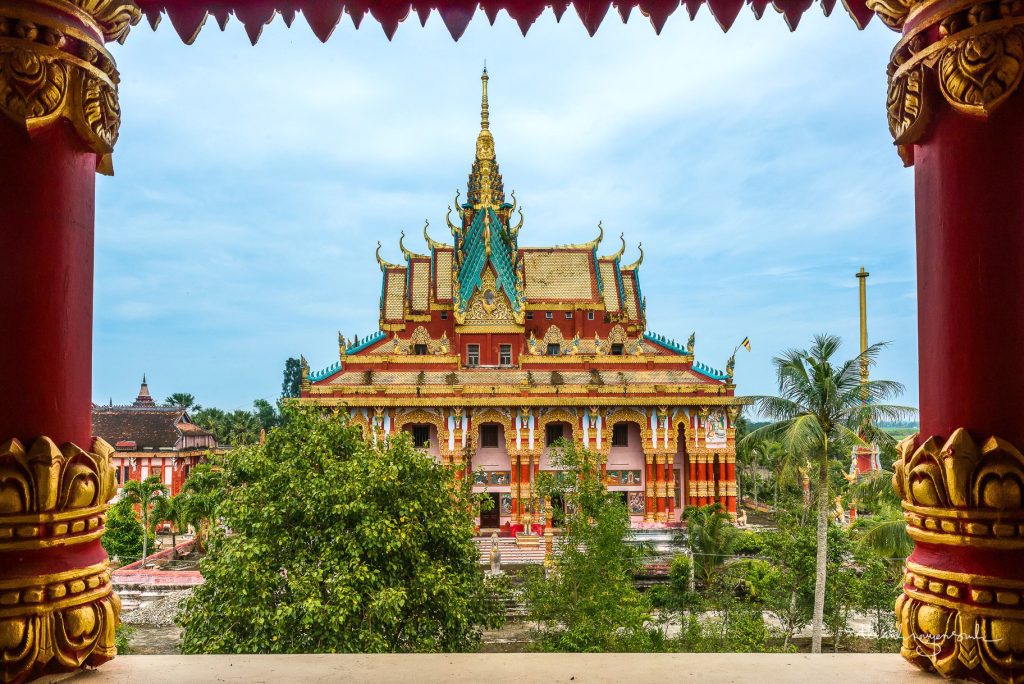
- Khmer pagodas of Sóc Trăng and Trà Vinh: Ornate, gilded temples set against flat green farmland, the architectural contrast is visually arresting and almost entirely tourist-free.
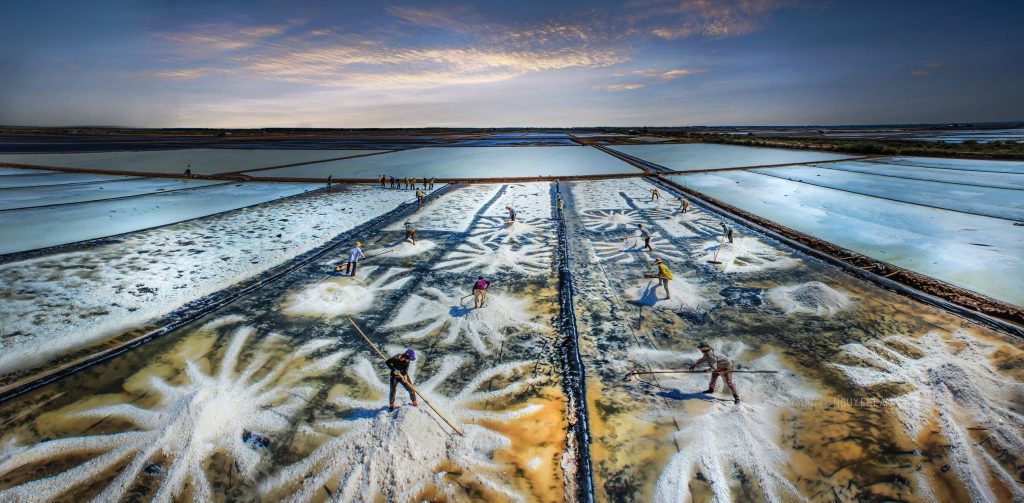
- Bạc Liêu salt fields (dry season): Shallow ponds shimmer under the sun while workers rake salt in rhythmic patterns, creating a geometric mosaic that looks almost abstract from a distance.
| Location | Best time to shoot | Time to allocate | Why It’s iconic |
| Cái Răng Market | 5:00 AM – 6:30 AM | 2-3 Hours | Golden light, bustling trade, and misty water reflections. |
| Tà Pạ Rice Fields | 5:30 AM – 7:00 AM | 1.5-2 Hours | Morning silhouettes of sugar palms against golden-green paddies. |
| Trà Sư Forest | 8:00 AM – 10:00 AM | 2-3 Hours | Surreal emerald-green duckweed canopy and birdlife. |
| Bến Tre Canals | 7:00 AM – 9:00 AM | 2-3 Hours | Dappled light filtering through low-arching coconut palms. |
| Khmer Pagodas | 3:00 PM – 5:00 PM | 1-2 Hours | Late afternoon sun highlights the gilded, ornate architecture. |
| Bạc Liêu Salt Fields | 4:00 PM – 5:30 PM | 1.5 Hours | Geometric shadows and shimmering reflections at golden hour. |
The common thread: go early, go local, and look beyond Cần Thơ. The most shareable pictures of the Mekong Delta come from places most visitors never reach.
Best times of day to take stunning Mekong Delta photos
Light makes or breaks any photograph, and the delta’s flat, water-rich landscape amplifies every shift in the sky. Here’s how the day breaks down:
- Golden hour (5:00-6:30 AM). The single best window. Low-angle sunlight rakes across the paddies, mist lifts off the canals, and the floating markets are in full swing. Golden rays filter through the morning mist, illuminating the calm waters and turning everything warm. This is when most iconic Mekong Delta photos are made.
- Early morning (6:30-8:00 AM). The light is still soft and the countryside is active – farmers plant, fishermen cast nets, village markets bustle. Ideal for people photography without harsh shadows.
- Midday (10:00 AM-3:00 PM). Overhead sun, flat light, intense heat. Not the most flattering for landscapes, but useful for detail shots under shade, market close-ups, food, handicrafts – where even lighting actually helps.
- Late afternoon (4:00-5:30 PM). The second golden window. Side light picks out textures on wooden boats and thatched roofs. Fewer tourists are out, and river activity picks up again as fishermen return.
- Sunset and blue hour (5:30-6:30 PM). Silhouettes of palm trees and sampans against orange and purple skies. At Trà Sư, this is when storks circle back to the forest, creating dramatic shapes against the fading light.
The practical takeaway: set two alarms, one for pre-dawn and one for late afternoon. The hours in between are for resting, eating and reviewing your shots. The delta rewards early risers more than any gear upgrade ever will.
Wildlife and nature photography opportunities
The Mekong Delta isn’t just farmland, it shelters some of southern Vietnam’s most important wetland ecosystems, and for patient photographers, the wildlife rewards are real.
- Tràm Chim National Park (Đồng Tháp) is the headline destination. Over 200 bird species have been recorded here, mostly egrets, herons, waterfowl, cormorants, kingfishers and bee eaters. The park is also the last stronghold of the endangered Sarus Crane in Vietnam. The dry season from December to April offers clear skies and the best birdwatching, when the cranes return after months of migrating from the flood.
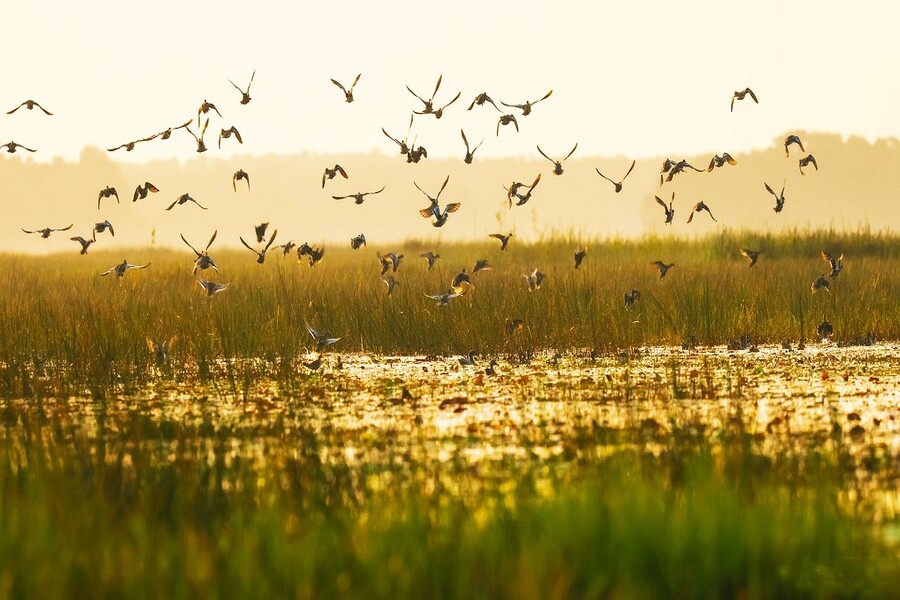
- Trà Sư cajuput forest (An Giang) is more compact but equally photogenic. Covering over 800 hectares of protected wetland, it is a haven for birdwatchers and photographers, especially during the flood season (September-November) when storks, cormorants, and egrets gather in huge numbers. The bamboo boat ride moves quietly enough to observe birds without disturbing them, making close-range shots possible.
- Bạc Liêu bird sanctuary rounds out the trio – a remnant mangrove forest that hosts one of the most important breeding waterbird colonies in the delta, surrounded by open paddies.
These nature spots add depth to any collection of Mekong Delta pictures – proof that the region is as much about wild ecosystems as it is about floating markets and rice fields.
Common mistakes travelers make when photographing the Mekong Delta
The delta is generous with visual material, but a few avoidable errors can leave you with a memory card full of flat, forgettable shots. Here’s what to watch for:
- Sleeping in: The single biggest mistake. The best light, the busiest markets, and the most atmospheric mist all happen before 7:00 AM. If your alarm doesn’t hurt a little, you’re probably too late.
- Staying on the tour bus route: Large group tours hit the same three or four stops. The most authentic Mekong Delta photos come from side canals, back roads, and villages the big boats skip. Hire a local guide or rent a bicycle and go off script.
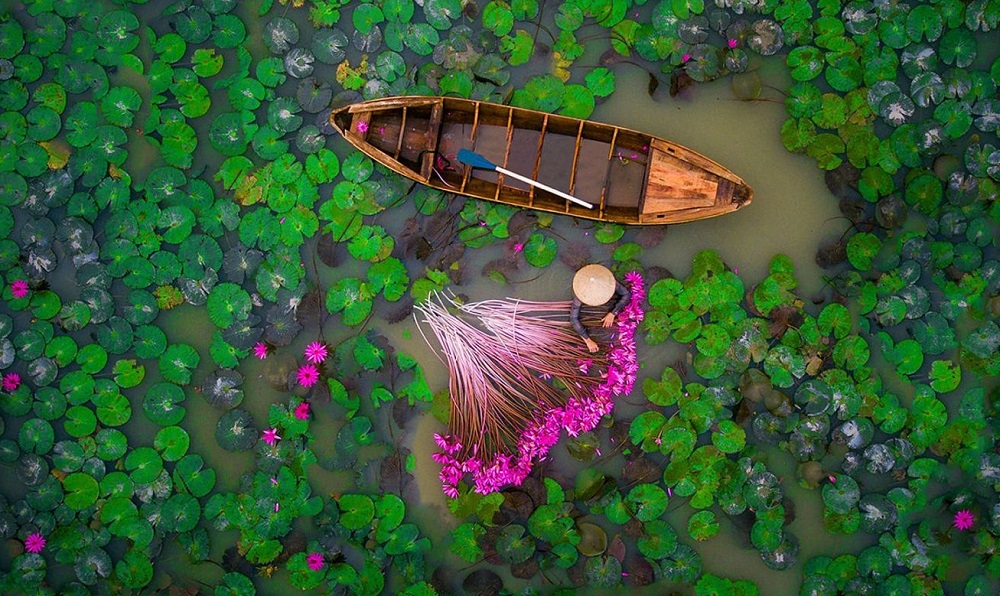
- Only shooting wide: The landscape is flat and lacks elevation, so sweeping panoramas can look empty. The delta’s strength is in details, weathered hands, peeling boat paint, a single lotus bloom on dark water. Mix wide establishing shots with tight close ups for a complete story.
- Chimping instead of watching: Constantly checking the screen means missing the next moment. In a floating market, action happens fast and won’t wait for you to review the last frame.
- Forgetting the weather: Heat, humidity, and sudden rain are part of the package. Bring a dry bag or rain sleeve for your camera, lens cloths for condensation, and silica gel packets for your bag. Gear failures from moisture are painfully common here.
- Neglecting the people: The most powerful pictures of the Mekong Delta include a human element. A perfectly composed landscape without a person in it is pretty; add a farmer or a boatman and it becomes a story.
- Overpacking gear: You’ll be on small boats, narrow paths, and in humid heat. One versatile zoom and a prime lens will cover almost everything, leave the heavy tripod at the hotel.
Ethical photography tips for respecting local communities
The warmth of delta communities is one of the reasons Mekong Delta pictures feel so alive – but that warmth is a privilege, not a right. A few principles help you photograph respectfully and keep that welcome open for travellers who come after you.
- Ask before you shoot. A smile, a gesture toward your camera, and a nod of permission take five seconds and change the entire dynamic. Most people will say yes, many will even pose proudly. The few who decline deserve that choice respected without question.
- Don’t treat people as props. A vendor at a floating market is running a business, not performing for your lens. Buy something, say hello, make a small human connection first. The photos that follow will be warmer and more genuine because of it.
- Be mindful at sacred sites. Khmer pagodas and village temples are active places of worship. Dress modestly, remove shoes when required, and avoid shooting during prayers or ceremonies unless explicitly invited.
- Share back when you can. If you photograph someone up close, offer to show them the image on your screen. Better still, if you’re carrying a portable printer or can return later with a small print, it’s a gesture that means far more than money.
The best pictures of the Mekong Delta are the ones where the photographer gave something back, attention, respect, a moment of connection before pressing the shutter.
A photographer’s ideal Mekong Delta itinerary
Three days is the sweet spot, enough time to cover the delta’s variety without rushing. Here’s a route that maximises light, variety, and the strongest Mekong Delta photos:
Three days is the perfect window to capture the heart of the Mekong without feeling rushed. By focusing on Can Tho and An Giang, you balance the high-energy commerce of the river with the serene, dramatic landscapes of the countryside.
Day 1: The pulse of the river (Cần Thơ & Phong Điền)
- Morning: Rise at 4:30 AM to reach the Cái Răng floating market by 5:15 AM. Use a private sampan to weave between larger barges; the low angle is essential for capturing the textures of tropical fruit and the steam rising from local breakfast noodle boats.
- Afternoon): After a midday break, head to the quieter canals of Phong Điền. This area offers a much more serene perspective than the main river. Focus your lens on the dense, overhanging vegetation and the “slow” side of Delta life, where locals traverse the landscape via narrow footpaths and wooden bridges.
- Evening: Relax at a riverside café in Cần Thơ, capturing the sunset as it reflects over the Hậu River.
Day 2: The art of light & landscape (An Giang)
- Morning: Depart for the Tà Pạ rice fields (Tri Tôn district). Arrive just after sunrise for the best light. The contrast between the jagged Cô Tô mountain in the background and the patchwork of green-and-gold paddies, punctuated by iconic, thin sugar palm trees, is a masterclass in composition.
- Afternoon: Continue to the Trà Sư Cajuput Forest. Navigate the flooded, duckweed-covered channels by bamboo sampan. Use a wide-angle lens to capture the surreal, emerald green monochrome of the forest canopy. Stay until late afternoon; as the sun dips, storks and egrets return to the trees, creating dramatic, dynamic silhouettes against the sky.
- Evening: Enjoy a quiet dinner in Châu Đốc and review your collection from the trip.
Day 3: Refining your narrative
- Morning & Afternoon: Use this final day to revisit a location from the previous two days that provided your best light or most interesting subjects. Whether you choose to head back to the canals of Phong Điền for more “hands-at-work” documentary shots or return to the Tà Pạ paddies for a different time-of-day perspective, this flexibility ensures you return home with a complete, high-quality portfolio of the Delta.
- Late afternoon: Begin your journey back toward Ho Chi Minh City, feeling confident that you have captured the full spectrum of the Mekong’s atmosphere.
Capturing the soul of the Mekong Delta is about more than just equipment, it’s about patience, respect, and knowing exactly where to find the magic. While the Delta is a treasure trove for any photographer, its maze-like canals and hidden village gems can be daunting to navigate on your own.
That is where Lily’s Travel makes all the difference. We don’t just provide tours; we create photography focused experiences that bypass the crowded tourist routes. Whether you want to be positioned at the best angle for the sunrise at Cái Răng, need access to a private sampan to weave through hidden side canals, or are looking for authentic homestays in the heart of the region’s most photogenic villages, our team handles the logistics so you can stay focused on the frame.
Ready to build your masterpiece portfolio? Click here to book a custom photography tour with Lily’s Travel and let us help you capture the true, unfiltered beauty of Southern Vietnam.