


Stretching across Southern Vietnam, the Mekong Delta rice fields are the heartbeat of the country’s agriculture. Known as the “Rice Bowl of Vietnam,” this fertile region produces over half of the nation’s rice output, creating a landscape that shifts beautifully with the seasons. Discover the best locations, timing, and local insights to experience this mesmerizing destination.
What makes Mekong delta rice fields unique?
While rice is grown throughout Vietnam, the Mekong delta rice fields stand in a league of their own. Their uniqueness is rooted in a rare combination of geography, hydrology, and a centuries old way of life that has adapted to the rhythm of the mighty Mekong River.
A few things set the delta’s paddies apart:
- Born from the river. The entire landscape is built over thousands of years from the Mekong’s alluvial silt — though today upstream dams and sand mining have slowed that sediment flow, leaving parts of the coast facing erosion.
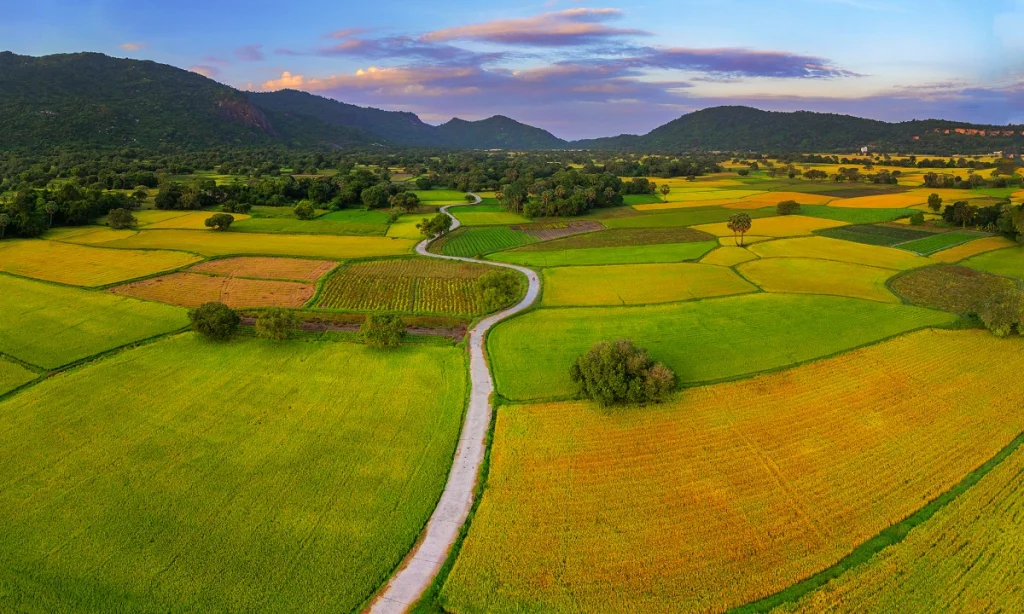
- Flat, not terraced. Instead of the stacked highland terraces of northern Vietnam, the delta is one continuous lowland plain, so the fields read as vast unbroken carpets rather than steps on a hillside.
- Harvests almost year-round. The warm climate and dense web of irrigation canals support multiple rice crops a year – in the most intensive areas, around 27% of the rice area is cultivated three times a year. Because farmers stagger their planting, you’ll often see emerald seedlings, ripening gold and freshly cut fields all in the same view.
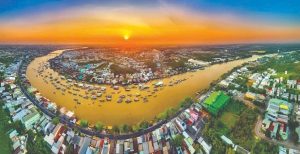
- A landscape of water and life. Here the rivers and canals are the roads. Water, boats, houses, and markets coexist right alongside the paddies, weaving farming and daily life into a single scene.
Why the Mekong delta is known as Vietnam’s rice bowl
The Mekong Delta earned its “rice bowl” nickname the most convincing way possible by feeding the nation. The region covers only a small slice of Vietnam’s land area, yet it carries an outsized share of the country’s food supply, which is why no single place matters more to how Vietnam eats and exports.
The numbers tell the story:
- It produces over 50% of Vietnam’s rice and around 90% of the country’s rice exports.
- It grows roughly 25 million tonnes of paddy rice every year.
- Twelve provinces make up the delta,home to some 17 million people, for whom rice farming remains the backbone of rural livelihoods.
That output is a big reason Vietnam is the world’s second-largest rice exporter, sending grain to markets across Asia, Africa, and beyond. And rice isn’t the whole picture, the same fertile land also supplies much of the nation’s fruit and seafood, making it the heart of national food security and a vital link in the global food supply chain.
Read more: Mekong Delta river tour: What to expect and how to choose the right experience
What do Mekong delta rice fields look like throughout the year?
Unlike the rice terraces of northern Vietnam, which turn gold just once a year, the Mekong Delta runs on a rolling cycle of two to three crops, so the paddies are almost never the same two months running. The region broadly follows three seasons: Winter-Spring (planted Nov-Dec, harvested Feb-Mar), Summer-Autumn (planted Apr-May, harvested Jul-Aug), and Autumn-Winter (planted Aug-Sep, harvested Oct-Nov).
What you actually see depends on the stage of the crop:
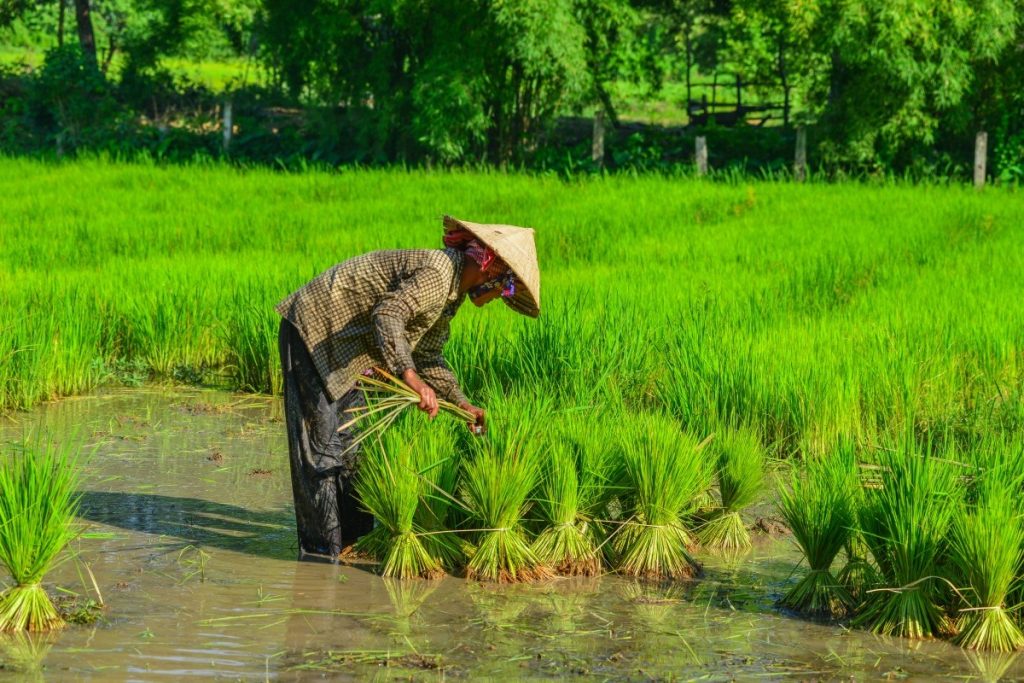
- Planting months (Nov, Apr, Aug): fields are watery and reflective, with farmers working in the mud, perfect for mirror-like reflections and rural life shots.
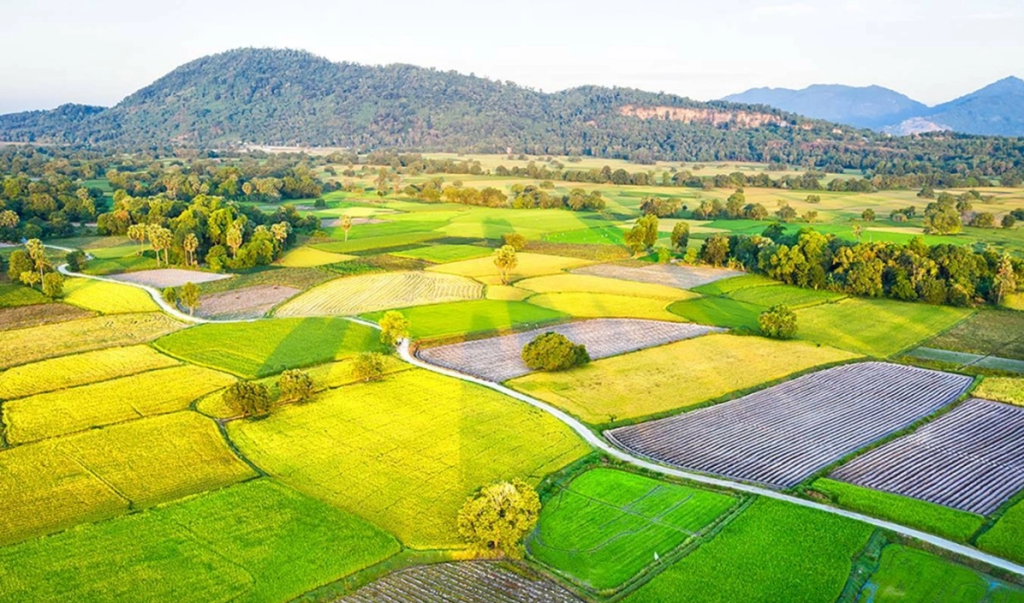
- Growing months (Dec-Jan, May-Jun, Sep): lush green paddies stretch across the plain, fresh and vibrant.
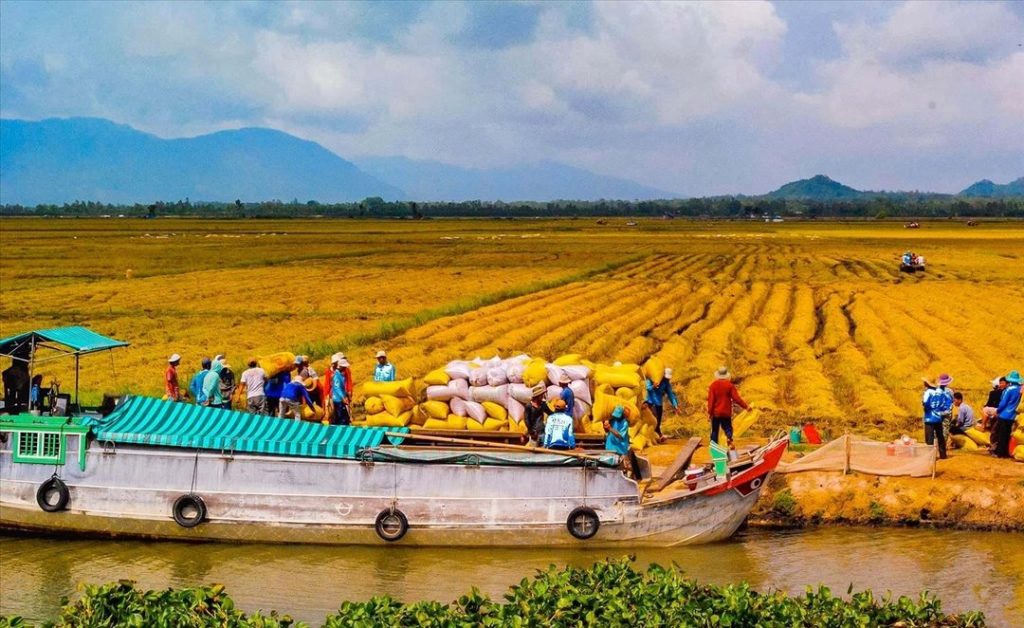
- Harvest months (Feb-Mar, Jul-Aug, Oct-Nov): the landscape turns golden, creating the classic postcard views.
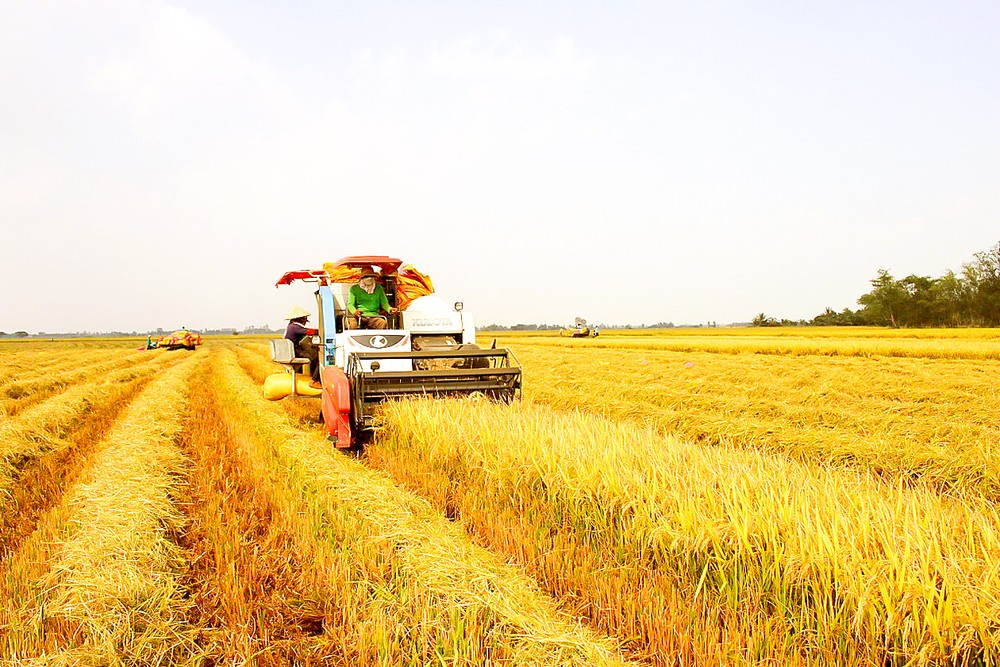
Because neighbouring plots are sown at slightly different times, you’ll often catch all three stages at once: green shoots, golden rice, and silver water in a single frame. That patchwork is the delta’s signature, and it’s why the scenery rewards a visit in almost any month.
Best time to visit Mekong delta rice fields
Timing is everything when planning a trip to the Mekong delta rice fields. Because the delta relies on a cycle of planting and harvesting, the landscape shifts dramatically throughout the year.
- The dry season (December to April): Generally considered the most comfortable time for travelers. The weather is cool and dry, making it ideal for cycling along canal paths and taking boat trips through the paddies. You will often see the golden harvest during the earlier months of this period.
- The transition period (April to May): This is a unique window when the fields are often being prepared for the next cycle. While you may see less “lush green”, it is the best time to witness the authentic, high-activity labor of local farming families.
- The floating season / rainy season (June to November): This is when the delta truly comes alive. As the water levels rise, the Mekong delta rice fields are transformed into a vibrant green oasis. While you should expect daily tropical rain showers, the trade-off is a breathtaking, emerald-colored landscape and the rare chance to witness the unique “floating” ecosystem at its peak.
If your main goal is photography, aim for the start of the harvest season (usually around early December or late April) to capture the striking contrast between the golden fields and the deep blue waterways.
Are you planning to explore the delta soon? Whether you’re looking for an off the beaten path adventure or a comfortable guided tour, Lily’s Travel can help you time your visit perfectly and arrange seamless logistics.
Green season vs harvest season: Which is more beautiful?
Choosing between the two seasons for your visit to the Mekong delta rice fields is a matter of personal preference, as both offer a completely different visual experience.
The green season: A vibrant oasis
From June to October, the delta is in its “green season.” This is when the rice paddies are at their most lush, carpeting the region in an electric, neon-green hue.
- The vibe: Everything feels fresh, alive, and thriving. It is the perfect time for nature lovers who want to see the delta at its most vibrant.
- Best for: Photographers looking for saturated colors and travelers who enjoy a dramatic, water filled landscape. The higher water levels make boat travel through the canals even more scenic.
The harvest season: A golden masterpiece
As the season shifts toward the end of the year (usually December and April), the fields turn into a vast, shimmering sea of gold.
- The vibe: This is the season of abundance. There is a sense of energy and purpose in the air as farmers work to bring in the crops. The golden color of the rice against the deep blue sky and the reflection of the sun on the water create a warm, nostalgic atmosphere.
- Best for: Those who want to witness the cultural heart of the delta. You will see the local community in action, utilizing traditional harvesting methods that have been passed down for generations.
Which is more beautiful?
If you crave vivid colors and lush scenery, the green season will take your breath away. It feels like stepping into a tropical garden.
If you prefer warm textures and authentic human stories, the harvest season is unparalleled. It is the best time to connect with the farmers and experience the true “Rice bowl” of Vietnam.
Ultimately, both are beautiful in their own right. Whether you prefer the refreshing emerald landscapes of the growing period or the rich, glowing gold of the harvest, your trip to the Mekong delta rice fields is guaranteed to be a visual highlight of your Vietnam journey.
Read more: Ho Chi Minh to Mekong Delta Distance
The best places to see rice fields in the Mekong delta
The delta is vast, so it helps to know where the most scenic rice country actually is. Three standouts cover most of it:
- An Giang – the Tà Pạ fields. The most photographed paddies in the delta sit at the foot of Tà Pạ and Cô Tô mountains in Tri Tôn district, forming a patchwork of colours because plots are planted and harvested at slightly different times. Rows of tall sugar-palm (thốt nốt) trees – a symbol of An Giang and its Khmer communities, rise throughout the fields, giving the area its instantly recognisable look. Most travellers base themselves in Châu Đốc, about an hour’s drive away.
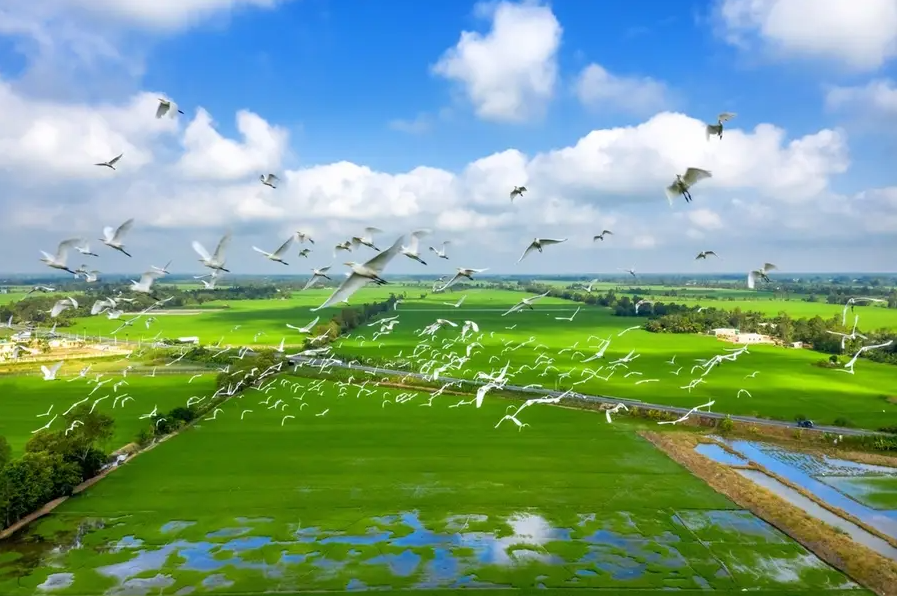
- Đồng Tháp – the plain of reeds & Tràm Chim. The Đồng Tháp Mười (Plain of Reeds) is classic flooded delta scenery, and Tràm Chim National Park layers in wetlands, lotus ponds, and birdlife at its most striking during flood season.
- Long An – the delta’s doorstep. Closest to Ho Chi Minh City and the easiest gateway, Long An’s Tân Lập floating village threads a boardwalk through cajuput forest and open paddies, a quick, satisfying taste of rice country on a day-trip.
Mekong delta rice fields vs Sapa rice terraces: What’s the difference?
While both are iconic symbols of Vietnam’s agriculture, the Mekong delta rice fields and the Sapa rice terraces offer entirely different visual and cultural experiences. Understanding these differences will help you decide which landscape fits your travel style.
The landscape: flat vs vertical
- Mekong delta rice fields: Think of these as a vast, horizontal sea of green or gold. The terrain is flat, interconnected by a massive network of river arteries and canals. The beauty here lies in the scale, the fields stretch as far as the eye can see, merging seamlessly with the horizon and the water.
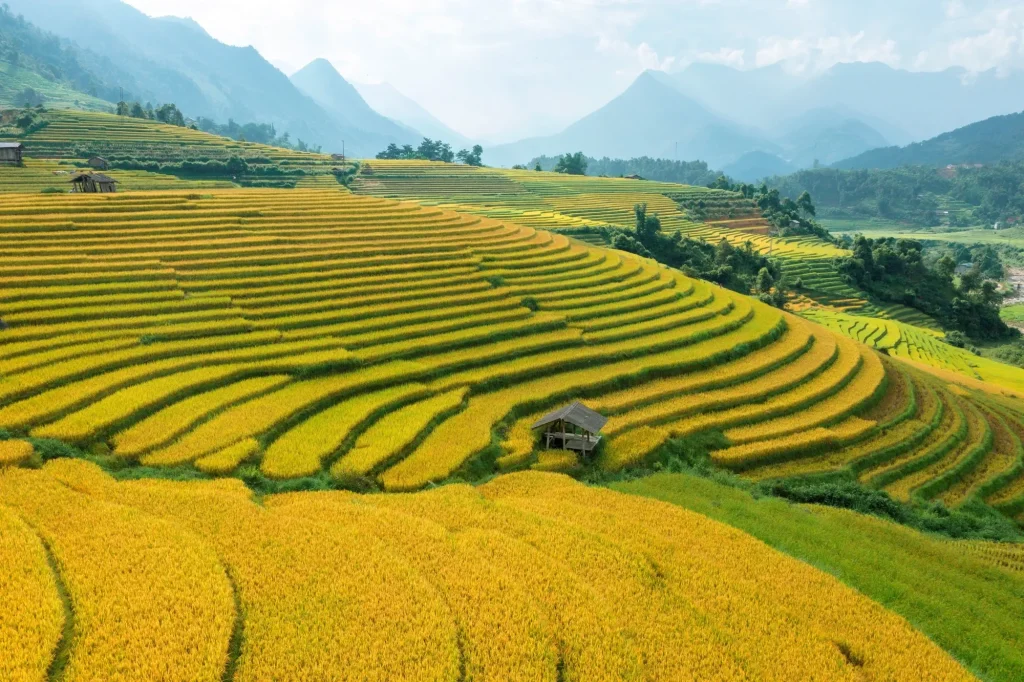
- Sapa rice terraces: These are a vertical masterpiece. Carved into the steep, rugged slopes of the Hoang Lien Son mountains, the terraces look like giant staircases leading toward the clouds. They offer dramatic elevation, sweeping valley views, and a sense of architectural wonder.
The experience: River life vs mountain trekking
- Mekong delta: Exploring here is all about the water. You will spend your time on sampans (traditional wooden boats), visiting floating markets, and cycling along narrow roads. It is a slow, rhythmic experience focused on river life and biodiversity.
- Sapa: This is a hiker’s paradise. You explore the terraces on foot, trekking from one village to another through misty hills. It is physically more demanding but rewards you with breathtaking panoramic views and a chance to experience the unique culture of various ethnic hill tribes, such as the Hmong and Red Dao.
The atmosphere:
- Mekong delta: The vibe is tropical, humid, and bustling with river commerce. It feels like the “engine” of Vietnam – vibrant, productive and deeply tied to the ebb and flow of the Mekong River.
- Sapa: The atmosphere is cool, crisp and serene. It feels like a world apart from the rest of the country, defined by quiet mountain villages, sweeping clouds, and the distinct traditions of the highland communities.
The best ways to explore Mekong delta rice fields
To truly appreciate the scale and beauty of the Mekong delta rice fields, you need to step off the main road and get closer to the water. Here are the most authentic ways to navigate this breathtaking landscape:
- By traditional sampan: This is the most iconic way to see the delta. Navigating the narrow, shaded canals on a small wooden boat allows you to glide right alongside the paddies. It’s quiet, intimate, and lets you observe the daily life of farmers and local river wildlife that larger boats simply can’t reach.
- Cycling along the canal paths: Many areas in the delta feature flat, narrow concrete paths that wind through the heart of the rice fields. Renting a bicycle gives you the freedom to set your own pace, stop for photos whenever the golden or green light catches your eye, and interact with locals working in the fields.
- Guided private tours: If you want to maximize your time, a knowledgeable local guide is essential. They can lead you to the most photogenic spots that are often hidden from public maps and provide context on the irrigation systems and farming cycles that make the delta so successful.
Ready to explore the hidden paths of the Delta? At Lily’s Travel, we specialize in timing your visit to catch the fields at their absolute peak.
Photography tips for capturing Mekong delta rice fields
Capturing the Mekong delta rice fields requires more than just a good camera; it’s about timing, composition, and patience. Because the landscape is so vast and water-dependent, here are some tips to help you get those professional looking shots:
- Master the “golden hour”: The light in the delta is magical during sunrise and sunset. In the early morning, the mist over the paddies adds a dreamlike, ethereal quality to your photos. In the evening, the low sun creates a stunning golden glow that reflects beautifully off the water filled canals and paddies.
- Utilize a high vantage point: While ground-level shots are great for intimacy, the scale of the Mekong delta rice fields is best appreciated from above. If you have a drone, this is the perfect place to use it to capture the intricate geometry of the canals and the endless expanse of green or gold. If not, look for taller river banks or bridges to get a slightly elevated perspective.
- Include the human element: The delta is a working landscape. Include local farmers wearing traditional conical hats (nón lá), sampans navigating the channels, or children playing by the water. These elements provide a sense of scale and tell a powerful story about the connection between the people and their land.
How rice farming shapes the culture of the Mekong delta
In the Mekong delta, rice was never just a crop. It’s the foundation everything else grew from. The work of planting and harvesting, and the rivers and canals that make it possible, have shaped how people here eat, celebrate, build their homes, and treat one another. Spend time among the Mekong delta rice fields and you start to see the local culture as an extension of the land itself.
- A life lived on the water: Because rice here depends on a dense web of rivers and canals, daily life is centred entirely on the waterways, houses are built on stilts or floats, markets gather on boats, and transport relies on the canal system, dictating a uniquely slow, peaceful pace of life. That’s the origin of the delta’s most famous sight, the floating market: at places like Cai Rang, Phong Dien and Nga Nam, locals buy and sell produce straight from their boats at dawn.
- A cuisine built on rice and river: As the country’s rice granary, the delta turns rice into far more than a staple. Rice and rice-based dishes are everywhere, from the rice noodles of hu tieu and bun mam to countless rice flour specialities, paired with the freshwater fish, herbs, and fruit the wetlands provide. The cooking is famously open-handed, reflecting a spirit of generosity in the way food is prepared and shared.
- Music born in the fields: The delta is the heartland of đờn ca tài tử, recognised by UNESCO as Intangible Cultural Heritage of Humanity a free, improvised art performed on house verandas where artists sing of homeland, longing, and the joy of rice harvests. You’ll hear it not only at festivals and weddings but at communal gatherings and weekend floating markets.
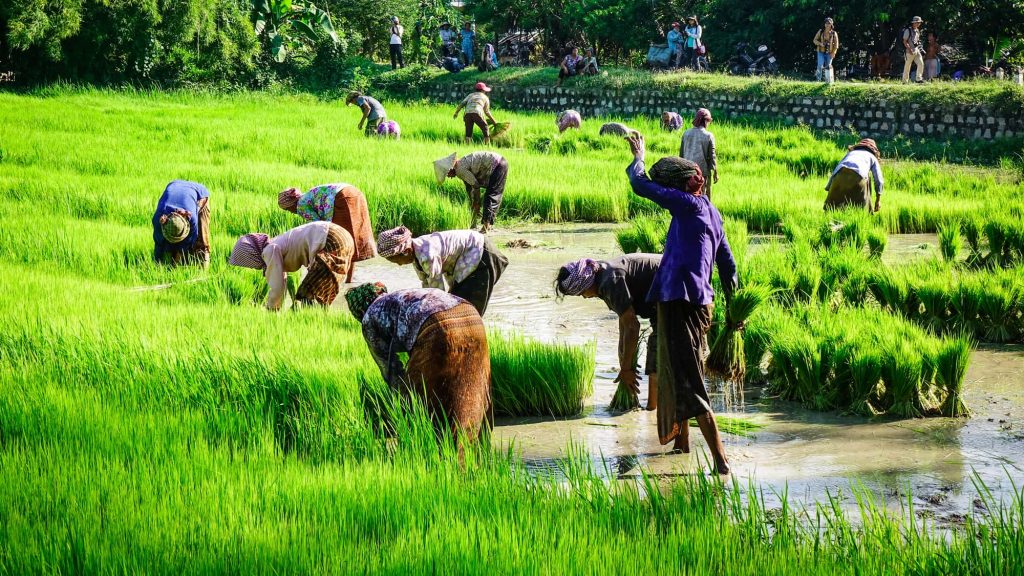
- Community, cooperation and generosity: Rice farming is hard, seasonal, weather-dependent work and for generations neighbours have pulled together to manage it. Stories of neighbours helping each other harvest rice and fighting floods together are part of the region’s identity, and the shared relief of enjoying a good harvest as a family and community fosters a culture of generosity. That same pioneering effort to turn wetland into farmland also forged a tightly united society of Kinh, Khmer, Chinese and Cham communities living side by side.
- Festivals that thank the land: Many of the delta’s celebrations are, at their core, harvest rituals. The Khmer festival of Ok Om Bok, the Moon Worship Festival falls on the full moon of the tenth lunar month, marking the end of the harvest season, with offerings of young green rice to the moon, water lantern releases and thrilling Ngo boat races. Few traditions show more clearly how the farming calendar still drives cultural life here.
For travellers, this is what gives the scenery its depth: the Mekong Delta rice fields aren’t just beautiful – they’re the root system of an entire way of life, from its food and music to its festivals and its famously warm people.
Common mistakes travelers make when visiting rural areas
The countryside around the Mekong Delta rice fields is welcoming and easy to enjoy but it runs on different rhythms from Vietnam’s big cities, and a few avoidable slip ups can take the shine off a trip. Here are the ones to watch for:
- Treating the delta as a half day checkbox. The most common mistake is booking a rushed tour from Ho Chi Minh City and assuming you’ve “seen” it. A quick trip barely scratches the surface, giving the delta two to three days lets you venture further and explore several provinces rather than one hurried loop. Go beyond Cần Thơ if you can.
- Arriving at floating markets too late. Floating markets are a dawn affair: The boat to boat trading happens at sunrise and has largely fizzled by mid morning. Show up at 10am and you’ll mostly catch it winding down, set an early alarm.
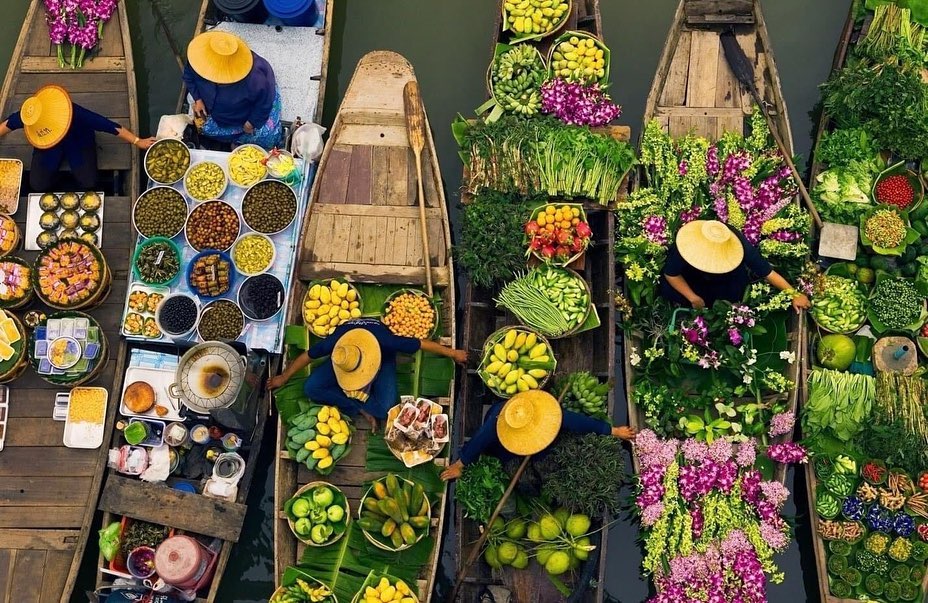
- Not carrying enough cash. Rural areas run almost entirely on cash. Card payments are rare, and ATMs are generally only found in larger towns like Mỹ Tho and Cần Thơ. Withdraw what you need before heading into the fields.
- Expecting city grade tourist infrastructure. This is working farmland, not a resort strip once you leave the main towns, expect simple standards, limited signage, and little English. A local guide, or just patience and a few words of Vietnamese, goes a long way.
- Misjudging the season. Many travellers arrive picturing golden fields or mirror-like floodwaters, then find bare or freshly planted plots. The paddies cycle through planting, green, and harvest several times a year, so check the crop calendar against the look you want before you book.
- Underestimating sun, heat and mosquitoes. The fields are wide open and the climate is hot and humid. Bring sun protection, insect repellent and water especially if you plan to cycle or walk between sights.
Avoid these and the rural delta becomes exactly what should be one of the most relaxed, authentic, and rewarding corners of Vietnam.
Suggested Mekong delta rice fields itinerary
To truly experience the magic of the Mekong delta rice fields, a 2 day, 1 night trip is the perfect balance between exploration and relaxation. Here is a recommended itinerary to help you make the most of your journey.
Day 1: The heart of the delta
- Morning (arrival & boat trip): Arrive in a central hub like Can Tho or Cai Be. Immediately board a traditional sampan to cruise through the smaller tributaries. This is the best time to see the morning harvest activities and the lush green paddies glistening in the early sun.
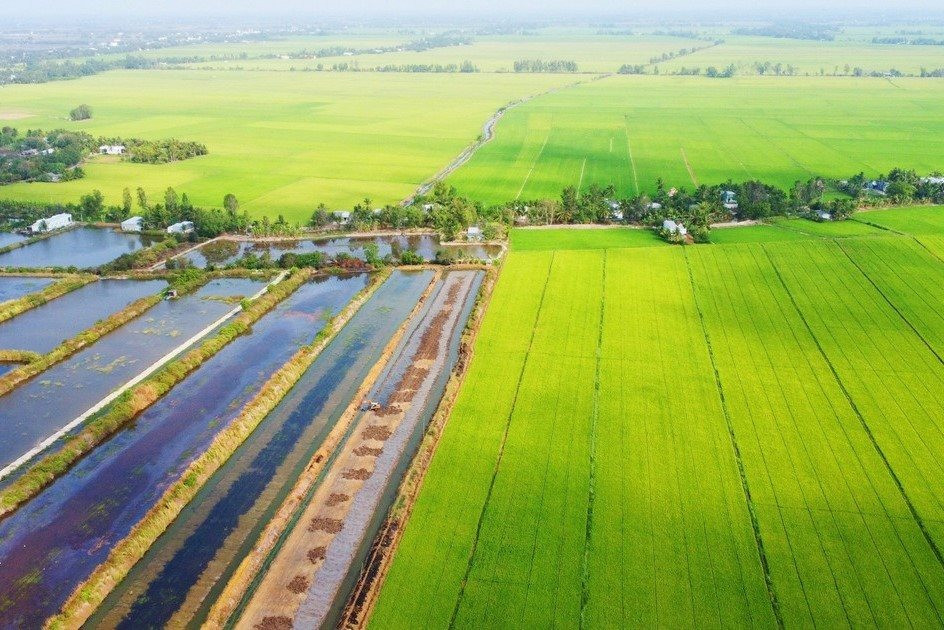
- Lunch (local flavors): Enjoy a traditional meal at a riverside restaurant, sampling dishes made with local rice, fresh freshwater fish and tropical fruits picked straight from nearby orchards.
- Afternoon (cycling & Eexploration): Rent a bicycle and ride along the narrow concrete paths that wind directly through the Mekong delta rice fields. Stop at a local family home to see how rice paper is made or visit a small, centuries-old pagoda tucked away in the greenery.
- Evening (sunset & homestay): Relax at a local homestay. Enjoy dinner with your host family, learn about their farming life and spend the night surrounded by the peaceful, open landscape.
Day 2: Culture & connection
- Early morning (Floating markets): Rise early to catch the vibrant atmosphere of a floating market (like Cai Rang). It is a stunning sight to see hundreds of boats trading produce at dawn – a cornerstone of the delta’s rice-based economy.
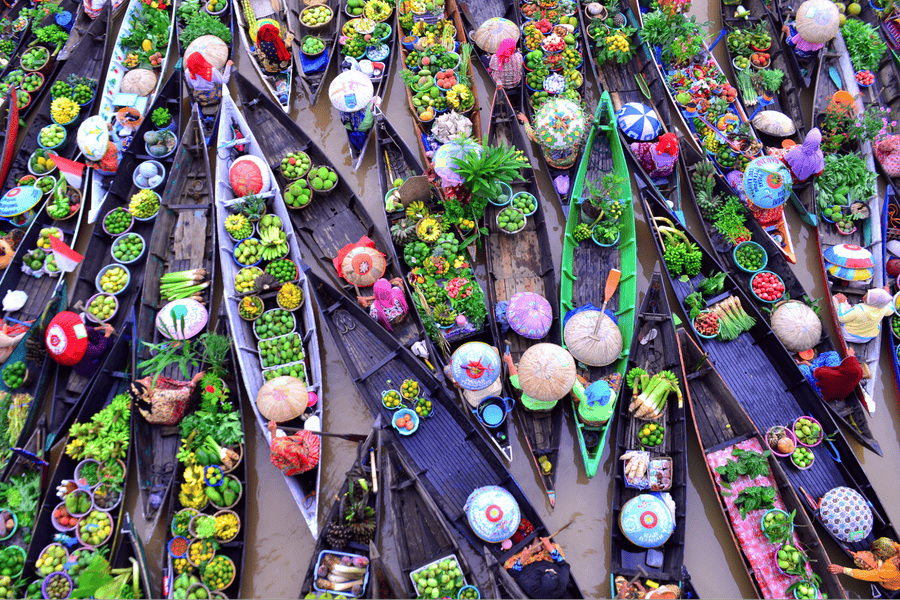
- Late morning (Education & wildlife): Visit an agricultural station or a local orchard to learn about the various rice varieties and irrigation techniques used in the delta. If time permits, take a final walk through a golden harvest field for those last, perfect photos.
- Afternoon: Enjoy a slow lunch before departing, heading back to your next destination with a deeper understanding of Vietnam’s “Rice Bowl”.
Frequently asked questions about visiting the Mekong Delta
Planning your trip to the Mekong Delta rice fields often comes with questions about timing and logistics. To help you make the most of your journey, we have compiled answers to the most common queries from travelers.
What is the best month to see the Mekong Delta rice fields?
The best time to witness the Mekong Delta rice fields in their full glory is during the harvest seasons. Depending on the local cropping cycles, this typically occurs from late winter to early spring (roughly February to April) and again during the late autumn harvest (September to October). During these months, the fields turn stunning, vibrant gold, offering the most iconic photographic opportunities.
How many days do you need in the Mekong Delta?
While you can see the highlights in a single day, we recommend at least 2 to 3 days. This allows you to move beyond the crowded tourist paths, visit the Mekong Delta rice fields in the more remote provinces like An Giang or Vinh Long, and truly absorb the slower, river-based pace of life that defines the region.
Are the floating markets still worth visiting?
Absolutely. While some say the markets have become more tourist-facing, they remain the essential lifeblood of the region’s river commerce. Markets like Cai Rang or Phong Dien are still vibrant hubs where local farmers trade vast quantities of produce directly from their boats. If you visit early in the morning, you will still witness an authentic, bustling display of regional trade that you won’t find anywhere else.
How far is the Mekong Delta from Ho Chi Minh City?
The distance varies depending on your destination within the Delta. The gateway provinces like My Tho or Ben Tre are approximately 70-80 km away (about a 2 hour drive), while major hubs like Can Tho are about 160 km away (a 3 to 4 hour drive). Thanks to improved road infrastructure, the region is highly accessible for both day trips and multi-day adventures.
Green season or harvest season – which is better?
This depends entirely on what you want to experience. The harvest season (February-April or September-October) is unbeatable if you want to see the famous golden Mekong Delta rice fields and enjoy dry, clear weather. The green season (June-August), however, is when the landscape is lush, the orchards are heavy with tropical fruit, and the water levels are high, creating a deeply vivid and alive ecosystem. If you prefer photography, go for the harvest; if you prefer nature and greenery, choose the green season.
Visiting the Mekong delta rice fields is more than just a sightseeing trip; it is an immersion into the rhythmic, water bound heart of Vietnam. Whether you are navigating the winding canals by sampan, cycling through rural paths or simply watching the sunset reflect over an endless expanse of crops, the delta promises an experience that stays with you long after you leave.
If you are ready to venture into Vietnam’s most fertile landscapes, don’t leave your travel plans to chance. Let Lily’s Travel craft the perfect, stress free journey tailored to your interests. We handle the logistics from private transfers and expert local guides to authentic homestays, so you can focus entirely on soaking in the beauty of the Mekong.