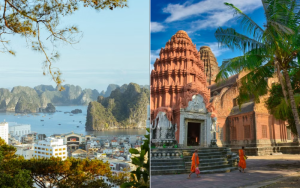



Dong Anh is a land with a rich cultural and historical tradition, famous for its 9 spiral walls over 2,000 years old. Returning to Co Loa citadel is about the legendary stories of the god crossbow: An Duong Vuong, My Chau, Trong Thuy. Not only that, this place also marks visitors’ hearts with its unique architecture, preserved and preserved to this day.
Some features of Co Loa Citadel
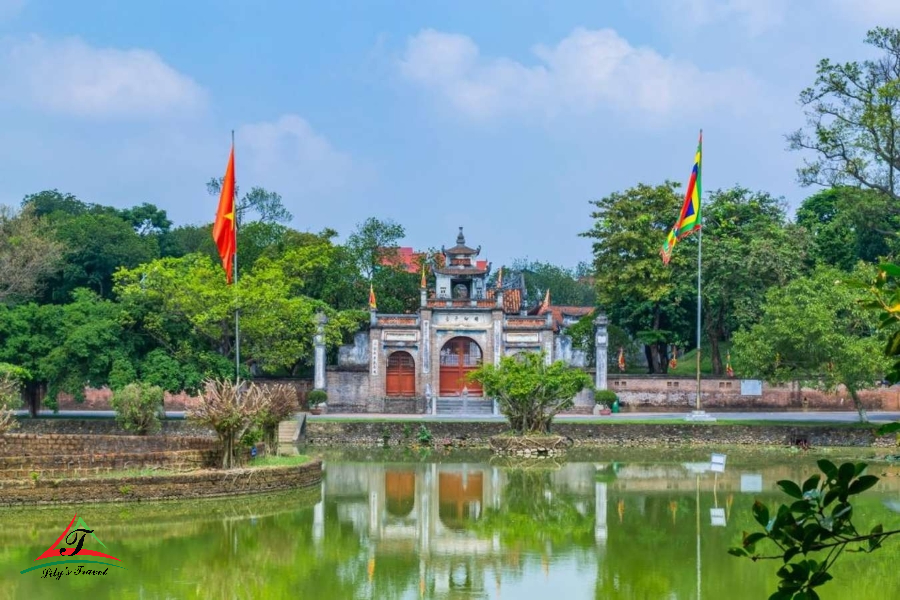
Co Loa Citadel, also known as Loa Thanh, is an ancient citadel related with the mythology of An Duong Vuong’s construction of the citadel and the My Chau – Trong Thuy story. This citadel was built in the 3rd century BC, the capital of Au Lac country, now in the territory of Dong Anh district, Hanoi capital.
Co Loa Citadel has great historical significance, showing the creativity and technical level of the ancient Vietnamese. With those factors, Loa Thanh has become an attractive destination for domestic and foreign tourists traveling to Hanoi. The works in the relics such as Co Loa Temple, Thuong Temple, Ba Chua Am, Ngoc Well… still welcome visitors to visit and admire.
Update the ticket price to visit the latest Co Loa
Co Loa tourist area is open to visitors from 8 am to 5 pm daily. Entrance ticket price is only 5,000 – 10,000 VND/ person, free tickets for children under 15 and people with meritorious services to the Revolution. The incense ceremony costs 600,000 VND/ group, and the fee for hiring a tour guide ranges from 300,000 VND/ guide.
The ideal time to travel to Co Loa
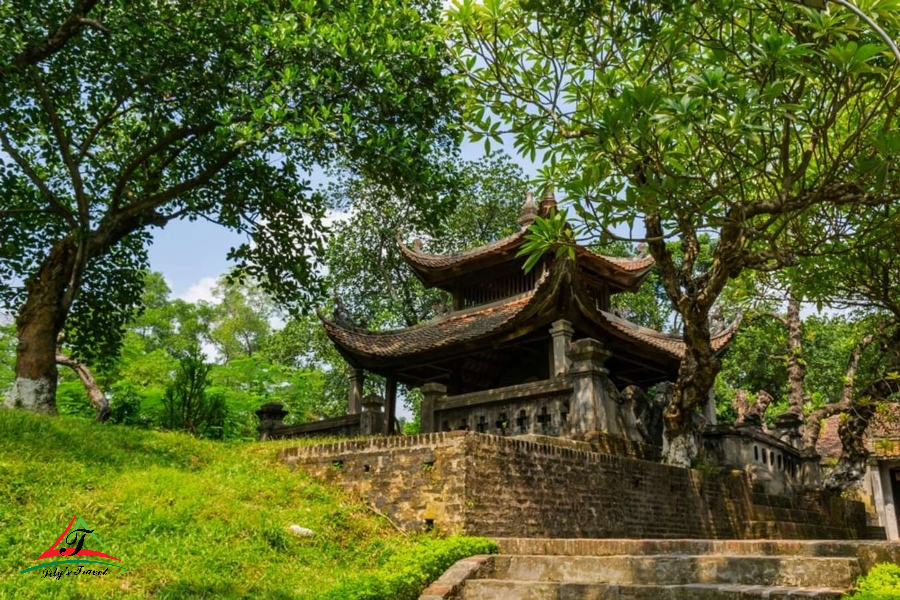
If you want to see the scenery, you can visit this monument in any season of the year as you like. However, the most beautiful is still in the summer – when flowers by mausoleums and phoenix flowers bloom. At this time, the weather is also quite pleasant, sunny suitable for outdoor sightseeing activities.
If you want to experience the festive atmosphere, visitors should come to Co Loa City on January 5-6. This is the time of Co Loa Festival, a festival to honor the merit of An Duong Vuong in building and creating Au Lac state.
The unique architecture of Co Loa city
The architecture of Co Loa citadel has a highly characteristic spiral shape; the name Loa Thanh also comes from the shape of the citadel. According to records, the city has 9 spirals; only 3 circles remain today. The citadel structure is divided into 3 zones: inner citadel, loyal citadel, and external citadel, a meandering shape with many unique architectural works.
The outer wall
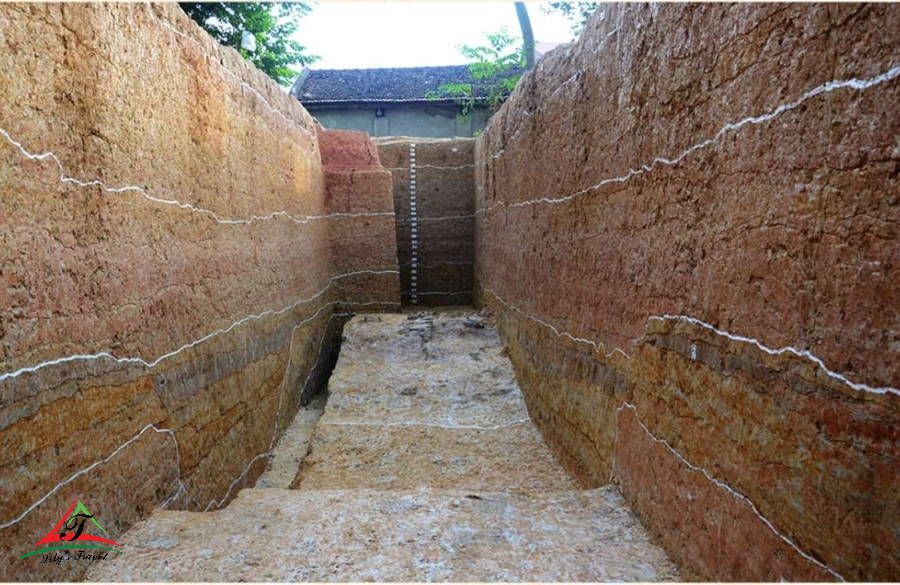
The outer wall has a circumference of about 8 km, built by excavating the earth to where the trench is, building the wall, and building an adjacent rampart. The old ramparts are 4 – 5 m high, with places up to 8 – 12 m high. It is estimated that the total amount of soil here is about 2.3 million m3.
The second wall
The central wall has a circumference of 6.5 km; the structure is relatively similar to the outer wall. However, the area of the city is narrower and somewhat more solid.
The inner city
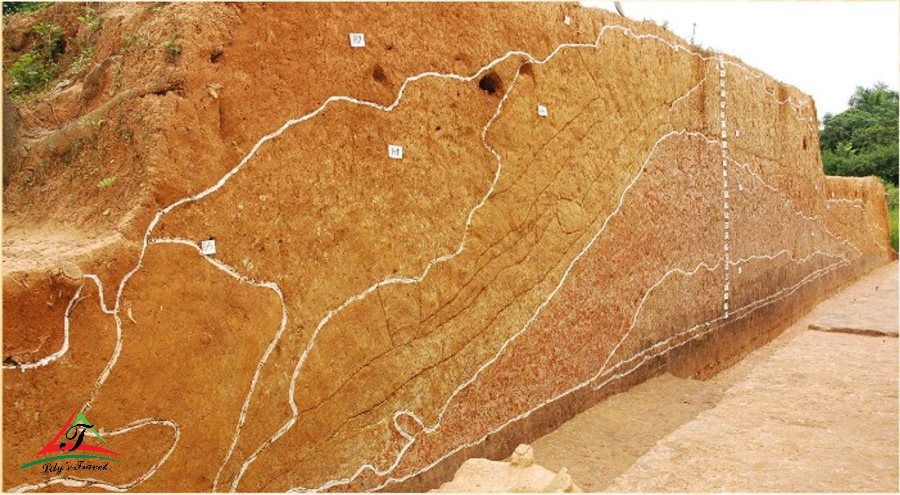
The inner city of Co Loa city has an area of about 2 km2, formerly the residence of An Duong Vuong and her court, beautiful women and officials in the court. Today, the inner city is used as a place to worship An Duong Vuong and Princess My Chau; many architectural works belonging to the relics are also gathered in this castle.
Read more: The reason makes Ho Chi Minh Mausoleum become one of Hanoi tourist attractions
Means and ways to move to Co Loa citadel
Co Loa Citadel is located in Dong Anh District, more than 20 km from the center of Hanoi’s Capital. Tourists can visit this ancient city by many different means. In particular, buses are still the means of choice for many people because of their convenience and low price. From Hanoi, there are many bus routes through Co Loa, and the ticket price is only 7,000 – 9,000 VND/ trip; depending on the starting point, you can choose the appropriate path.
- Near My Dinh area: Bus line 46.
- Close to Hanoi Railway Station and Thong Nhat Park: Bus line No. 43.
- Long Bien transfer point: Bus lines 15 and 17.
- Near Nhu Quynh area and University of Agriculture: Bus route No. 59.
In addition to buses, personal vehicles such as cars and motorbikes are also suitable for traveling to Co Loa city. Visitors can refer to the following travel routes:
- Thang Long Bridge: City center – Pham Van Dong – Thang Long Bridge – Hai Boi – 6 km road – National Highway 3 – Co Loa.
- Chuong Duong Bridge is accessible via the following routes: City Center – Chuong Duong Bridge – Nguyen Van Cu – Dong Tru Bridge – Tien Hoi – National Highway 3 – Co Loa.
- The direction of Nhat Tan Bridge: City center – Nhat Tan Bridge – Road 5 extended – National Highway 3 – Co Loa.
To be continued
The best center Vietnam tour: Tour in Vietnam
Outstanding places to visit in Co Loa city
Co Loa Relic has many attractive attractions as one of Vietnam’s largest and most unique ancient castles.
Relics of An Duong Vuong Temple
The An Duong Vuong Temple, also known as the Upper Temple, was built on a hill formerly the king’s palace. The temple faces south, and the main buildings in the temple are located on the axis of Courage (Shinto). The temple has An Duong Vuong statue cast in bronze and countless historical relics, wooden antiques, porcelain, and cloth.
Pearl Well Monuments (Gieng Ngoc)
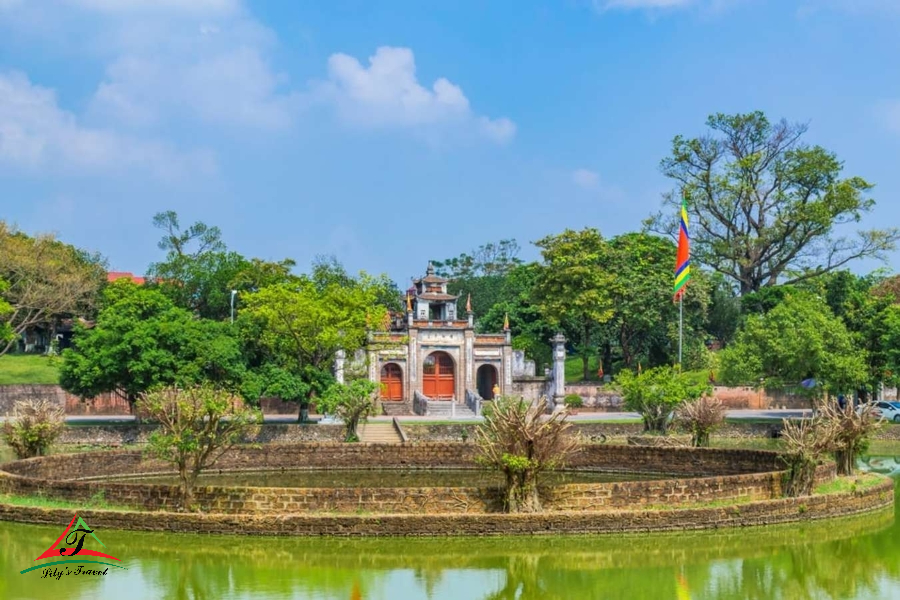
In front of the Thuong temple is a large lake; in the middle is an ancient well – where Trong Thuy threw himself. According to legend, if you use the water in this well to wash pearls, the pearls will be brighter. Therefore, this well was named Ngoc Well. This is also the most attractive place to visit in Co Loa City.
Ngoc Well has a circular arc shape, and the naturally curved bank is embanked with stone, surrounded by walkways and trees. Previously, the lake was connected to the trenches of the two outer walls and the east-south bank of the exterior wall. According to legend, Princess My Chau and Trong Thuy often sailed around this lake before the war broke out.
Am Ba Chua relics
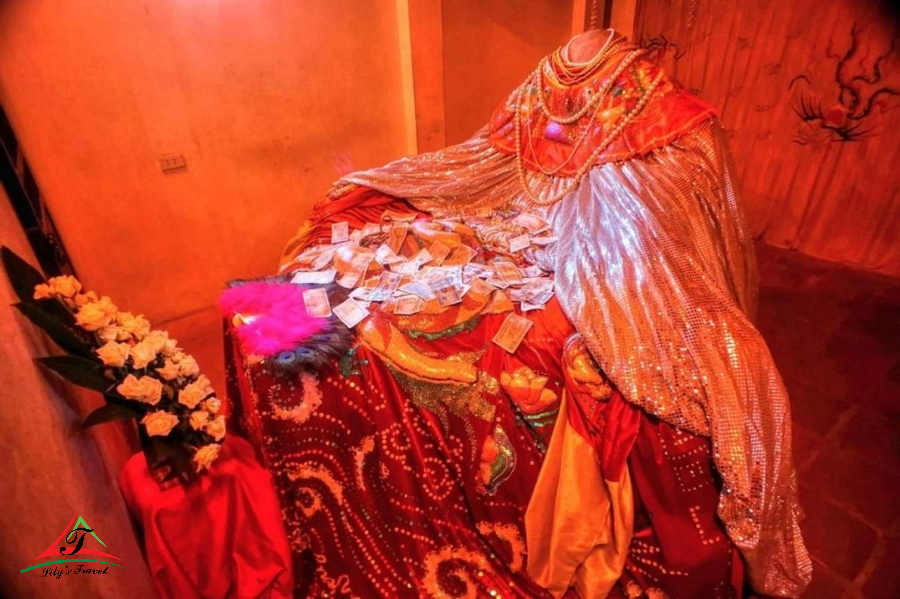
Am Ba Chua, or My Chau tomb, works behind a thousand-year-old tree. In the am, there is a statue of My Chau – a natural stone shaped like a headless person. Legend has it that My Chau transformed into a large rock drifting to Duong Cam beach, east of Loa Thanh after death. The people brought the hammock to the stretcher; to the root, the hammock broke, causing the rock to fall. And when the people saw it, they set up a temple there and called it Amos, the Lady of the Lord.
Cao Lo Temple Relics
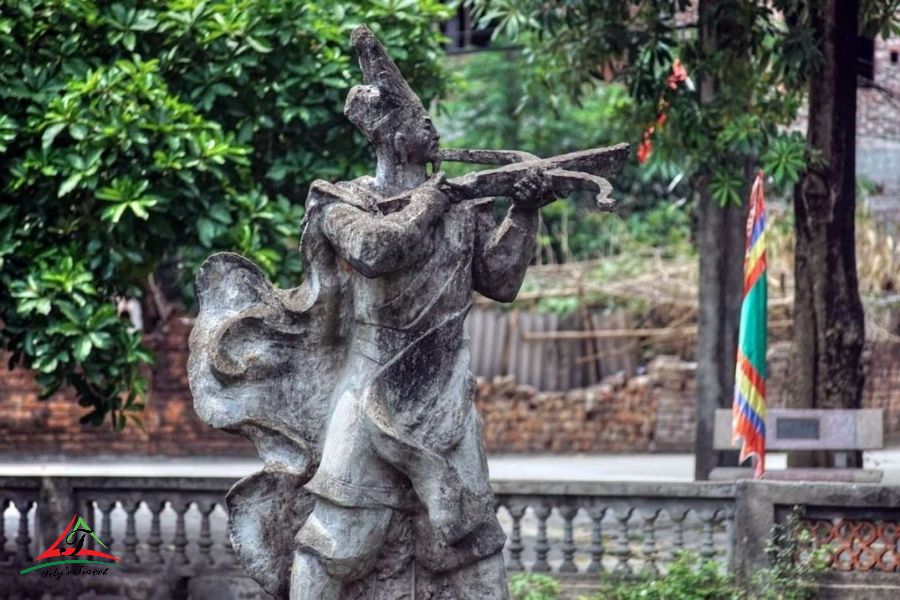
Cao Lo Temple is also a place many people visit when visiting the Co Loa citadel. Cao Lo was a talented general under King Thuc Chao, the creator of the Lien Chau crossbow, shot many arrows simultaneously, and helped the king build the citadel.
To remember his merit, the people cast statues and built temples. Cao Lo Temple has a small scale; in the middle of the pond, in front of the temple, a statue of Cao Lu holding a crossbow. In the temple, there are still many copper arrows excavated by archaeologists.
Ngu Trieu Di Quy relic – Co Loa communal house
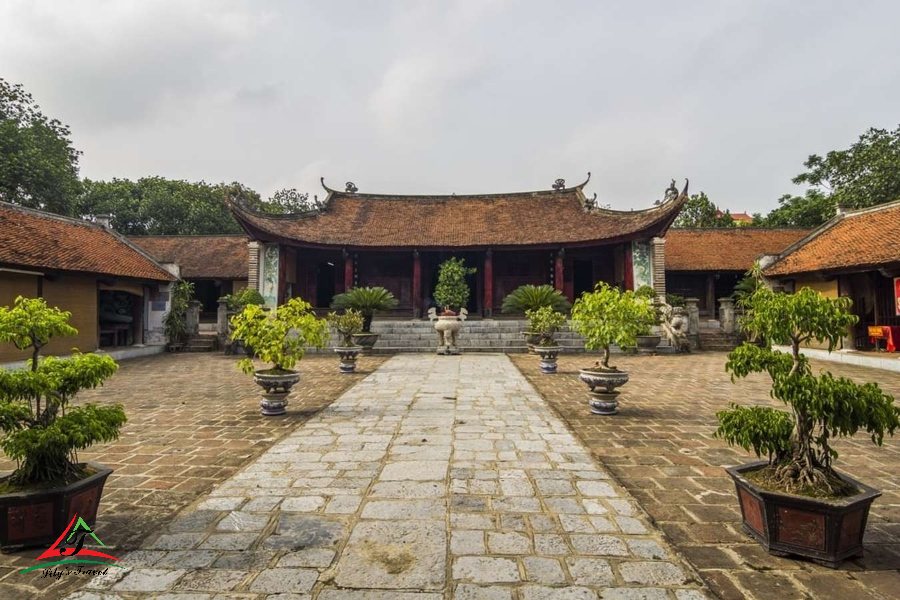
Di Quy Dynasty is located on the foundation of the old dynasty palace, transferred from elsewhere and rebuilt at the end of the 18th century. The communal house is located near the middle of the inner city, about 300 m east of An Duong Vuong temple, and to the west is Am My Chau. The communal house has the most solid and sturdy architecture in Co Loa, displaying many archaeological relics.
Ngu Trieu Di Quy has a Nghi Nghi section built in a 2-story style, with a false roof with pipe tiles. The entrance has 2 doors, 1 central 2 adjacent to the wall forming a separation in front. On the left is the road to Am My Chau; between the communal house is a four-quarter and four-spirit-shaped hammock door.
Display area of archaeological artifacts in Co Loa
Ngu Trieu Di Quy has a Nghi Nghi section built in a 2-story style, with a false roof with pipe tiles. The entrance has 2 doors, 1 central 2 adjacent to the wall forming a separation in front. On the left is the road to Am My Chau; between the communal house is a four-quarter and four-spirit-shaped hammock door.
Read more: The reason makes Ho Chi Minh Mausoleum become one of Hanoi tourist attractions
What to eat when visiting and traveling Co Loa citadel
Coming to Co Loa, the first dish you must try is Ve Trang vermicelli – a general specialty of Ve Trang village and Dong Anh. Ve Trang vermicelli fiber is more significant than usual and is slightly cloudy; it feels crispy and chewy when eating.
In addition, near the citadel area, there are many delicious eateries for visitors to choose from. In particular, the most famous is the famous Co Loa mussel porridge. Porridge is sold inside the market, only 2 hours from 14h – 16h is finished.
The ingredients of the porridge are mussels caught from the Hoang Giang River, chewy, fatty and very sweet. Porridge is often served with sticky rice and salted tomatoes, which are both anti-fatigue and add flavor. Each mussel porridge bowl here is cheap, only 15,000 VND/ bowl.
The best center Vietnam tour: Tour in Vietnam